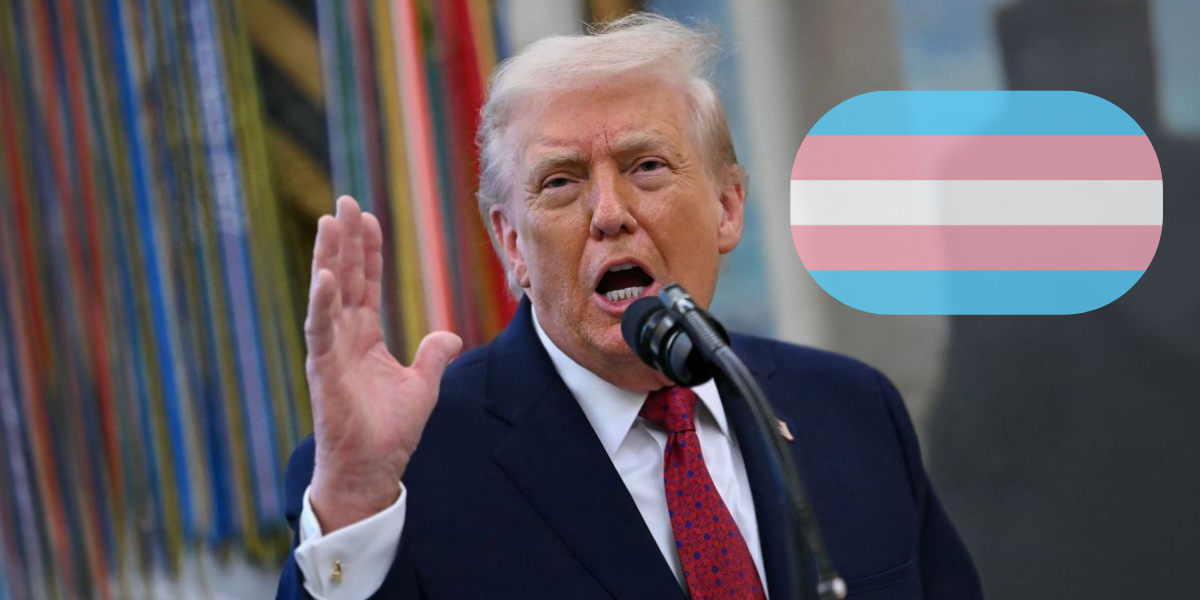
Donald Trump may just have received one of the clearest indications yet that his campaign over women’s sport is changing the political landscape far beyond his own supporters.
A fresh examination of the issue has revealed growing unease inside the Democratic Party over allowing transgender women and girls to compete in female sporting categories, with several prominent figures now adopting positions that are significantly closer to Trump’s than they were to the traditional Democratic line.
Most strikingly, California Governor Gavin Newsom, widely regarded as a potential Democratic presidential contender in 2028, has acknowledged that he believes allowing athletes assigned male at birth to compete against girls can be unfair.
Speaking recently while campaigning in South Carolina, Newsom admitted that he was uncomfortable finding himself on the same side of the argument as Trump.
Read also: Europe supplied 94% of the World Cup's player value. FIFPRO Europe wants a seat at FIFA's table
“I don’t want to be on that side of it, but I’m being honest, I’d be lying to you if I said differently,” Newsom told the Associated Press.
The comments form part of a much wider political development identified by the Associated Press in its latest examination of the issue, with Democratic politicians in several states reassessing their positions as the United States approaches the 2026 midterm elections.
For Trump, it is potentially significant evidence that one of his most controversial sporting positions is becoming increasingly difficult for political opponents to dismiss as simply a Republican culture-war issue.
Newsom is no longer alone
Newsom is far from the only Democrat confronting the issue.
Read also: Pietersen back in England cricket
Iowa Democratic gubernatorial candidate Rob Sand has spoken against transgender athletes competing in women’s sport on fairness grounds, while Ohio Democratic gubernatorial nominee Amy Acton has taken a similar position. Acton has even faced criticism from parts of the political left after using language closely resembling Trump’s framing of the issue.
Texas Democratic Senate nominee James Talarico has also begun distancing himself from some of his previous positions on transgender policy, acknowledging recently that some of his earlier comments had “missed the mark”.
That does not mean the Democratic Party has suddenly adopted Trump’s policy.
Major Democratic figures including Illinois Governor JB Pritzker and Massachusetts Senator Ed Markey continue to strongly defend transgender rights, while Pennsylvania Governor Josh Shapiro has argued that politicians should not dictate individual sporting eligibility decisions.
Read also: Mourinho gave the squad a day off, and Real Madrid filled the paddock
But the fact that the disagreement is increasingly taking place inside the Democratic Party represents a notable shift.
The issue is no longer simply Trump and Republicans against Democrats.
It is beginning to divide Democrats themselves.
The numbers explain why the issue is becoming difficult to ignore
The political calculations behind that movement are not difficult to understand.
Read also: Mahomes is back: Chiefs crush Broncos 31-10 in quarterback's ACL comeback game
A Quinnipiac University poll cited by AP found that roughly seven in ten registered American voters believe transgender women and girls should not be permitted to compete on women’s and girls’ sports teams.
Only around one-quarter supported allowing them to do so.
Perhaps more importantly for Democratic politicians, their own voters are far from united. Democratic respondents were approximately evenly divided on the question.
Separate Pew Research Center polling has also found considerable discomfort among Democratic voters with athletes competing on teams that do not correspond with their sex at birth.
Read also: Man United fans hit back at 685 season-ticket bans before City derby
That leaves Democratic candidates with a difficult calculation.
Maintaining the party’s most permissive position risks leaving them exposed on an issue where national public opinion appears considerably more restrictive. Moving towards Trump’s position, meanwhile, risks angering progressive voters and LGBTQ+ organisations that regard blanket restrictions as discriminatory.
Trump and his allies have already recognised the opportunity.
Trump made women’s sport a national political issue
Trump elevated the issue immediately after returning to the White House.
On February 5, 2025, he signed the executive order Keeping Men Out of Women’s Sports, directing federal agencies to pursue policies designed to prevent transgender women and girls from participating in female sporting categories in federally funded educational institutions.
But Trump went considerably further than domestic school sport.
His administration was also instructed to encourage international sporting organisations, including the International Olympic Committee, to adopt eligibility standards based on sex rather than gender identity or testosterone reduction.
The Olympic movement later moved significantly in that direction.
In March 2026, the IOC announced that from the Los Angeles 2028 Olympics, its female category would be restricted on the basis of biological sex, with a one-time SRY gene screening forming part of the eligibility process.
The IOC has maintained that its decision was reached through its own scientific and medical review rather than because of pressure from the White House.
Nevertheless, politically, the result gave Trump another opportunity to argue that elite sport was moving towards a position he had championed.
World Athletics had already taken a comparable approach, implementing SRY testing requirements in its female category from September 2025.
The courts have also changed the landscape
Trump’s position received another significant boost this summer.
In June, the US Supreme Court upheld state laws restricting transgender girls from competing on female school sports teams, giving states greater legal room to preserve sex-based sporting categories.
That ruling did not originate from Trump’s executive order and should not be presented as a direct presidential victory.
But it strengthened the broader legal environment surrounding a central part of Trump’s sporting agenda.
At least 25 states are now enforcing laws or policies restricting transgender women and girls from competing in at least some female sporting categories, according to the latest AP assessment. Three additional states have adopted restrictions that are currently blocked by courts.
The direction of travel is therefore becoming increasingly clear.
International sporting organisations have tightened eligibility rules. The Supreme Court has permitted states to maintain sex-based restrictions. Public polling heavily favours restrictions. And now members of the Democratic Party are publicly reconsidering where they stand.
Trump has spotted the political opportunity
Republicans are already attempting to turn that movement into an electoral weapon.
The transgender sports issue was prominently featured at the Republican midterm convention in Dallas last week, where Trump’s record was presented as evidence that the administration had protected women’s competition.
Trump himself went further, suggesting that he hoped Democrats would continue defending transgender participation in women’s sport.
The remark was political rather than sporting, but its logic was obvious.
Trump appears to believe his opponents are vulnerable on the issue.
Campaign organisations connected with his allies have already begun targeting Democratic candidates in key Senate races with advertisements focused on women’s sport and transgender participation.
What was once presented as one of Trump’s most provocative culture-war positions is therefore becoming increasingly central to election strategy.
A warning sign for Democrats ahead of 2028
The implications could extend well beyond November’s midterms.
Newsom, Pritzker, Shapiro and other prominent Democrats are widely considered possible candidates for the 2028 presidential election. How they answer questions about women’s sport may therefore become part of a much larger battle over the future direction of the Democratic Party.
Newsom’s position is particularly striking because of his long record supporting LGBTQ+ rights.
He stressed that record when discussing the issue and described the subject as difficult, noting his personal connection to the transgender community.
Yet when it comes specifically to sporting competition, he remains concerned about fairness.
That distinction could increasingly become the political compromise adopted by Democrats seeking national office: support transgender rights in broader society while drawing a different line around protected female sporting categories.
If that happens, Trump will have achieved something considerably more significant than winning another argument among his own supporters.
He will have helped move the political centre of one of America’s most divisive sporting debates.
And the latest signs suggest that movement may already be underway.