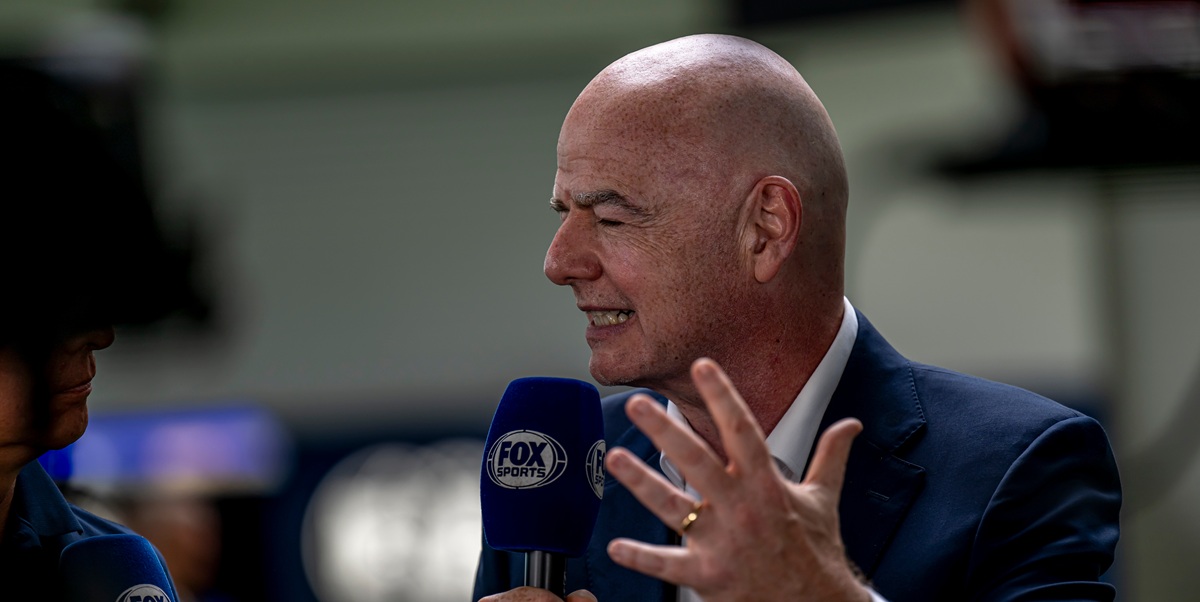
The sharpest blow to Gianni Infantino’s re-election campaign has come from his own passport. Switzerland’s Football Association, the SFV, withdrew its endorsement of the FIFA president on Wednesday, 30 September, barely three months after formally giving it.
The decision carries unusual weight. Infantino is Swiss, FIFA is based in Zurich, and UEFA sits down the road in Nyon. His own federation walking away is a signal no English, French or South American withdrawal could send.
In a statement signed off by SFV president Peter Knabel, the association said its board had reversed course after a review of recent months in office. “Key questions regarding the background, responsibilities and decision-making processes remain unanswered. As these have not been convincingly clarified, we cannot justify continuing to support Gianni Infantino’s candidacy,” the SFV said.
The federation framed the move as a question of governance rather than personality, pointing to “fundamental questions regarding leadership, governance, transparency and decision-making processes within FIFA”.
Read also: Verstappen sets a new goal for the season
Two decisions the Swiss could not accept
The breaking point, according to the Swiss and to the other European federations that have moved before them, was Infantino’s July attempt to sell a stake in FIFA’s commercial future. Through a new subsidiary called FIFA Forward Enterprise, Infantino sought to open parts of the World Cup, Club World Cup and other FIFA competitions to private investors. The plan was pulled within days under pressure from UEFA and several national associations, but the political damage held.
The second trigger was the Folarin Balogun episode at the World Cup. The United States forward was sent off for serious foul play against Bosnia and Herzegovina in the round of 32, picking up an automatic one-match ban under FIFA’s disciplinary rules.
President Donald Trump then phoned Infantino, and FIFA’s disciplinary committee used Article 27 of its code to suspend the ban for a probationary year, clearing Balogun to face Belgium. Belgium’s own appeal against the move was ruled inadmissible. UEFA, led by president Aleksander Ceferin, said FIFA had “crossed a red line” and put the “integrity of the game at stake”.
The electoral map before 18 November
The FIFA election will be held at the governing body’s congress on 18 March 2027 in Rabat, Morocco. Any challenger must declare their candidacy by 18 November 2026.
Read also: Bayern break silence on Florian Wirtz return rumours
Switzerland is the latest in a lengthening list of federations to pull back. England, Wales, France and Serbia have already withdrawn their endorsements, New Zealand broke ranks with the rest of Oceania to do the same in August, and Belgium withdrew its support in September after the Balogun ruling.
Those withdrawals shift the political mood more than they shift the maths. FIFA presidential elections are decided one member, one vote across all 211 associations, and confederations do not deliver their members’ ballots as a block. UEFA has made clear it intends to field a challenger before the November deadline. CONCACAF president Victor Montagliani has been widely tipped as the likeliest name, after Ceferin ruled himself out.
As of Thursday, Infantino has not responded publicly to the Swiss decision, and remains the only declared candidate on the ballot.
Read also: Joshua: “I’m going to come out and I’m going to blast him out”