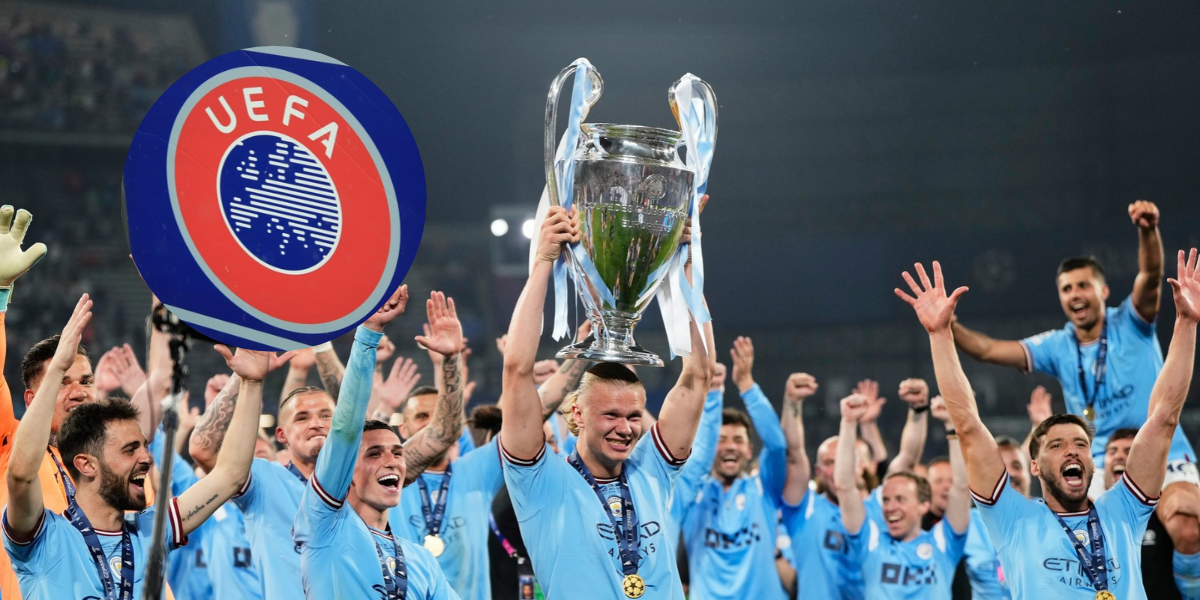
Manchester City lodged their appeal against the 114-charge guilty verdict at 7pm on Thursday 1 October 2026, calling the ruling “unsafe” and arguing it contains “material errors, of law, principle and fact.” According to reporting first carried by The Times, the central plank of that defence sits uneasily beside what the club previously told European football’s governing body.
The disputed money comes down to two payments of £15m in 2012 and 2013. City told UEFA at the time that the funds had been “caused to be made by ADUG,” the Abu Dhabi United Group owned by Sheikh Mansour. The money, City said, should have come from Etisalat, the majority UAE-owned telecoms firm that sponsors the club.
The man actually behind the transfer was named as Jaber Mohamed, described to UEFA as providing financial and brokering services. What City did not pass on, according to the reporting, was Mohamed’s day job: general director of the Abu Dhabi Crown Prince Court.
The defence City now needs to run
Before the Premier League’s independent commission, City argued the opposite shape of the same story. The sponsorship money, the club’s lawyers said, was not routed through Sheikh Mansour or ADUG at all: it was Abu Dhabi government money that happened to arrive via sponsors.
Read also: Ancelotti had never heard of Arthur Dias. Now he is on Barcelona’s radar
That is the argument City will carry into the appeal. The original commission already called it an explanation “concocted well after the event in an attempt to obscure and conceal the realities of the Disguised Funding Scheme.” The appeal panel will now have to weigh it against what the club wrote to UEFA when the same payments were first examined.
The timing matters because the UEFA submission was contemporaneous, made to a different governing body, and recorded in writing. It is not a journalist’s version of events, it is City’s own.
Where UEFA stands
European football’s governing body has not acted on the Premier League ruling and does not plan to until the English process is finished. UEFA is “monitoring” developments and will wait for the end of the Premier League’s disciplinary process before deciding on any action of its own, Sky Sports reports.
That matters because UEFA pursued its own case against City in 2020. Some of those sanctions were overturned by the Court of Arbitration for Sport, which ruled the Etisalat allegations themselves were time-barred and did not determine whether those payments amounted to disguised equity funding. The paperwork from that process, including what City told UEFA about Mohamed, has now resurfaced inside a different jurisdiction.
Read also: Bellingham on Ballon d’Or hopes: ‘Who knows, it’s definitely possible’
What happens next
Premier League rules give the appeal board 12 weeks from 1 October to hold the hearing, and 30 days after it concludes to deliver a verdict. The hearing itself cannot run longer than five consecutive days, and will take place in private. A separate hearing on punishment, where the options run from a fine through a points deduction to expulsion from the competition, has yet to be scheduled.
Read also: Man Utd make Carrick decision as Conte links intensify