France is confronting one of its most turbulent periods of social unrest in recent years. What began as student demonstrations over deteriorating school conditions has developed into a nationwide protest movement, bringing together young people, trade unions and citizens frustrated by rising living costs and pressure on public services.
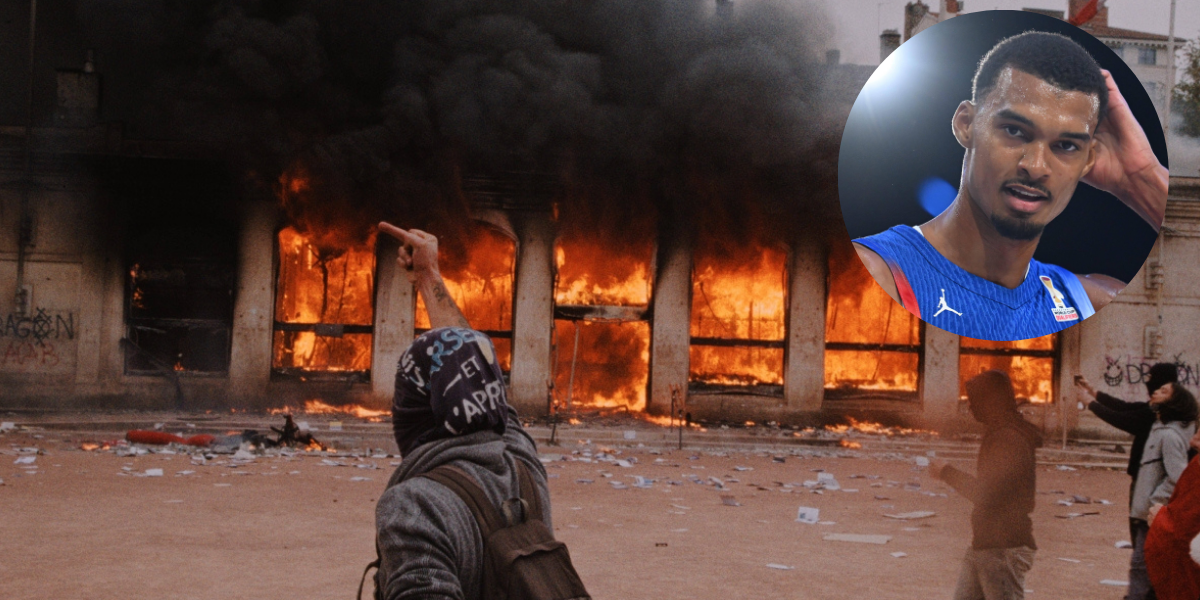
On October 17, demonstrations spread across major French cities, including Paris, Lyon, Marseille and Bordeaux. According to The Associated Press, authorities estimated that approximately 550,000 people participated, while organisers put the figure at 800,000. Although many marches remained peaceful, violent groups clashed with police, looted businesses and attacked public buildings. By October 18, at least 1,800 people had been arrested.
The unrest has also drawn attention from some of France’s most recognisable sporting figures. NBA sensation Victor Wembanyama and judo legend Teddy Riner both commented on the student movement earlier in October, offering different perspectives on the frustrations driving the demonstrations.
Victor Wembanyama sends a message to France’s leaders
Speaking from the United States on October 8, Wembanyama expressed his support for French students demanding better educational conditions. The 22-year-old San Antonio Spurs star addressed the situation after a preseason game against the Atlanta Hawks, drawing on his own experience growing up and attending school in Nanterre.
Read also: Liverpool identify two transfer alternatives as £100m deal hits major obstacle
According to Reuters, Wembanyama described the problems facing students as systemic inequalities that extended far beyond individual schools. He welcomed the fact that young people were making their voices heard and expressed hope that France’s political leadership would take their concerns seriously.
“I hear them and I support them,” Wembanyama declared, adding that he hoped those at the top would do the same.
His comments carried a personal dimension. Before becoming one of basketball’s most recognisable players, Wembanyama attended high school in Nanterre, an area where student blockades and demonstrations were already familiar. He acknowledged that his sporting career had allowed him to escape many of the difficulties currently facing young French people.
The basketball star had also signalled his sympathy through social media. According to RTL, a fan invited him to return to France and join the demonstrations, prompting an enthusiastic response in which he indicated that he would love to participate.
Read also: Barcelona’s quiet route back to Bergvall: a release clause from 2027
Teddy Riner condemns violence but defends the younger generation
Five-time Olympic gold medallist Teddy Riner has also addressed the unrest, although his intervention focused on the distinction between legitimate grievances and destructive behaviour.
On October 3, the 37-year-old judo champion published a statement on X after incidents involving violence and damage to educational facilities. His message was clear: young people’s concerns deserve attention, but the destruction of schools cannot be justified.
As reported by L’Équipe, Riner warned that setting fire to a school endangered lives and deprived students of the places where they prepare for their futures. He called for those responsible for violence to be identified and held accountable.
Nevertheless, the French sporting icon refused to condemn an entire generation because of the actions of a minority.
Read also: Carrick now turns United’s spending to defence
“I refuse to put an entire generation on trial,” Riner stated.
He recalled a recent visit to a vocational school, where he had met students working hard to learn a trade and build a future for themselves. Those young people, he argued, deserved encouragement and protection rather than being associated with acts of violence committed by others.
Riner also expressed concern for teachers and school staff, insisting that education should remain a safe environment. His statement combined recognition of the problems facing French students with a firm rejection of violence as a response.
The protests reveal deeper problems in French society
The demonstrations reflect grievances that extend well beyond the education system. Students have complained about teacher shortages, overcrowded classrooms and difficulties navigating the country’s higher education admissions process. Their movement has since converged with wider demands concerning wages, pensions and household living costs.
Read also: Balde left Flick meeting ’emotional and deeply affected’
According to Le Monde, the October 17 demonstrations brought together high school students, university students, trade unions and participants associated with the Yellow Vest movement. The latter emerged in 2018 over fuel taxes before becoming a broader expression of anger over economic inequality and government policy.
The scale of the latest demonstrations has presented another challenge for President Emmanuel Macron and the French government. Images of burning vehicles, damaged buildings and clashes with police have dominated coverage, while peaceful protesters have continued to demand attention for the issues that originally brought them onto the streets.
Two different messages amid a national crisis
Wembanyama and Riner have approached the protests from different angles, but both have acknowledged the difficulties confronting France’s younger generation.
Wembanyama has openly supported the student movement, urging those in power to listen to demands for change. Riner, meanwhile, has defended young people’s right to have their concerns heard while warning that violence threatens the very opportunities they are fighting to protect.
Read also: Manchester City’s financial case raises a question European football thought was settled
Crucially, both athletes made their statements before the major unrest on October 17. Neither statement should therefore be interpreted as a direct response to the violence and arrests that followed.
Their interventions nevertheless demonstrate how far the debate has travelled beyond classrooms and political institutions. With two of France’s most celebrated sports figures speaking publicly about the frustrations of young people, the country’s social tensions have become an issue that extends well beyond politics.