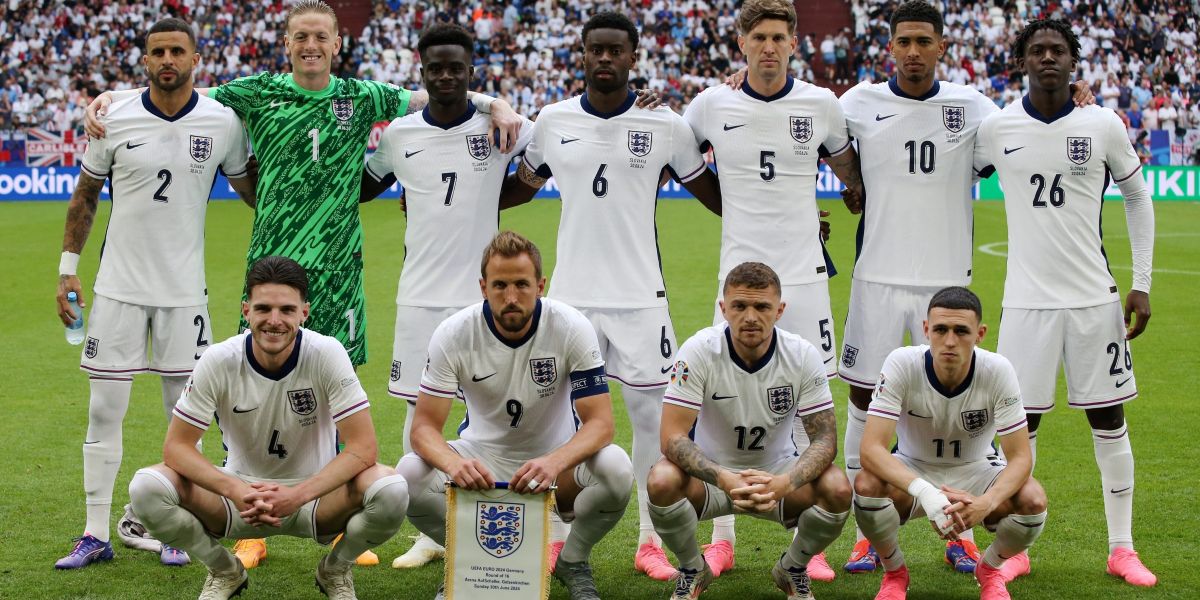
England’s new digital playbook
The English Football Association has spent the past several years building a backroom team that looks more like a tech lab than a traditional sports office. Beside coaches and physios now stand data scientists, performance specialists, and analysts who rely on artificial intelligence tools to sift through mountains of information.
For fans outside the sports world, this means football is no longer guided only by instinct or experience. Modern teams use AI to recognise recurring patterns, predict likely decisions by opponents, and present this information in the form of simple visuals that players can interpret quickly.
Penalties through an algorithm’s eyes
According to reporting from British media covering the Football Association, new AI software has dramatically reduced the time needed to analyse penalty takers.
Rhys Long, the FA’s head of performance analysis, told reporters that artificial intelligence makes it easier to spot behavioural tendencies among opposing players. He explained that a process that once required nearly a week can now be completed in a matter of hours, giving England’s staff more time to translate findings into practical goalkeeper training.
Former England defender Conor Coady has previously said that automated insights ease the emotional pressure during high stakes matches. Instead of guessing where to dive, goalkeepers receive evidence based suggestions that improve decision making under stress.
Read also: Kasper Schmeichel finds completely new path after football retirement
Reading the match while it happens
England has also adopted real time tracking systems capable of recording tens of thousands of movements on the pitch each second. These tools highlight tactical patterns as they emerge, allowing analysts to flag weaknesses or opportunities before a coach would normally notice them.
Allistair McRobert, a professor of performance science at Liverpool John Moores University, has collaborated with the national team. He described training sessions where players were first shown raw data and then walked through those same scenarios on a tabletop model of the pitch. According to McRobert, the combination helped athletes understand not only their own responsibilities but also the strengths of their teammates.
Who gets left behind
Not everyone in the football community believes the AI boom is entirely positive. While England has access to cutting edge software, extensive datasets, and specialised personnel, smaller federations often do not.
Tom Goodall, an analyst working with Iceland’s national team, has warned that high technology may deepen global inequalities in football. He noted that England can invest nearly unlimited resources into data and analytics, whereas many smaller nations struggle to afford even basic tools.
Read also: Andy Murray reveals one major regret about Nadal and Djokovic
At the same time, Long has argued that technology is not a magic shortcut. He has said that football organisations should carefully evaluate whether any new system genuinely improves results rather than adopting AI simply because it is fashionable.
A sport transformed by information
As the World Cup approaches, England’s experiment highlights a wider shift in global sport. Teams are no longer competing only on talent, fitness, or tactics, but on who can interpret information most effectively. The question facing football now is not whether AI will influence the game, but how quickly it will redefine what it means to prepare, compete, and win.
Read also: Manchester United told to ‘nick’ two Man City stars if relegation hits