For years, Jeff Kent’s Hall of Fame case lived in a strange limbo. He produced numbers rarely achieved at his position, yet voters never fully embraced him. This week, that stalemate ended when the Contemporary Baseball Era Committee selected him for induction into Cooperstown, a decision that also triggered renewed debate about how baseball rewrites its own history.
Early verdict
The Hall of Fame announced that Kent received 14 out of 16 votes from the 16 member committee, comfortably passing the 75 percent threshold required for entry. According to the Hall’s voting summary, Carlos Delgado earned nine votes, while Dale Murphy and Don Mattingly collected six each. Four well known names Barry Bonds, Roger Clemens, Gary Sheffield and Fernando Valenzuela received fewer than five, which under the Hall’s updated rules temporarily removes them from consideration until at least 2031.
To readers outside the baseball world, these committees serve as a second chance for players who fell short in the main voting conducted by baseball writers. They are designed to revisit careers shaped by different eras, evolving statistics and shifting attitudes about how greatness is defined.
Kent’s rise from prospect to powerhouse
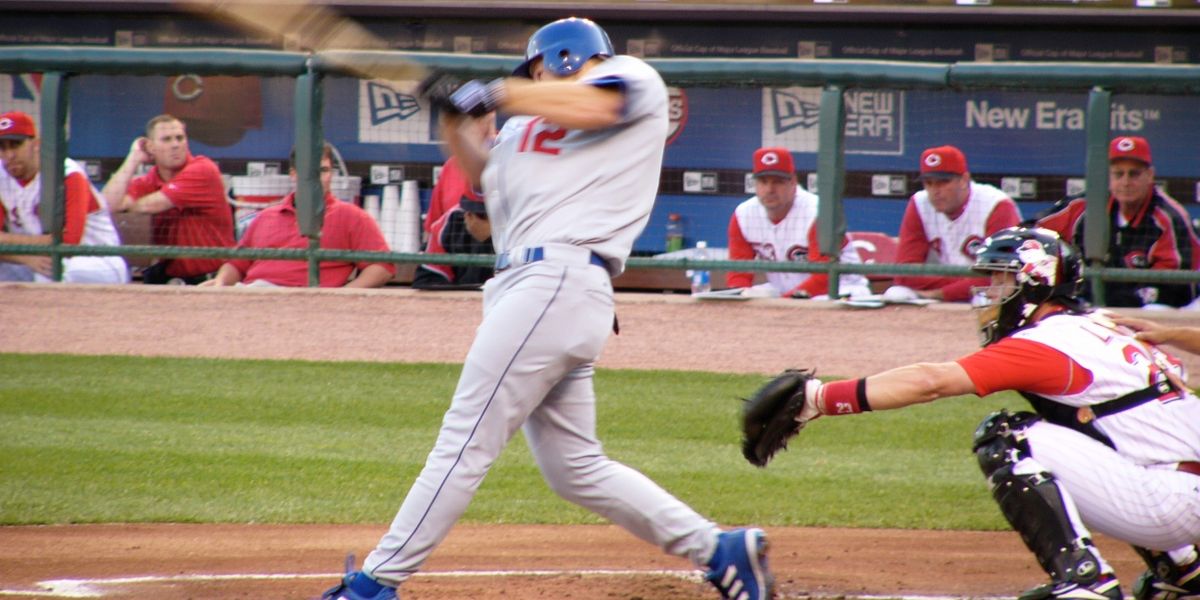
Kent spent 17 seasons in Major League Baseball from 1992 to 2008, playing for six teams. His early years were promising but unspectacular. Toronto traded him during its 1992 championship push, sending him to the Mets, where he gradually established himself as an everyday contributor.
Read also: Trump team pressed on travel restrictions amid rising World Cup concerns
His career transformed after a move to the San Francisco Giants, where he became one of the most dangerous hitters in the league. According to MLB historical data, Kent’s 351 home runs as a second baseman remain the most ever recorded at the position. He won the National League’s Most Valuable Player award in 2000, earned four Silver Slugger awards and appeared in five All Star Games.
For readers less familiar with baseball statistics, Kent excelled in areas that define a modern power hitter: consistently strong batting averages, high slugging percentages and run production that placed him among elite middle of the order hitters. His partnership with Barry Bonds created one of the most intimidating offensive duos of the late 1990s and early 2000s.
A career defined by big moments and sharp edges
Kent reached his only World Series in 2002 when the Giants fell to the Anaheim Angels in a seven game thriller that remains one of the sport’s most dramatic championship battles. He later played for Houston and Los Angeles, remaining productive well into his late thirties, a rarity for infielders.
Yet his Hall of Fame case was complicated by more than numbers. Reporters who covered him often pointed to tense relationships with teammates and media, including a well known feud with Bonds during their years in San Francisco. When the Baseball Writers Association held voting authority, Kent never received more than 46 percent support.
Read also: Why Europe is backing away from Vinícius Júnior, and who’s ready to move for him
A new set of rules with long term consequences
The Contemporary Baseball Era Committee is the latest version of a process once known as the Veterans Committee. It reviews players whose contributions came after 1980, using a smaller panel made up of former players, executives, team owners, journalists and historians.
This year, however, the committee operated under a new rule. Any candidate receiving fewer than five votes must wait until 2031 to reappear on the ballot. Critics argue this procedural change allows the Hall to sidestep ongoing debates over players tied to performance enhancing drug allegations, particularly Bonds and Clemens. Supporters say it creates space to evaluate a wider range of candidates more fairly.
For casual readers, the significance is simple. The Hall of Fame is not only about statistics, it is also about public memory, ethics debates and how institutions decide which parts of their history they want to celebrate.
The broader conversation around recognition
The final writers ballot, which still determines most inductions, will be announced on January 20. Candidates like Carlos Beltrán and Andruw Jones are viewed as likely to approach or surpass the 75 percent threshold. Whoever is selected will join Kent at the July 26 ceremony in Cooperstown, a town that transforms every summer into a celebration of baseball’s past.
A committee shaped by experience and conflicting viewpoints
This year’s 16 person committee included Hall of Famers Ferguson Jenkins, Jim Kaat, Juan Marichal, Tony Perez, Ozzie Smith, Alan Trammell and Robin Yount, along with former general managers Doug Melvin, Kim Ng, Tony Reagins and Terry Ryan. Team owners Mark Attanasio and Arte Moreno also participated, joined by journalists Tyler Kepner and Jayson Stark and historian Steve Hirdt. Their diverse backgrounds create a panel designed to blend statistical evaluation with lived experience, something writers alone may not always capture.
Read also: England is betting big on AI, and what the data reveals may shock the football world