Manchester United’s next managerial decision will not just determine who occupies the dugout next season it will reveal whether the club has learned anything from a decade of churn.
With another caretaker in place and another rebuild promised, the board faces a familiar dilemma: opt for comfort and control, or back a figure strong enough to impose clarity on a drifting institution.
A pause, not a solution
Michael Carrick’s appointment as caretaker following Ruben Amorim’s sudden departure is designed to stabilise the present rather than define the future. Internally, United accept that the timing of Amorim’s exit has left them with few elite options immediately available.
Reporting from GOAL has highlighted that reality, noting that the strongest pool of candidates is expected to emerge in the summer, when several Premier League contracts expire including Andoni Iraola at Bournemouth, Oliver Glasner at Crystal Palace and Marco Silva at Fulham.
Read also: Abu Dhabi United Group financed them for years
For now, Carrick buys time. What United do with it will matter far more.
Tuchel never went away
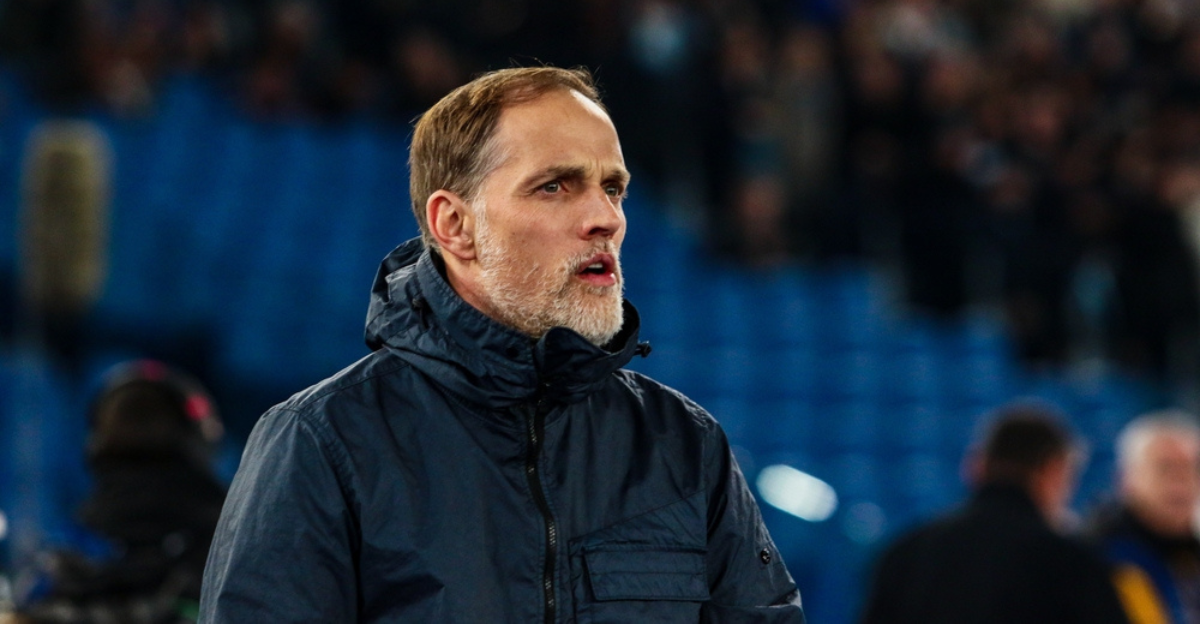
Thomas Tuchel’s name continues to surface at Old Trafford because it never truly left. United held discussions with the German coach before extending Erik ten Hag’s contract in 2024 a choice that has since come to define their latest miscalculation.
At the time, explanations for Tuchel’s reluctance varied. Some pointed to concerns over operating within a sporting structure that limited managerial control. Others cited exhaustion after an intense spell at Bayern Munich.
That context makes his subsequent move into international management easier to understand. The England role offered a different rhythm, fewer day-to-day demands, and a delayed start until January conditions that suited a coach looking to reset without stepping away entirely.
Read also: Dana White on ownership of new Las Vegas NBA Team: “YES”
A proven short-term catalyst
What separates Tuchel from most available candidates is not longevity but immediacy. Few coaches in modern football have demonstrated his ability to transform teams quickly, often in turbulent circumstances.
He followed Jürgen Klopp at Borussia Dortmund without hesitation, won domestic honours across Germany and France, and delivered Chelsea’s Champions League triumph within months of replacing Frank Lampard. Those successes were not built on long-term projects, but on rapid clarity of purpose.
With England, Tuchel has again shown that trait, overseeing a flawless World Cup qualifying campaign in which every competitive match has been won without conceding a goal.
For a club craving direction more than philosophy, that record carries weight.
Read also: Aymeric Laporte exposes ugly side of Pep Guardiola relationship
Authority comes with friction
Tuchel’s intensity has always been double-edged. He has never hidden his restlessness, joking at his England unveiling, “I’m working on my long-term game,” an acknowledgment of his tendency to move on after two or three seasons.
Yet that same force of personality is precisely what many believe United now lack. Former England striker Alan Shearer, speaking to Betfair, argued that only a manager with genuine authority can halt the club’s cycle of resets.
“You stop the cycle by getting a really strong, big character in and letting him do the job,” Shearer said.
For Sir Jim Ratcliffe, that would require a shift in approach after months of internal friction and public uncertainty.
Read also: Manchester City face new panel that could reopen the 115-charge verdict
The World Cup complication
Any move for Tuchel would come with unavoidable controversy. Taking charge of a club before a major tournament has produced mixed outcomes in the past from Louis van Gaal’s successful 2014 World Cup with the Netherlands to Julen Lopetegui’s disastrous exit from Spain on the eve of the 2018 tournament.
England have declined to comment on Tuchel’s future, though the coach himself has been transparent about not planning beyond the World Cup.
The risk is obvious: distraction, media scrutiny, and blame should England fall short. But for United, avoiding risk has hardly delivered stability.
A calculated gamble
Tuchel would not be a safe appointment, nor a comfortable one. He would challenge structures, expectations, and authority just as he has everywhere else.
Read also: UK Tax-service (HMRC) is coming after Manchester City now
But United’s recent history suggests that incremental fixes and compliant choices have only deepened the problem. If the club genuinely wants to reset, it may need a manager capable of forcing that reset through strength rather than consensus.
In that sense, the question is not whether Tuchel carries risk it is whether United can afford to keep choosing options that do not.
Sources: GOAL, Betfair