As preparations continue for the 2026 World Cup, political developments in the United States have introduced uncertainty around how the tournament will be experienced by fans from around the world.
The competition is due to be co-hosted by the United States, Canada and Mexico, with the US scheduled to stage 78 matches, including the final at MetLife Stadium in New Jersey. While organisers maintain that planning remains on schedule, recent changes in US foreign policy have prompted debate about whether all supporters will be able to attend matches without restriction.
US hosting role under scrutiny
According to reporting by SPORTbible, the administration of President Donald Trump has imposed travel restrictions on citizens from several countries that have already secured qualification for the World Cup. Those measures have fuelled calls from critics who argue that FIFA should reassess the US’s role as a host nation.
Ivory Coast is among the affected countries. Head coach Emerse Fae addressed the issue publicly, saying, “it would be a real shame not to let our supporters come and experience this celebration.” His remarks highlight concerns that travel barriers could undermine the tournament’s global and inclusive character.
Read also: Javier Tebas breaks silence on what should happen to Man City next
FIFA unlikely to intervene
Despite the criticism, there is little indication that FIFA is considering removing the United States as a co-host. The scale of investment, long-term planning, and infrastructure already in place make a late-stage change highly improbable.
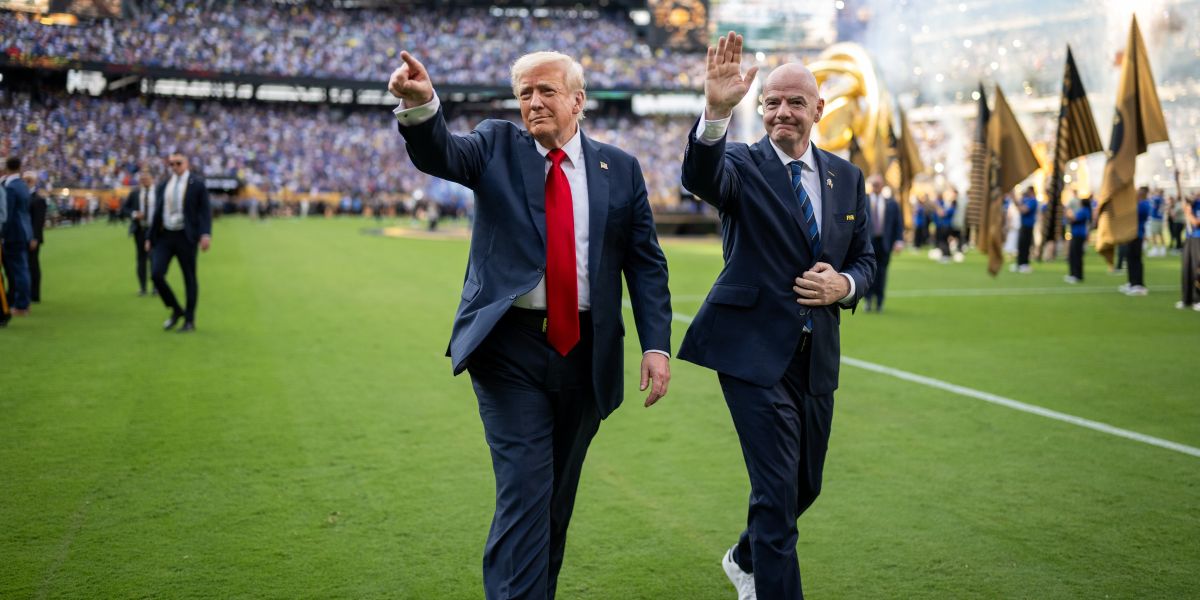
SPORTbible also noted President Trump’s close relationship with FIFA president Gianni Infantino, a factor that further reduces the likelihood of intervention. To date, FIFA has made no public statement suggesting the hosting arrangement is under review.
A rare historical precedent
Although unusual, FIFA has previously been forced to change World Cup hosts under exceptional circumstances.
In 1974, Colombia was awarded the right to host the 1986 World Cup. However, growing financial strain and extensive infrastructure requirements eventually proved unmanageable. Then-president Belisario Betancur criticised FIFA’s demands as “extravagant,” later stating that “the golden rule that the World Cup should serve Colombia and not Colombia the World Cup multinational was not complied with.”
Read also: Messi admitted he targeted one World Cup rival on purpose
Colombia officially withdrew from hosting duties in 1982, becoming the only selected host nation never to stage the tournament.
Mexico steps in
Following Colombia’s withdrawal, FIFA opened the bidding process to find a replacement host. Several countries were considered, including Brazil, the United States, Canada and Mexico, according to SPORTbible.
Mexico ultimately won a unanimous vote, making history as the first country to host the men’s World Cup twice after previously staging the competition in 1970.
The 1986 tournament went on to become one of the most iconic in World Cup history, largely due to Diego Maradona’s performances as Argentina lifted the trophy at the Estadio Azteca.
Read also: Cristiano Ronaldo crisis forces Portugal chief into emergency action
Uncertainty remains
While there is no immediate threat to the US’s hosting status, the debate surrounding travel restrictions underscores how political decisions can influence even the world’s biggest sporting events. For now, the focus remains on whether FIFA can balance global participation with the realities of international diplomacy.
Sources: SPORTbible