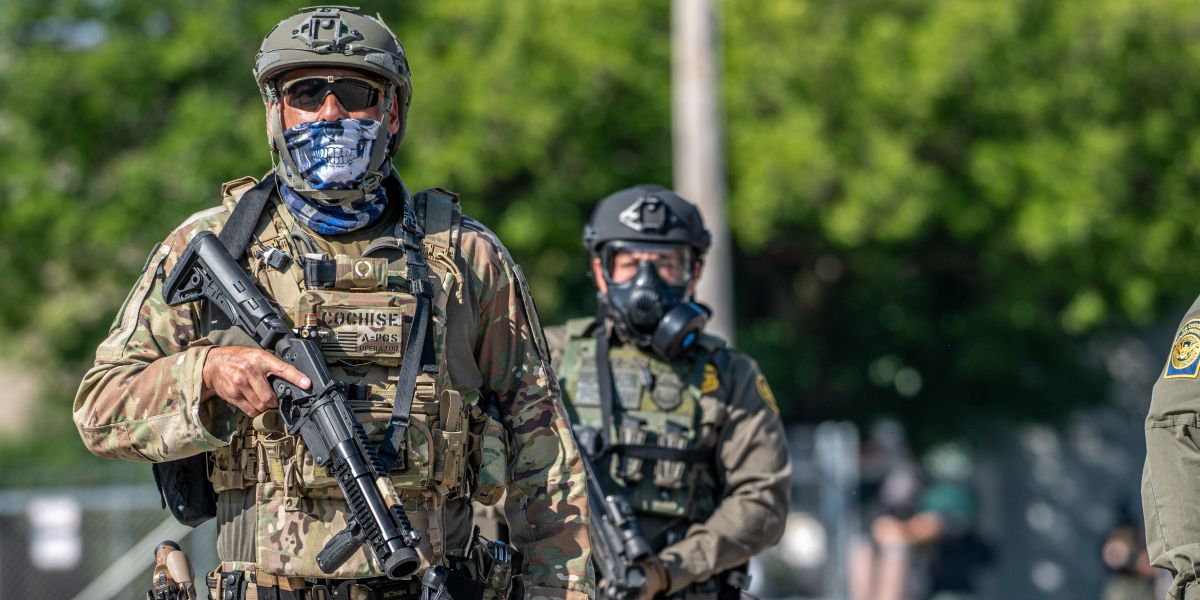
Why U.S. agents are involved
Preparations for the Milan Cortina Winter Olympics have been unsettled by reports that U.S. Immigration and Customs Enforcement will assist with security during the Games. According to the Associated Press, the United States has confirmed that the personnel involved come from Homeland Security Investigations (HSI), a branch within ICE that focuses on serious cross border crime rather than immigration enforcement. The other branch is called Enforcement and Removal Operations (ERO)
HSI agents are regularly deployed abroad to support major international events, including previous Olympic Games, where they help assess threats linked to terrorism, trafficking and organized criminal networks.
ERO agents’ primary objective is to oversee the detention and removal of undocumented individuals. This means that their main mission is to uphold the U.S. immigration law by identifying, detaining, and removing people who doesn’t follow the law.
Confusion in Italy emerged after early media reports failed to clearly distinguish between HSI and ERO deportation focused arm, Enforcement and Removal Operations, which has been central to President Donald Trump’s domestic immigration crackdown.
Read also: Gyokeres says bloody socks is normal procedure
What separates HSI from ICE enforcement
Understanding the distinction between the two branches is key to the controversy. According to ABC15 Arizona and reporting by journalist Lillian Donahue, Homeland Security Investigations is the primary investigative arm of ICE and handles complex criminal cases rather than routine immigration arrests.
HSI has authority to investigate offenses such as human smuggling, international money laundering, cybercrime, weapons trafficking and worksite related crimes. Its agents often work with foreign law enforcement partners and are stationed in embassies and consulates around the world.
By contrast, Enforcement and Removal Operations (ERO) is responsible for immigration related arrests, detentions, deportations and supervision of non citizens inside the United States. That branch is the face of ICE most associated with immigration raids and removals.
Italian officials have emphasized that only HSI personnel are involved in Olympic security planning and that ERO officers are not part of the deployment. HSI is usually present during big events for security reasons, last time was doing the Club World Cup
Read also: Botev Plovdiv president shot in the head after Bulgaria’s Nations League tie
Limits placed on the deployment
Italian authorities have sought to calm tensions by outlining strict boundaries on the U.S. role. According to the Italian Interior Ministry, as cited by the Associated Press, HSI officers will be based at the U.S. Consulate in Milan and will work in coordination with Italian authorities and other U.S. agencies.
The ministry said the agents will not patrol streets, venues or Olympic sites and will not take part in immigration controls. It added that all security operations on Italian territory remain under the exclusive responsibility of Italian authorities.
The U.S. Department of Homeland Security echoed that position. According to the Associated Press, the department said ICE does not conduct immigration enforcement operations in foreign countries.
Political anger in Milan
Despite those assurances, the announcement provoked a sharp response from local leaders. Milan Mayor Giuseppe Sala publicly objected to the presence of ICE linked personnel in the city, which will host the opening ceremony and most ice based events.
Read also: John Stones has been convicted: “Nothing to say”
“This is a militia that kills, a militia that enters into the homes of people, signing their own permission slips. It is clear they are not welcome in Milan, without a doubt,” Sala told RTL Radio 102, according to the Associated Press.
Public opposition was amplified by online petitions and criticism on social media, following recent Italian television footage showing ICE agents threatening journalists during reporting in Minneapolis, images that resonated strongly with Italian audiences.
How Washington frames the mission
U.S. officials have described the deployment as technical and low profile. According to the Associated Press, one U.S. official said the HSI agents are expected to work largely behind the scenes and that spectators are unlikely to notice their presence during the Games.
American officials have emphasized that the agents will operate under Italian authority and that their role is limited to intelligence sharing and threat assessment, not law enforcement on Italian soil.
Read also: Enzo Maresca breaks silence after Man City guilty verdict with cryptic message
Olympic bodies draw clear lines
International sports officials have also weighed in to clarify responsibilities. The International Olympic Committee said security at the Games is the responsibility of the host country, working in coordination with participating delegations, according to the Associated Press.
The U.S. Olympic and Paralympic Committee said it cooperates on security planning with the U.S. State Department, the IOC and Italian authorities, but not with U.S. domestic law enforcement agencies.
Italian Interior Minister Matteo Piantedosi has downplayed the controversy, saying he sees no issue with the narrowly defined and clearly limited role described by both governments.
Why the issue cuts deeper in Italy
The backlash reflects broader sensitivities in Italy around sovereignty, policing and international perception. While officials describe the arrangement as routine, ICE’s association with controversial enforcement actions in the United States has made the issue politically charged.
Read also: Guardiola stands by City after guilty verdict: ‘we will get through this together’
As Italy prepares to host one of the world’s most visible sporting events, authorities are now focused on reassuring the public that Olympic security planning does not compromise national control or domestic law enforcement standards.
Sources: Associated Press, ABC15 Arizona