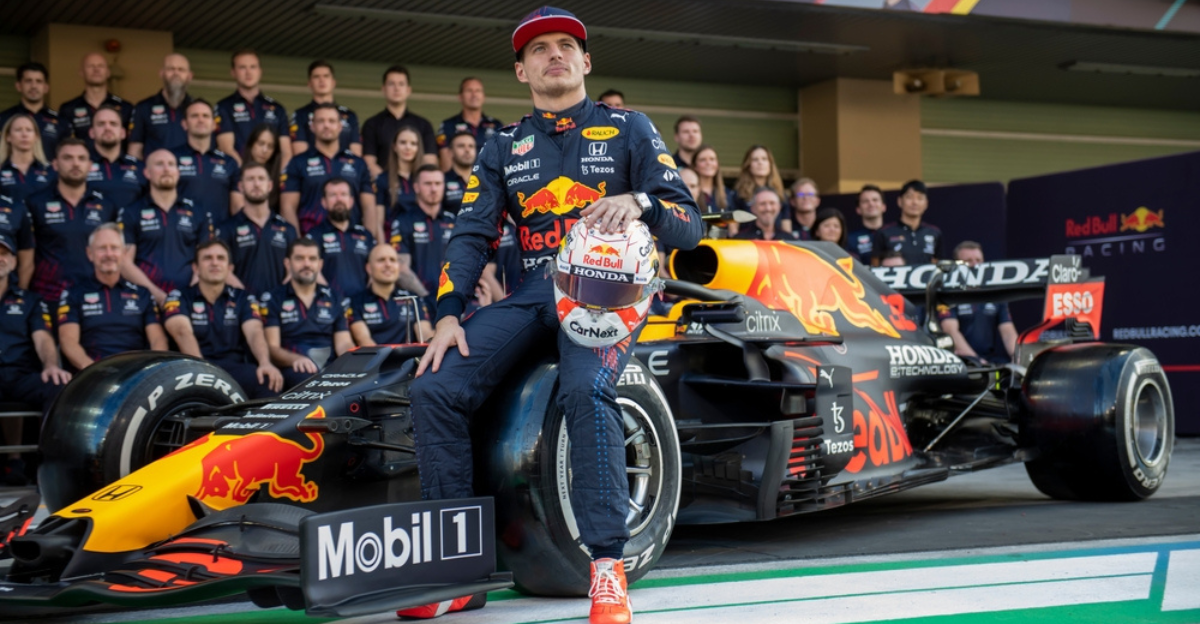
Formula 1’s sweeping 2026 regulation overhaul made its on-track debut this week in Bahrain, offering the first clues about how teams are interpreting one of the sport’s most significant technical resets in more than a decade.
While lap times drew early attention, much of the intrigue centered on how drivers are adapting to revised power units that rely far more heavily on electrical energy. Among those experimenting was Red Bull’s Max Verstappen, who appeared to be exploring an aggressive downshifting method aimed at maximizing battery recovery.
Early pace under new regulations
The opening day of official testing at the Bahrain International Circuit produced tightly grouped times. Lando Norris, the reigning world champion, recorded a 1:34.669 to lead the session. Verstappen followed with a 1:34.798, and Ferrari’s Charles Leclerc posted a 1:35.190.
Although testing times are rarely definitive indicators of competitive order, the session offered an initial snapshot of performance under the revised technical framework.
Read also: Harry Kane breaks silence on Man City verdict
What’s changed in 2026
The 2026 rules package reshapes both chassis and engine philosophy. Cars have been made more compact and lighter in an effort to improve responsiveness and encourage closer racing. Aerodynamic concepts have also evolved to reduce drag and promote overtaking.
The most consequential shift, however, lies in the power unit. Electrical energy now plays a substantially larger role in overall performance. That means drivers must be precise in how they harvest and deploy battery power throughout a lap. Braking phases, in particular, have become critical opportunities to recharge the system.
The situation recalls the introduction of the hybrid era in 2014, when teams that best understood energy management gained an early competitive edge.
Verstappen’s approach
According to motorsport publication The Race, Verstappen experimented on Wednesday with what it described as “an unorthodox downshifting technique.” The method involves selecting a lower gear than typically used in certain corners, briefly increasing engine revolutions to enhance energy harvesting.
Read also: Phil Taylor comes out of retirement for stunning darts return
In slower sections of the circuit where drivers would normally remain in second gear, Verstappen was observed shifting down to first. The outlet reported that this produced a “big spike in revs,” potentially aiding battery recharge under the new system.
Trackside observers noted that he applied the approach consistently across multiple runs and “already seems relatively at ease in terms of mastering” it a sign that Red Bull may be confident in its early interpretation of the regulations.
Red Bull sets the tone?
Mercedes team principal Toto Wolff suggested that Red Bull’s straight-line performance has been particularly strong in the opening sessions.
“They are able to deploy far more energy on the straights than everybody else. You are speaking a second, over consecutive laps,” Wolff said.
Read also: ‘If you lie to me, I will leave’: Guardiola’s City warning takes on new weight
“On a single lap we have seen it before, but now we have seen it on 10 consecutive laps with the same kind of straight-line deployment.”
He added: “I would say that as per today, on the first official day of testing, which is always with the caveat of that, they have set the benchmark.”
As teams continue to experiment with setup and software calibration, the competitive picture is likely to evolve. But the first day in Bahrain suggested that mastering energy recovery not just outright speed could define Formula 1’s new era.
Sources: The Race, comments from Toto Wolff during Bahrain testing.
Read also: Harry Kane’s Bayern future suddenly comes with a Tottenham escape route
Read also: ‘I’m not confident’: Red Bull chief delivers troubling verdict on Verstappen’s car