Japan’s top division has scrapped draws for a transitional competition, sending every level match straight to penalties in an effort to increase excitement and sharpen players’ nerve from the spot.
According to Danish broadcaster DR, the J-League is using a short interim tournament to test the format while it shifts from a calendar-year schedule to a summer-to-summer season.
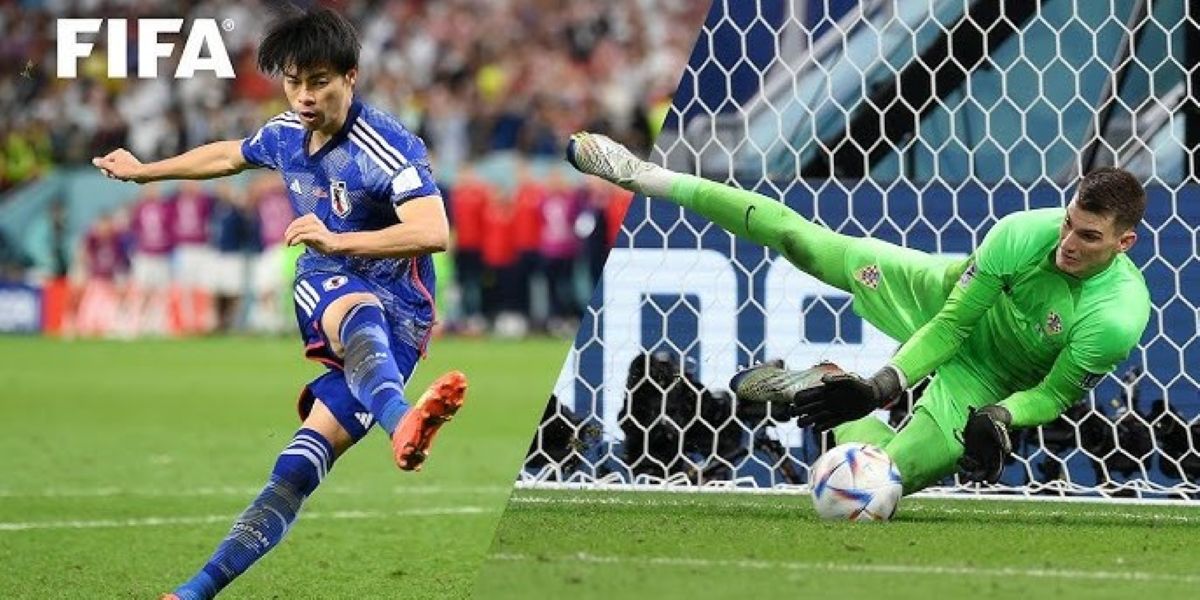
The timing is notable. Japan have suffered several painful shootout exits in major tournaments over the past 15 years. At the 2022 World Cup in Qatar, they lost 3,1 on penalties to Croatia in the round of 16. They were also beaten in shootouts at the 2015 Asian Cup against the United Arab Emirates and at the 2010 World Cup against Paraguay. One exception came in the 2011 Asian Cup semi-final, when Japan defeated South Korea 3,0 from the spot.
Why the league is changing format now
The no-draw rule is not being introduced as a permanent overhaul, at least not yet. The league is in the middle of a structural shift, moving away from a season that runs within a single calendar year to one that begins in the summer and ends the following year.
Read also: Barca eye blockbuster as laporta hints at major summer splash
That adjustment has created a gap between the previous campaign, which concluded in December, and the new season set to kick off in August. League organisers are filling that window with a temporary competition, and using it to trial the revised points model.
Under the system, a win in regular time remains worth three points, and a loss brings none. If teams are level after 90 minutes, each side receives one point. A penalty shootout then awards an extra point to the winner, meaning the victorious team takes home two in total.
Saburo Kawabuchi, chairman of the J-League, has stressed the importance of preparation when it comes to penalties.
“You don’t win if you don’t train regularly. At the last World Cup, it went wrong from the start. I felt like telling them to be a bit more inventive,” he said, according to DR.
Read also: Hamilton powers past rivals in dramatic test moment
League officials believe the added jeopardy could keep supporters engaged through the final whistle, particularly in matches that might otherwise drift toward a draw.
A wider debate about football’s appetite for change
Japan’s experiment echoes a broader conversation about whether football should rethink the value of draws.
In 2024, former Manchester United defender Gary Neville argued that matches should always produce a winner.
“Make it exciting for the fans. If a child is watching a game for the first time, or maybe it’s their only game of the season, and it ends 0,0 or 1,1, at least there will be a winner at the end,” Neville said at the time.
Read also: Fabregas speaks out after touchline incident as Allegri sent off in Milan draw
Former Barcelona defender Gerard Pique has taken an even firmer stance, suggesting that goalless draws should yield no points at all.
“Something has to change. A proposal one could consider would be that if the match ends 0,0, the teams get zero points,” Pique has said.
“Football is afraid of change. It has a long history, it is very traditional, but change will happen, it has to happen. A 90 minute match that can end 0,0 is hard to understand for the new generation.”
While such ideas remain controversial in Europe’s major leagues, Japan is now putting one version of the concept into practice.
Read also: Coutinho speaks out after shock Vasco departure
Could the no-draw experiment outlast the transition?
For now, the rule applies only to the interim competition. Still, some within the league see potential beyond this stopgap period.
Sanfrecce Hiroshima defender Kim Joo-sung has already experienced the format firsthand and believes it adds an extra edge.
“It’s good to play without draws, and the fans find it exciting. I think it will be a positive and interesting year,” he said, according to DR.
Whether the experiment becomes a permanent feature may depend on fan reaction, competitive balance and, perhaps, how Japan fare the next time a World Cup match goes to penalties.
Read also: The highest-paid English footballers in world football
Sources: DR