In a feature published by Wirtualna Polska, journalist Krzysztof Zaluski looks back at everyday sporting life in the Polish People’s Republic, PRL, the communist state that existed from 1947 to 1989. His account suggests that while facilities were modest and equipment hard to find, enthusiasm for physical activity was deeply embedded in daily routines.
There were no synthetic running tracks in most towns, and few people had encountered modern surfaces. School tracks were often layered with ash that clung to socks and scraped bare knees. Trainers and proper sports kits were difficult to obtain. Yet, according to Zaluski, fields, courtyards and schoolyards were active from morning until dusk.
Everyday Playgrounds
Children stayed outside for hours, drawn not by obligation but by the pull of shared games. Football dominated. Makeshift goals were assembled from schoolbags or jackets placed on the ground. If a shot led to disagreement, the players themselves settled it by vote.
Physical education classes often revealed unexpected talent. Students challenged one another to vault higher, tumble faster or land a clean backflip. Many had practised these moves long before entering a gym, improvising on carpet beating frames and metal bars in housing estate courtyards.
Read also: Kylian Mbappe had just hit top form – now Real Madrid have a problem
Few young players owned proper football boots. On grass or cracked asphalt, ordinary sneakers were standard. When the soles split, they were stitched or patched rather than thrown away. Appearance mattered less than staying in the match.
Local sports clubs, Zaluski notes, were widespread and accessible. Training sessions, basic equipment and travel to competitions were typically funded by the club. For some teenagers, tournaments abroad offered a rare opportunity to travel beyond Poland’s tightly controlled borders.
Winter on Ice
When winter arrived, activity did not stop, it shifted. According to Wirtualna Polska’s account, residents could request assistance from the fire brigade to flood cleared schoolyards, turning them into temporary skating rinks at no cost.
Cobblers saw increased demand during these months. Special metal fittings were attached to ordinary shoes so that skates could be secured. Proper hockey skates or figure skates were available in shops, but their prices placed them beyond the reach of many families.
Read also: Premier League boss breaks silence with damning Manchester City statement
Indoor sports facilities existed in larger cities, though they were sometimes adapted from former industrial buildings with limited ventilation and basic changing rooms. In smaller towns and rural areas, asphalt pitches were common. Falls left visible marks, and showers, if available at all, were rudimentary.
Sport as Spectacle and State Message
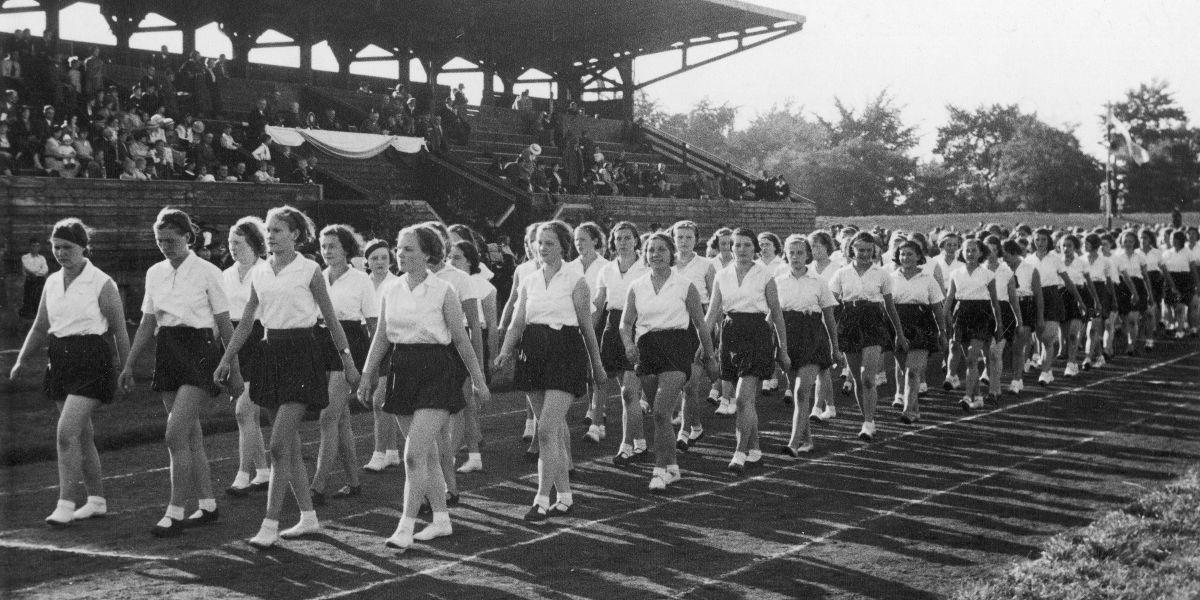
Mass youth competitions known as Spartakiads were staged with ceremony reminiscent of the Olympic Games. As described by Krzysztof Zaluski, these events were widely covered by state media and served as early milestones for athletes who would later compete internationally.
After Poland secured third place at the 1974 World Cup in West Germany, interest in football surged. Training grounds filled with aspiring players, and informal neighbourhood tournaments multiplied. The popularity of the television series Do Przerwy 0:1 added to the excitement.
The communist authorities treated athletic success as a showcase for the system. International medals were presented as evidence that socialism could outperform capitalist rivals. This narrative persisted even when economic shortages shaped everyday life.
Read also: Kasper Schmeichel finds completely new path after football retirement
Privilege, Pressure and Personal Gain
Poland produced respected coaches such as Feliks Stamm, Jan Mulak, Kazimierz Górski and Hubert Wagner, along with celebrated competitors including Irena Szewińska, Ryszard Szurkowski, Tomasz Wójtowicz, Waldemar Baszanowski and Grzegorz Lato.
Top athletes enjoyed certain privileges. Apartments were allocated, jobs were arranged and salaries were paid, even if the work itself was largely symbolic. Still, their official earnings were modest compared with Western professionals. According to the Wirtualna Polska feature, some athletes used foreign trips to sell goods privately in order to supplement their income.
One episode illustrates the tension between prestige and hardship. In 1968, the Polish team returned from the Winter Olympics in Grenoble without medals and without the sheepskin coats issued by the Polish Olympic Committee. The coats had reportedly been sold abroad for between 100 and 200 dollars each, a decision that sparked controversy at home.
Looking back, Krzysztof Zaluski presents sport in the PRL as both social glue and political instrument. Facilities were basic, opportunities uneven and ideology ever present. Yet for many children of that era, the memory that endures is simpler, the thud of a ball against a wall, the scrape of skates on fresh ice and the sense that, for a few hours each day, the courtyard belonged to them.
Read also: Andy Murray reveals one major regret about Nadal and Djokovic
Sources: Wirtualna Polska, Krzysztof Zaluski
Read also: Manchester United told to ‘nick’ two Man City stars if relegation hits