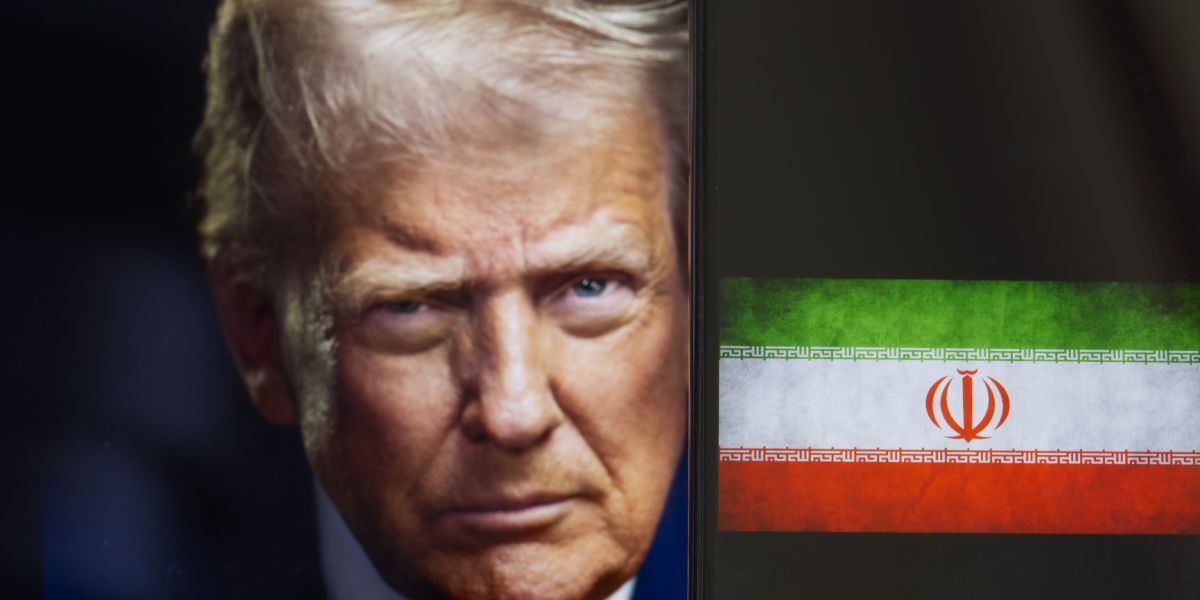
Global political tensions are spilling into international sport after comments from US President Donald Trump about Iran’s participation in the upcoming FIFA World Cup.
The tournament, scheduled for 2026, will be jointly hosted by the United States, Canada, and Mexico and is expected to be the largest World Cup in history, with 48 national teams competing.
But the build up to the event has been overshadowed by a deepening geopolitical crisis involving Iran, Israel, and the United States.
According to reporting by Britt Jones for LADbible, Trump recently warned that Iran’s national football team might face safety concerns if it attends the tournament.
Read also: Chelsea fined £10.75m and handed suspended transfer ban over secret payments linked to transfers
Trump’s comments spark controversy
Posting on the social media platform Truth Social, Trump wrote that the Iranian team would technically be welcome but questioned whether it should participate.
“The Iran National Soccer Team is welcome to The World Cup, but I really don’t believe it is appropriate that they be there, for their own life and safety.”
The comments came shortly after a major escalation in the Middle East conflict.
According to LADbible, the United States and Israel launched missile strikes on Iran on February 28. The attack reportedly killed Iran’s Supreme Leader Ayatollah Ali Khamenei along with several senior members of the country’s leadership.
Read also: Donald Trump spotted golfing amid Iran war as taxpayer cost of his trips revealed
The situation has dominated global political headlines and raised concerns about the wider regional impact, including economic and energy market disruption.
Iran’s national team responds
Iran’s national football team responded publicly in a statement posted on Instagram, defending its place in the tournament and stressing that decisions about participation fall under FIFA’s authority.
“The World Cup is a historic and international event and its governing body is FIFA, not any individual, country,” the team said in the statement.
“Iran’s national team, with strength and a series of decisive victories achieved by the brave sons of Iran, was among the first teams to qualify for this major tournament.”
Read also: Doping debate intensifies as Enhanced Games prepare for Las Vegas debut
The statement also appeared to question whether a host nation should comment on another country’s eligibility.
“Certainly, no one can exclude Iran’s national team from the World Cup, the only country that could be excluded is one that merely carries the title of ‘host’ yet lacks the ability to provide security for the teams participating in this global event.”
Iran qualified for the 2026 World Cup through Asia’s qualification system and has appeared in multiple recent tournaments, becoming one of the region’s most consistent teams on the international stage.
Conflict begins affecting sport and global markets
The political dispute has already begun affecting conversations around international sport.
Read also: World Cup 2026: These stars wont participate
According to LADbible, Iran’s sports minister Ahmad Donyamali suggested the country could refuse to take part in the tournament following the death of the country’s leader.
“Considering that this corrupt regime has assassinated our leader, under no circumstances can we participate in the World Cup,” he said.
Despite the tensions, Trump has continued promoting the upcoming tournament, which the United States will help host.
“The United States of America looks very much forward to hosting the FIFA World Cup. Ticket sales are ‘through the roof!’” Trump wrote in a separate post online.
Read also: Toto Wolff says he thought Mercedes had “three cars” after Hamilton qualifying run
The conflict has also had consequences far beyond sport.
Global energy markets reacted quickly to the escalation, with Brent crude briefly climbing to around $119 per barrel. Shipping routes through the Strait of Hormuz, one of the world’s most important oil transit corridors, have reportedly been threatened by drones and naval mines, forcing several Gulf producers to scale back production.
Analysts say the situation highlights how geopolitical tensions can quickly spill into global sporting events, particularly when tournaments are hosted by countries directly involved in international conflicts.
Sources: LADbible