A long-running dispute between the United States and the World Anti-Doping Agency (WADA) will remain unresolved for now, delaying a politically sensitive decision that could affect senior officials’ presence at major international sporting events.
WADA said Tuesday it will wait until September to revisit a proposal that would allow the organization to bar government representatives from competitions if their countries voluntarily withhold financial contributions. According to the Associated Press, the delay pushes any immediate consequences beyond this summer’s men’s World Cup, which the U.S. will co-host with Canada and Mexico.
The timing is significant. Even if the rule is approved later this year, it would likely come into force well before the 2028 Los Angeles Olympics, leaving open the possibility of restrictions affecting future events on American soil.
A funding standoff with broader implications
At the center of the dispute is the United States’ decision to stop paying its WADA dues in 2023. The Associated Press reported that Washington has withheld roughly $7.3 million over 2024 and 2025, citing concerns over the agency’s handling of a doping case involving Chinese swimmers, among other issues.
Read also: Ballon d’Or 2026: Power Rankings Revealed
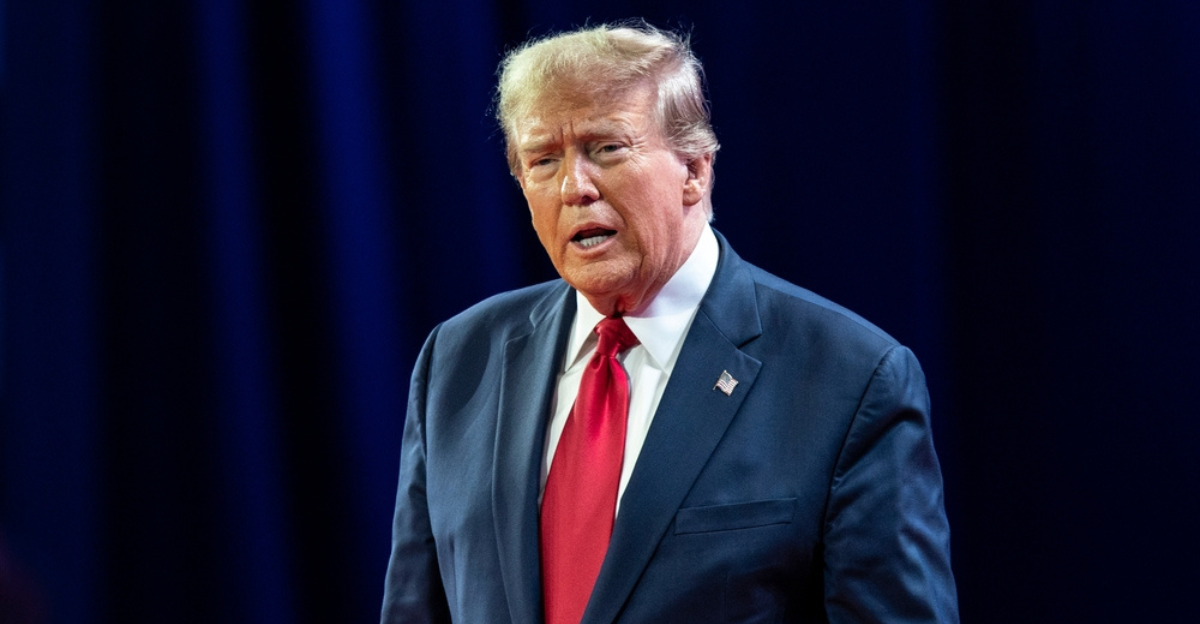
The disagreement has not fallen neatly along partisan lines. According to AP, the funding was withheld during both Donald Trump’s and Joe Biden’s presidencies, reflecting broader frustration in Washington over WADA’s governance and transparency.
If the proposed rule is eventually adopted and U.S. payments remain frozen, American officials including the president could theoretically be barred from attending certain global sporting events. However, AP noted there is skepticism about whether WADA would have the authority to enforce such a ban in practice.
Uncertainty over how rules would apply
WADA has offered mixed signals about how any new policy might be implemented. Spokesman James Fitzgerald previously told the Associated Press that the rule would “not (be) applied retroactively,” suggesting that upcoming events such as the World Cup and future Olympics in Los Angeles and Salt Lake City would not be affected.
But AP also reported that a draft version of the proposal obtained by its journalists did not clearly include that exemption. Fitzgerald did not respond to follow-up questions seeking clarification, leaving uncertainty about how the rule would ultimately be enforced.
Read also: Is Liverpool losing their edge under Slot?
What comes next
Following Tuesday’s meeting, WADA Director General Olivier Niggli emphasized the broader stakes of the dispute, warning that withheld contributions can weaken global anti-doping efforts.
“The withholding of contributions by governments for political or other voluntary reasons remains a serious topic of concern for all WADA’s stakeholders,” Niggli said. “Funding instability has a direct effect on the functioning and development of the World Anti-Doping Program. Ultimately, those who are most directly and most negatively impacted are athletes around the world.”
Before any rule can take effect, WADA’s executive committee would need to approve it, and the agency’s foundation board must then sign off. The board is next scheduled to meet in November, though the timeline could change if discussions accelerate.
For now, the delay leaves the issue unresolved prolonging a dispute that sits at the intersection of global sport, politics, and governance, with potential consequences still unclear ahead of two of the world’s biggest sporting events.
Read also: Iran players split as asylum drama ends with return home
Sources: Associated Press, WADA statements
Read also: Analysis: The truth about Michael Schumacher, inside his secret world