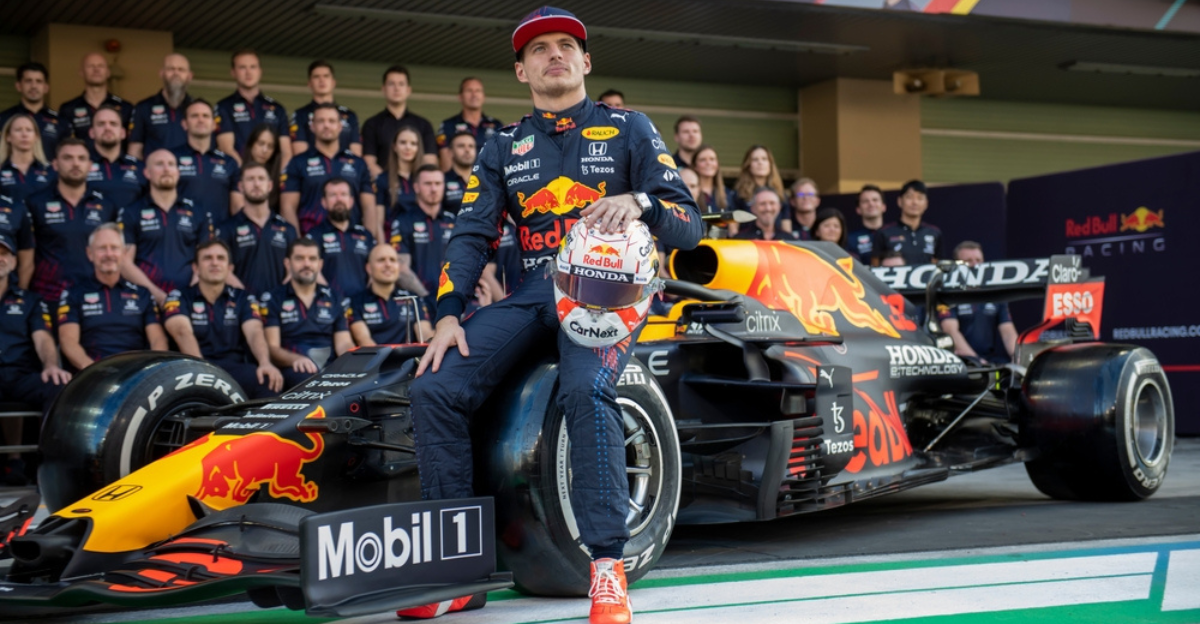
The idea itself is striking, but the real weight of the story sits in the uncertainty behind it. A paid sabbatical may sound like a smart compromise if Verstappen wants distance from Formula 1 without making an immediate move elsewhere. At the same time, it could just as easily give him the time and freedom to realize that he no longer wants to come back at all.
A £60m break could become Red Bull’s most expensive gamble
The Telegraph, as cited in Archer’s report, says Red Bull could allow Verstappen to take a sabbatical in 2027 while still receiving his reported £60 million salary. From Red Bull’s side, that would be a dramatic attempt to avoid a cleaner and more damaging split. If the team believes Verstappen is serious about stepping away, then keeping him contractually close may feel safer than watching him leave permanently or join another front running rival.
But that strategy only works if the break actually leads back to Red Bull. If it does not, then the team would effectively be paying for uncertainty rather than stability. A year away might preserve the relationship on paper, yet it could also weaken the practical link between driver and team, especially if Verstappen begins to feel more comfortable outside Formula 1 than within it.
The bigger danger is not 2027, but losing 2028 as well
That is what gives this story its sharper edge. Missing one season would already be significant, but it would still be survivable if Red Bull had confidence that Verstappen would return refreshed and fully committed. The deeper concern is that a pause could slowly become an exit, particularly if the reasons behind his frustration are not resolved during the time he is away.
Read also: Andy Murray reveals one major regret about Nadal and Djokovic
Archer’s report frames Verstappen’s dissatisfaction as tied to the 2026 rules, especially the increased role of battery power in the new engine formula. If that dislike is not temporary, then a sabbatical may do more than create breathing room. It may confirm for Verstappen that he prefers other forms of racing, or simply a different kind of career path, over continuing in a Formula 1 environment he no longer enjoys.
The release clause makes Red Bull’s position even more fragile
The report also notes that Verstappen could have a release window from August to October if he is third or lower in the drivers’ standings at the summer break. That matters because Red Bull’s early 2026 form has already made the scenario look more realistic than it once would have. In that context, weak results do not just damage momentum, they increase the chance of a genuine contract rupture.
Even if Red Bull manages to steer the situation toward a sabbatical rather than a direct departure, the underlying problem remains the same. The team would still need to convince Verstappen that its long term direction deserves his trust. A paid year out does not solve that on its own. It only delays the moment when Red Bull must prove it can still offer him the package he wants.
Racing elsewhere could make a return feel less necessary
Archer also points to the possibility of Verstappen pursuing other categories if he steps away from Formula 1. The report notes that Red Bull has already allowed him to enter the Nürburgring 24 Hours, and it suggests further opportunities, including endurance racing and GT competition, could become part of the picture during any break from the grid.
Read also: Manchester United told to ‘nick’ two Man City stars if relegation hits
That matters because a sabbatical becomes much harder to reverse if the driver is not simply resting, but actively enjoying something different. If Verstappen spends 2027 racing in events that feel more rewarding or more natural to him, then Red Bull may find that the break it hoped would preserve a future reunion actually helps him build a future away from Formula 1. In that case, the team would not just be managing a temporary pause. It would be watching its leverage fade in real time.
Why Red Bull would still have no guarantee of getting him back
Even in the most optimistic version of this scenario, Red Bull would still need 2027 to tell a convincing story. The team would need to show that it can compete strongly under the new regulations, that its long term outlook remains attractive, and that returning in 2028 would offer Verstappen something worth coming back for. Without that, the money becomes secondary.
That is why the headline question matters more than the salary itself. £60 million is a huge figure, but the more important issue is whether Red Bull would be paying that amount for a bridge back to Verstappen, or for the first stage of a permanent goodbye. If the team cannot restore belief, performance and a clear sense of purpose, then a paid sabbatical may end up looking less like a clever retention move and more like a very costly way of postponing the inevitable.
Sources: Kyle Archer, The Telegraph
Read also: Thierry Henry issues blunt warning over Liverpool’s £123m signing
Read also: Roy Keane goes nuclear on Man City after 114 guilty findings