For a reigning world champion, Argentina enter the road to 2026 in an unusually uncertain position.
The results remain strong on paper. The performances, however, tell a more complicated story.
Lionel Scaloni’s side are no longer overwhelming opponents with the same authority that defined their run in Qatar. Instead, they look like a team caught between eras still reliant on past strengths, but not yet fully rebuilt for what comes next.
The illusion of control
Argentina’s qualification campaign suggests dominance: top of the CONMEBOL table, consistent results, and Lionel Messi finishing as top scorer.
Read also: Italy's World Cup collapse pushes FIGC toward a defining reset
But that surface-level success masks a more uneven reality.
Losses to Uruguay and Paraguay, along with a frustrating draw against Colombia, exposed a side that can be disrupted when pressed with intensity. Even in victory, Argentina have often struggled to dictate tempo or sustain attacking pressure.
This is not the same team that seized control of matches in 2022 it is one that increasingly reacts rather than imposes.
A team in transition
Part of the issue is structural.
Read also: Max Verstappen’s frustration with Formula 1 may be about more than racing
The core that delivered World Cup success is aging, while the next generation is still finding its footing. As previously reported by GOAL, Argentina’s triumph in Qatar was built on a rare blend of experience, emerging talent, and collective belief.
That balance is now shifting.
Younger players like Nico Paz offer creativity and promise, but they are not yet ready to take on decisive roles. Meanwhile, established figures are no longer operating at their peak, leaving gaps in both energy and leadership.
The result is a side that feels slightly disjointed not declining outright, but no longer fully cohesive.
Read also: Why Iran’s World Cup standoff is also a test for Trump and Infantino
Messi: essential, but no longer inexhaustible
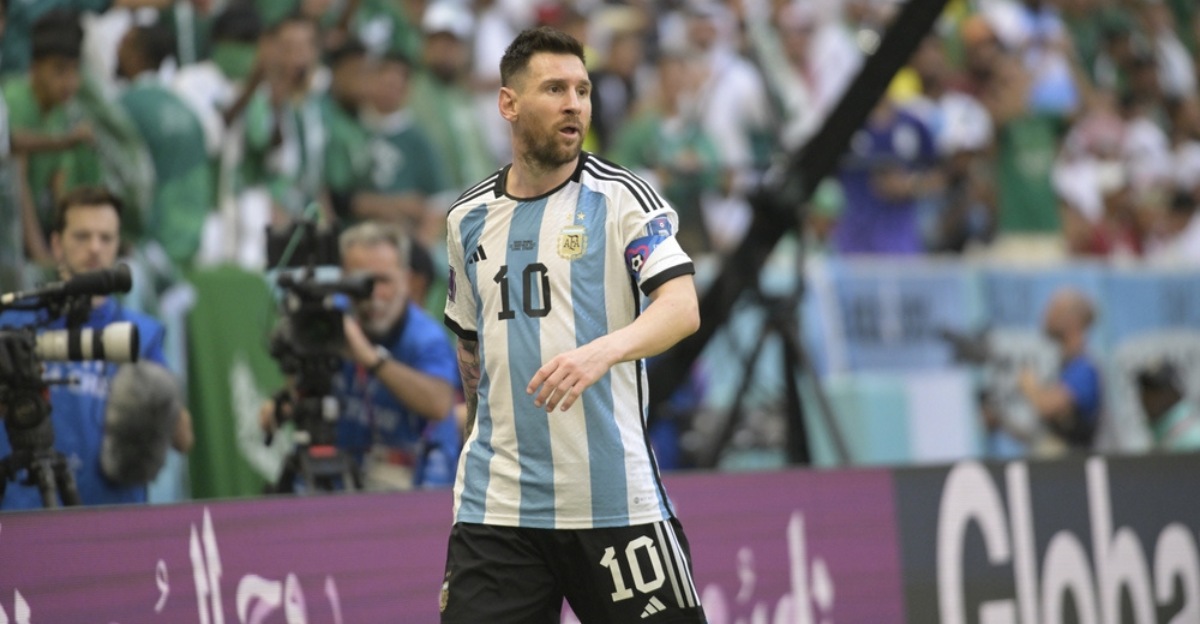
Everything still revolves around Messi, which remains both Argentina’s greatest advantage and its central dilemma.
At 37, he continues to produce moments that can change games instantly. Yet expecting him to replicate the physical and creative output of 2022 across a longer, more demanding tournament is unrealistic.
Scaloni has acknowledged the uncertainty, stating: “It’s up to him, how he feels in his mind and his physical condition.”
More concerning is what happens without him.
Read also: Danish head coach Brian Riemer: "We have nothing to loose", while actually loosing everything..
In matches Messi has missed, Argentina’s attacking structure has often lacked clarity and invention. There is no obvious successor capable of linking play, controlling tempo, and delivering decisive actions in the same way.
That dependency is now a strategic vulnerability.
Preparation without pressure
Argentina’s recent schedule has done little to address these concerns.
A high-profile Finalissima against Spain which could have provided a genuine benchmark was cancelled, forcing the team into a series of low-intensity friendlies. According to GOAL, scheduling complications left Argentina facing significantly weaker opposition.
The impact has been visible on the pitch.
After one underwhelming display, Emiliano Martinez admitted: “It was one of the worst friendlies we’ve played. We lacked intensity, game and speed.” Scaloni echoed that assessment, conceding: “The team didn’t play a good match.”
Without meaningful tests, Argentina risk entering the World Cup without a clear understanding of their true level.
Erosion at the back
Defensive stability once a cornerstone of Argentina’s success is also beginning to show cracks.
Nicolas Otamendi’s experience remains valuable, but his limitations are increasingly exposed against quicker, more dynamic attacks. Cristian Romero’s inconsistency at club level has carried into international duty, while injuries have disrupted continuity across the back line.
Even Martinez, so often decisive in crucial moments, has shown signs of vulnerability.
Individually, these issues are manageable. Collectively, they point to a defence that no longer inspires the same confidence.
A more competitive field
Argentina’s challenge is made harder by the evolution of their rivals.
Spain and France, in particular, combine tactical clarity with depth in every position. Unlike Argentina, they are not navigating a transitional phase they are accelerating into their peak.
That contrast matters.
Four years ago, Argentina built momentum at exactly the right time. Now, they are searching for it.
Time and answers running short
None of this rules Argentina out. Tournament football still rewards experience, resilience and moments of individual brilliance all qualities they possess.
But the margin for error is thinner than before.
Unless Scaloni can quickly restore balance, define roles, and reduce reliance on Messi, Argentina risk arriving at the World Cup as contenders in name rather than in form.
And if that happens, their title defence may not collapse dramatically it may simply fade away.
Sources: GOAL