Why the forecast has to be layered
According to the PLOS One study “The Betting Odds Rating System”, bookmaker consensus is often a stronger forecasting signal than standalone ranking systems, because it absorbs far more information than one table ever can. If the goal is to make an objective World Cup forecast, then the best approach is to combine market prices, official rankings, simulation models, draw strength, coach continuity, player form, squad depth and tournament history, instead of pretending that one number can settle the argument on its own.
According to FIFA’s official tournament update, the 2026 World Cup runs from 11 June to 19 July, features 48 teams and 104 matches, and is hosted across Canada, Mexico and the United States. According to Inside FIFA’s latest ranking update, France lead the FIFA ranking ahead of Spain and Argentina, while according to Doug Greenberg at ESPN Betting, Spain are currently the betting favorite at +450, followed by France and England at +600, with Brazil and Argentina at +850. That split is already useful. It tells us the market, the official ranking and the model based view all broadly agree on the same top group, even if they do not agree on the exact order.
Spain, the strongest all round case
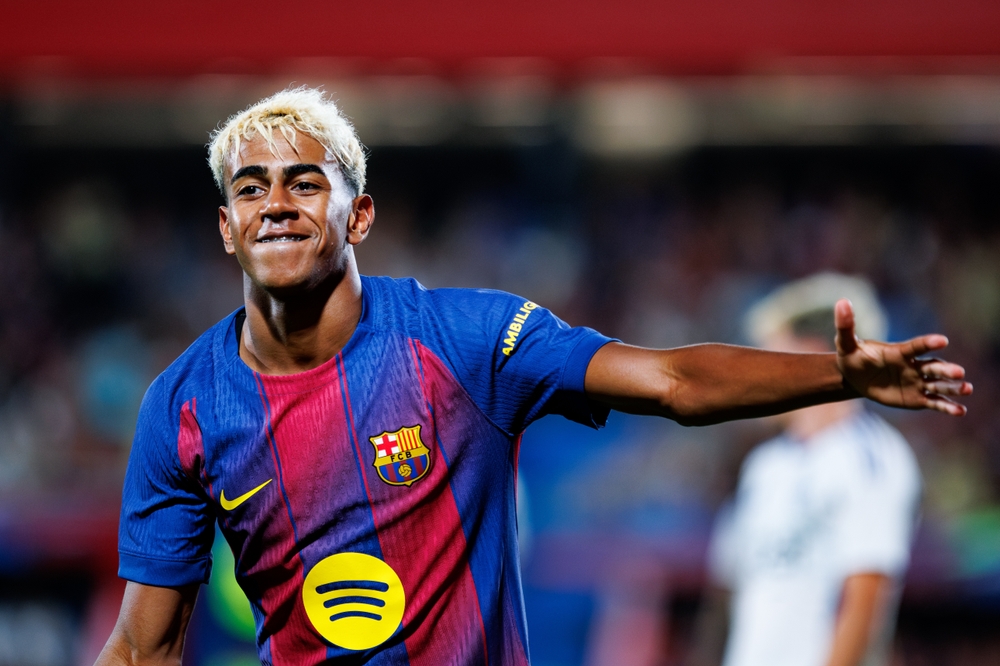
According to Robbie Dunne at Opta Analyst, Spain entered the cycle as the Opta supercomputer’s pre draw favorite, winning 17 percent of 10,000 simulations. The same Opta analysis pointed to Spain’s 31 match unbeaten run, their Euro 2024 triumph and a squad profile that combines tactical clarity with one of the healthiest age curves among the elite nations. According to the RFEF, Luis de la Fuente is now contracted through 2028, which strengthens the continuity argument even further. At player level, the club data is just as persuasive. According to FC Barcelona’s official player archive, Lamine Yamal has already reached 21 goals in 41 matches in 2025,26, which is a remarkable output for a player who still changes the geometry of a game even when he does not score. Spain’s case is simple, they have structure, rhythm, talent and timing.
The counterargument is that Spain’s path is not especially forgiving. According to Ryan Benson, Ali Tweedale and Robbie Dunne at Opta Analyst, Group H has an average rating of 76.04, with Uruguay as a serious second force and Saudi Arabia still dangerous enough to punish a slow start. There is also a more uncomfortable historical point in Opta’s Spain analysis, Spain have won only three of their last 11 men’s World Cup matches since lifting the trophy in 2010. So even though Spain look like the best total package, the anti Spain argument is not weak, it is that a brilliant modern side still has to prove that its control game travels perfectly into the World Cup’s knockout stress.
Read also: Kylian Mbappe had just hit top form – now Real Madrid have a problem
France, the deepest elite squad
According to Inside FIFA’s April 2026 ranking release, France are back at number one. According to FIFA’s squad coverage and its feature on France’s attacking options, Didier Deschamps can choose from Kylian Mbappé, Ousmane Dembélé, Michael Olise, Désiré Doué, Rayan Cherki and others in a forward line that few teams can match. According to Real Madrid’s official player page, Mbappé has 38 goals in 36 appearances this season. That matters because France do not just have depth in theory, they have elite level output at the sharp end of the pitch. If Spain have the cleanest collective identity, France may have the most dangerous squad list on paper.
But the strongest case against France is not talent, it is route and margin. According to Opta’s draw strength study, France landed in one of the toughest sections, with Group I averaging 76.7 and including Senegal and Norway. The other subtle risk is emotional rather than tactical. This is Deschamps’ final World Cup, which can be a powerful motivator, but also adds pressure to every selection decision. France absolutely have the tools to win the tournament, and in pure squad depth they may even rank first, but their early road looks slightly more dangerous than Spain’s overall talent case suggests.
Argentina, the champion’s continuity edge
According to FIFA’s Argentina team profile, Argentina enter the tournament as reigning world champions, and according to FIFA’s continuity feature on Lionel Scaloni’s side, ten of the 11 starters in one key 2025 qualifier had also played at Qatar 2022. According to Opta’s South American qualifying piece, Argentina were 10 points clear at the top of CONMEBOL qualifying heading into Matchday 17. This is a major part of their case. Argentina know how to survive bad spells, control emotional pressure and win high stakes matches with minimal waste. According to Inter’s official Lautaro Martínez profile, Lautaro has scored 171 goals for Inter and 36 for Argentina, which underlines that this team still has match winners even outside the Messi question.
The problem is that Argentina may be less certain than their aura suggests. According to ESPN’s reporting on Lionel Messi’s decision, Messi still has not fully confirmed whether he will play. According to Opta’s draw analysis, Group J is the strongest group in the tournament by average rating. And according to FIFA’s review of defending champions, successful title defences are historically rare. Argentina remain one of the most credible winners in the field, but their path is harsher and their emotional center is less settled than it was in 2022.
Read also: Premier League boss breaks silence with damning Manchester City statement
England, the strongest defensive platform
According to Joel Sritharan at Opta Analyst and Opta’s later review of England’s flawless qualification, Thomas Tuchel’s side built the cleanest defensive platform among the major contenders, completing qualification without conceding a goal and keeping eight clean sheets in their last nine matches. According to FC Bayern’s official statistics piece, Harry Kane reached 100 Bundesliga goal contributions in only 78 games. According to Arsenal’s official Saka profile and the club’s piece on his statistical rise, Bukayo Saka remains one of the most decisive and durable attacking players in the squad. That makes England very dangerous in tournament football, because elite knockout teams usually begin with defensive security, not chaos.
Yet England still carry one major question, can they create enough in the biggest games when the structure is good but the flow is not. According to Opta’s draw study focused on England, Group L is the fifth most difficult group among the Pot 1 teams. Croatia remain dangerous, and Panama and Ghana are both capable of turning matches messy. England’s case for the trophy is strong because their base is so stable, but the case against them is equally clear, in the final rounds, the team with the best defensive platform does not always beat the team with the most decisive attacking patterns.
Brazil, the highest ceiling
According to FIFA’s profile of Carlo Ancelotti’s appointment and its feature on Brazil’s first foreign permanent coach, Brazil have chosen a coach built for elite knockout football. According to FIFA’s look at Ancelotti’s attacking options, Vinícius Júnior, Estêvão and Matheus Cunha are all strongly placed in the attacking discussion. According to Real Madrid’s official Vinícius Júnior page, Vinícius has 17 goals and 8 assists in 44 appearances this season. The pro Brazil argument is therefore easy to understand, no team may be more capable of producing a devastating three week stretch if the front line catches fire.
The anti Brazil argument is about stability. According to Inside FIFA’s ranking update, Brazil sit below France, Spain and Argentina in the current order, and according to Opta’s group strength analysis, Brazil’s group contains Morocco and Scotland, which is not a comfortable opening section. Brazil have the highest ceiling of the main contenders, but right now they still look slightly more volatile than Spain and slightly less complete than France.
Read also: Kasper Schmeichel finds completely new path after football retirement
Portugal, Germany and the dangerous second tier
According to ESPN Betting, Portugal sit at 11,1 and Germany at 14,1, which feels like the correct second tier. According to FIFA’s team listings for the tournament, Portugal are ranked sixth in the field and Germany tenth. According to Opta’s group strength work, Germany may benefit from a cleaner route than Portugal, while Portugal’s section contains a very serious Colombia side. These teams are not fantasy outsiders. They are realistic semi final and even final candidates if the bracket opens in the right way. But on the evidence available now, they still sit one layer below Spain, France, Argentina, England and Brazil.
Structural variables that could swing the trophy
According to David Segar’s Opta study on World Cup host nations, six of 23 host nations have won the tournament, with France in 1998 the last to do so. That is useful because it stops us from overstating home advantage in 2026. The United States, Mexico and Canada may each benefit in specific matches, but history does not suggest that hosting alone turns a non favorite into a likely champion. At the same time, the expansion to 48 teams and 104 matches increases the importance of recovery, travel management, squad rotation and bracket luck. In a tournament this large, the best team is not always the one with the best first eleven, it is often the one that stays healthy, adapts fastest and avoids one catastrophic night.
The model’s final signal
If all of these signals are blended together, market expectation, FIFA ranking, Opta simulations, draw difficulty, coaching continuity, club form and tournament history, Spain emerge as the most defensible single pick. France remain the most powerful alternative because their top level squad depth is extraordinary. Argentina still have the best continuity of any recent champion, England have the strongest defensive base, and Brazil have the most explosive upside. My final forecast is therefore Spain first, France second, Argentina third, England fourth and Brazil fifth, with Portugal and Germany leading the next tier. That does not mean Spain are certain to win. It means that, according to the broadest credible evidence available today, they are the team most likely to be holding the trophy on 19 July 2026.
Sources
- The Betting Odds Rating System: Using soccer forecasts to forecast soccer, PLOS One
- World Cup 2026 Predictions: The Opta Supercomputer’s Pre Draw Projections, Opta Analyst
- FIFA World Cup 2026 line up complete as Iraq claim final spot, FIFA
- France reclaim top spot in the FIFA, Coca Cola Men’s World Ranking, Inside FIFA
- Every team’s championship, group odds for the 2026 World Cup, ESPN Betting, Doug Greenberg
- Why are Spain favourites to win the 2026 World Cup?, Opta Analyst, Robbie Dunne
- World Cup 2026 draw: strongest groups to the weakest, according to the Opta Power Rankings, Opta Analyst, Ryan Benson, Ali Tweedale and Robbie Dunne
- Luis de la Fuente renews his contract as national coach until 2028, RFEF
- Lamine Yamal stats, FC Barcelona
- Dider Deschamps names France squad for Brazil, Colombia, FIFA
- Deschamps’ selection dilemma, FIFA
- Kylian Mbappé official player page, Real Madrid
- Argentina at the FIFA World Cup: team profile and history, FIFA
- Scaloni finds comfort in continuity, FIFA
- South American World Cup qualifiers: Opta Supercomputer predictions for Matchday 17, Opta Analyst
- Lionel Messi undecided on 2026 World Cup, Lionel Scaloni, ESPN
- Lautaro Martínez official profile, Inter
- Latvia vs England prediction: Tuchel’s clean sheet kings out to seal World Cup qualification, Opta Analyst, Joel Sritharan
- England expects after flawless 2026 World Cup qualification, Opta Analyst
- England’s World Cup 2026 draw: how difficult is Group L and what is their route to the final?, Opta Analyst
- Harry Kane sets yet another Bundesliga record as fastest player to 100 goal contributions, FC Bayern
- Bukayo Saka player profile, Arsenal
- The stats behind Bukayo Saka’s rise, Arsenal
- Carlo Ancelotti, Brazil, FIFA
- Ancelotti and Brazil, the Seleção’s first foreign boss prepares for a new era, FIFA
- In focus: Carlo Ancelotti’s attacking options for Brazil, FIFA
- Vinícius Júnior official player page, Real Madrid
- World Cup host nations: how have they performed?, Opta Analyst, David Segar
Read also: Andy Murray reveals one major regret about Nadal and Djokovic