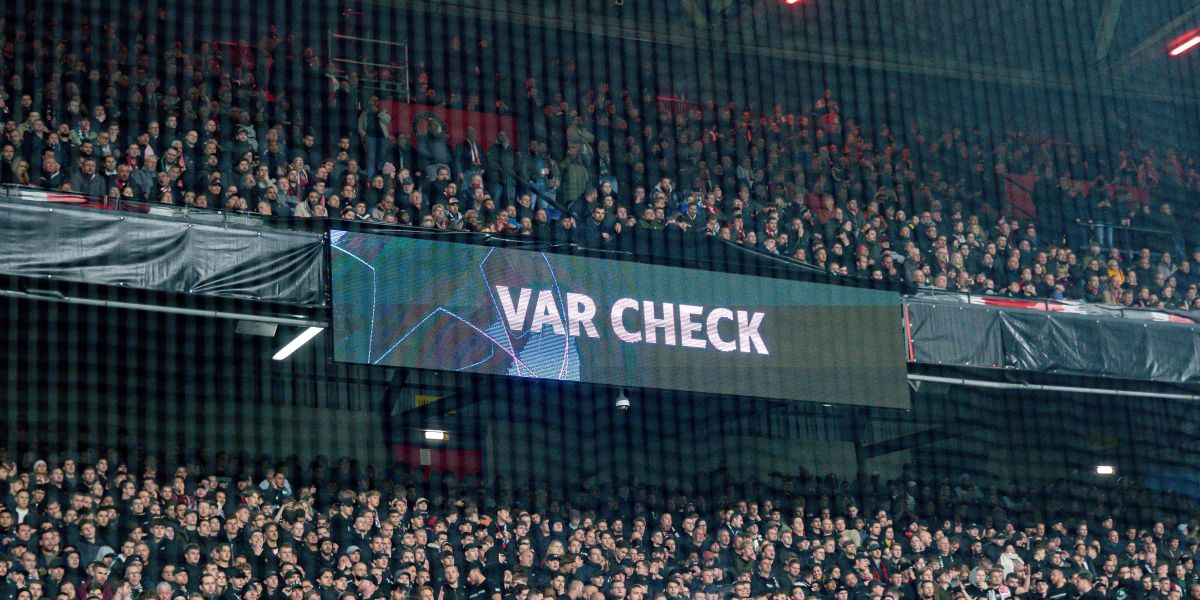
Everton has emerged as a vocal critic of perceived inconsistencies in Premier League refereeing and VAR decisions, prompting other clubs to air their grievances. The latest flashpoint, a controversial handball incident against West Ham United, has solidified the Merseyside club’s resolve to address the issue with the Professional Game Match Officials (PGMO).
During the recent fixture against West Ham, referee Stuart Attwell and VAR Michael Salisbury waved away a handball claim against Mateus Fernandes. The Premier League later clarified the incident, deeming Fernandes’ contact with the ball ‘accidental’. This decision, however, has ignited further frustration within the Everton camp, with reports indicating that Angus Kinnear is set to hold talks with the PGMO to convey these concerns.
A pattern of contentious calls
The Fernandes incident is not an isolated one for Everton, who have endured a season marked by several contentious decisions. The club points to a series of moments where they believe they have been unfairly treated:
In the opening game of the season, a penalty was awarded against James Tarkowski for handball, leading to a Leeds United conversion and an Everton defeat.
Read also: Breaking: Scott Parker departs Burnley after relegation
Jake O’Brien had a goal disallowed against Aston Villa due to alleged interference from an offside Harrison Armstrong, though Everton ultimately won the match 1-0.
Michael Keane was adjudged to have committed violent conduct for pulling Tolu Arokodare’s hair against Wolves, a decision that drew comparisons to incidents involving Kenny Tete of Fulham against Manchester City and Dominic Calvert-Lewin against Marc Cucurella, neither of which resulted in similar sanctions.
Perhaps the most significant grievance, however, stems from a penalty claim against Arsenal on December 20, when striker Thierno Barry was seemingly kicked in the box by William Saliba in the 57th minute. On-field referee Sam Barrott did not award a spot-kick.
Key Match Incidents Panel highlights split decisions
The incident involving Barry and Saliba was subsequently reviewed by the Premier League’s Key Match Incidents Panel, a five-member body comprising three former players or coaches, one Premier League representative, and one from the Professional Game Match Officials. The panel’s findings, reported by BBC Sport, reveal a telling split:
Read also: US government makes surprise World Cup call after FIFA intervention impacting 48 nations
- A 3-2 vote in favour of Everton being awarded a penalty.
- Panel members supporting the penalty stated, “Saliba carelessly kicks Barry with no contact on the ball.”
- A 3-2 vote that VAR Michael Salisbury should have advised the match official to review his decision at the monitor.
The panel’s divided opinion underscores the subjective nature of such calls, with dissenting members arguing “there was not enough impact and a delayed reaction” to warrant a penalty. This perceived inconsistency was further highlighted days later when a similar incident involving Fulham against Nottingham Forest resulted in a penalty, a decision the panel unanimously supported.
Everton manager David Moyes voiced his frustration, stating, “I was half-choking last night when I saw the decision given [to Fulham] and ours wasn’t. It feels as though certain clubs get those decisions and other clubs don’t.”
The Key Match Incidents Panel has also reviewed other high-profile decisions, revealing further complexities. On the same day as the Arsenal-Everton match, the panel voted 3-2 that referee Andy Madley should have awarded Newcastle United a penalty against Chelsea, yet concluded that VAR Peter Bankes was correct not to advise a spot-kick. Conversely, decisions such as Tottenham’s Xavi Simons’ red card against Liverpool and Liverpool’s second goal by Hugo Ekitike against Tottenham (despite a push on Cristian Romero) received unanimous panel support, with the latter decision citing “not enough contact for a foul, particularly given the high threshold for penalising contact.”
As Everton pushes for clarity and consistency, the ongoing dialogue with the PGMO will be crucial in addressing the growing concerns over refereeing standards and VAR application across the Premier League.
Read also: VAR decisions for Manchester United vs Liverpool creates concern
Sources: www.everton.news, www.bbc.co.uk
Read also: Assist king in the making: Bruno Fernandes closes in on Premier League record


