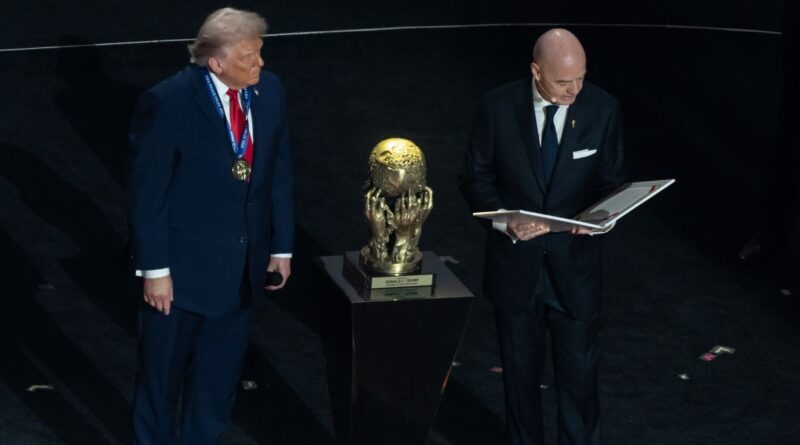
Experts warn World Cup boycott could cost FIFA billions
Growing political tensions linked to the United States have prompted renewed discussion within football about whether a boycott of the 2026 men’s World Cup could become a realistic threat. While no national association has formally proposed withdrawing, some officials say the issue can no longer be ignored as preparations for the tournament continue.
The World Cup is scheduled to be hosted jointly by the United States, Canada and Mexico and will be the first edition expanded to 48 teams, a format designed to increase global reach, broadcast revenue and commercial partnerships.
Financial consequences for FIFA
Football finance specialist Dr. Rob Wilson has warned that any boycott involving major footballing nations would have consequences far beyond politics, potentially destabilising FIFA’s business model and damaging the tournament’s credibility.
Speaking to BettingLounge, Wilson said a withdrawal by Argentina or Brazil would be particularly serious because of their commercial and sporting importance. He noted that Argentina are the defending champions, while Brazil remain one of the most recognisable brands in global football, driving television audiences and sponsorship value.
Read also: World Cup boycott rumors collide with record demand
According to Wilson’s estimates, a coordinated boycott by South American nations could cost FIFA around $2 billion overall. He said lost broadcast revenue alone could reach between $700 million and $1 billion, with further losses expected from sponsorships and marketing deals that rely on participation from those markets.
Wilson also said reduced participation would have knock-on effects for host cities, which are relying on matchday activity, tourism and fan engagement to justify heavy investment in infrastructure and transport.
Sporting legitimacy at stake
Beyond the financial impact, Wilson argued that a World Cup missing elite teams would struggle to maintain its status as the sport’s most prestigious competition. He compared the scenario to past Olympic boycotts, where the absence of leading nations raised questions about whether athletes were truly competing against the world’s best.
He said such a situation would undermine the tournament’s legitimacy and damage the broader ecosystem of international football, including development funding that FIFA distributes to emerging football nations.
Read also: At least 11 killed after gunmen open fire at football match in Mexico
Political backdrop
The debate gained momentum after comments from German Football Association official Oke Gottlich, who told the Hamburger Morgenpost that it was time to begin serious discussions about a potential boycott.
Gottlich’s remarks followed renewed controversy surrounding U.S. President Donald Trump, who has repeated claims that the United States should acquire Greenland for national security reasons and has threatened economic measures against countries that oppose the idea. German media reported that those statements have unsettled some football administrators as the tournament approaches.
Why relocation is unlikely
Wilson also dismissed suggestions that the World Cup could simply be moved or cancelled without severe consequences. He said the tournament’s delivery budget is just under $4 billion, while host cities are each committing hundreds of millions of dollars to stadium operations, fan zones, transport upgrades and accommodation.
He estimated that forcibly relocating the tournament would cost more than $7 billion before accounting for legal claims from broadcasters, sponsors, ticket holders and host cities. Such a move, he warned, could expose FIFA to unprecedented financial and legal risk.
Read also: Rising prices and early pullbacks cloud U.S. World Cup hotel outlook
For that reason, Wilson said, a boycott scenario is more plausible than relocation, even though he stressed that cancellation remains highly unlikely.
No formal boycott proposal
At present, FIFA has not indicated any intention to move or cancel the tournament, and no national federation has formally called for a boycott. However, the growing debate highlights how geopolitical tensions could intersect with the sport’s commercial realities in the build-up to 2026.
Sources: Hamburger Morgenpost, BettingLounge
Read also: Sepp Blatter urges fans to avoid US travel for 2026 World Cup
Read also: Trump: "Super Bowl is too far away"; you weren't invited sir?