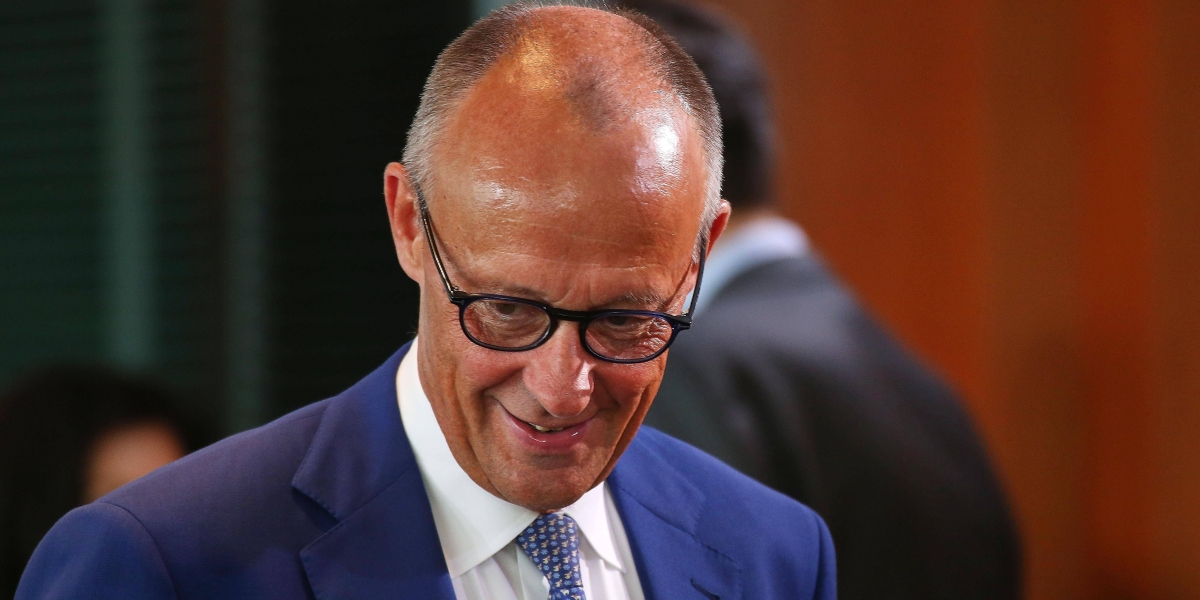
Germany has spent years discussing how to give sport greater political influence, and Friedrich Merz’s government appeared to have delivered part of that answer by placing a dedicated State Minister for Sport and Volunteering inside the Federal Chancellery. The position was designed to give elite and grassroots sport a direct political contact close to the centre of government, rather than leaving the portfolio further down the administrative hierarchy. That makes what has happened since July considerably more significant than an ordinary personnel change.
On July 27, Merz announced that Christiane Schenderlein would leave the sports role after only 14 months and move to the Health Ministry as a parliamentary state secretary. No successor was ready to take over, but the chancellor sought to play down concerns by saying that the eventual appointment would be handled carefully and that there would be no vacuum around the position. More than five weeks later, Germany’s most senior dedicated political sports post is still unfilled, even though the department itself continues to operate under its senior civil servants.
The timing could hardly be more sensitive
The vacancy comes at a particularly important moment because Germany is approaching the final stage of its domestic Olympic bidding process. On September 26, an extraordinary meeting of the German Olympic Sports Confederation, DOSB, in Baden-Baden will choose between Berlin, Munich and KölnRheinRuhr as the German candidate for a future Olympic and Paralympic Games. Germany has not yet committed to one particular edition, with 2036, 2040 and 2044 all remaining possible targets.
The vacant political position is directly connected to that process. A six-member evaluation commission is overseeing the assessment of the three concepts, with four voting members representing sport and two representing politics, and Schenderlein had been one of the political members before her departure. Sportschau reports that Babette Kibele, who heads the Sport and Volunteering department in the Chancellery, is currently attending those meetings as her temporary replacement, which means the work continues even though the political post itself has not been filled.
Read also: Roy Keane gives Manchester City stars brutal message over medals after guilty verdict
That distinction matters because describing German sport as completely leaderless would be inaccurate, but the absence of a permanent political figure is becoming increasingly difficult to dismiss. The Chancellery has argued that the specialist departments continue to guarantee the necessary work and has indicated that the appointment should be made with care rather than under artificial time pressure. Critics inside organised sport, however, argue that a country seeking to convince both domestic and international audiences of its Olympic ambitions should ideally have its highest dedicated sports office settled before such an important decision.
Merz removed a minister who was receiving praise
The circumstances surrounding Schenderlein’s departure have added to the controversy because there was no obvious sporting scandal or collapse in confidence that forced Merz to act. During her 14 months in the newly created position, she helped steer the long-delayed Sports Funding Act through parliament, a reform that previous governments had struggled to complete. Sportschau noted that serious criticism of her work had been rare, while Saxony’s CDU Minister-President Michael Kretschmer went as far as describing her as the most successful member of the Merz government.
Schenderlein later said that Merz had told her personally that the decision was not a judgement on her performance. According to her account, the chancellor wanted to reshape the position around someone with a greater level of public and international recognition, which immediately created speculation about a successor from elite sport rather than traditional party politics. One name quickly became more prominent than all the others, although neither the Chancellery nor UEFA publicly confirmed that an appointment had been agreed.
The Nadine Keßler plan reportedly failed
That name was Nadine Keßler, one of the most decorated figures in recent German women’s football. The former midfielder won three Women’s Champions League titles, helped Germany become European champion in 2013 and was named FIFA World Player of the Year in 2014 before injuries forced her to end her playing career at only 28. She subsequently moved into football administration and has built another high-level career at UEFA, where she now serves as director of women’s football.
Read also: Where Erling Haaland could end up if he leaves Man City
German reports initially presented Keßler as a leading candidate to replace Schenderlein, and the profile was easy to understand from Merz’s perspective. She combined sporting credibility, international recognition and experience within one of the most influential governing bodies in world sport, precisely the qualities Schenderlein said the chancellor wanted to bring into the job. However, reports on August 21 stated that Keßler had informed the Chancellery that she was not available for the position, while UEFA declined to comment publicly on the information.
The rejection has reportedly forced Merz to broaden the search beyond football, with prominent former athletes from Olympic sports also being considered. There is nothing unusual in a government taking time to find the right person for a senior position, but the political problem is that Merz created the vacancy before securing the replacement he wanted. Each additional week therefore invites the same question: why remove an office-holder who was widely regarded as effective before a successor was ready?
Pressure is now coming from inside German sport
The frustration is no longer limited to opposition politicians or media commentary. DOSB chief executive Otto Fricke has said that he has been pressing for weeks for a decision and has made clear that responsibility for choosing the new State Minister ultimately rests with the chancellor. Berlin sports president Thomas Härtel has been even more critical, describing it as scandalous that the country’s highest political sports office could remain unresolved so close to the decision over Germany’s Olympic candidate.
The government can reasonably argue that no major administrative process has stopped because of the vacancy, since Kibele and the specialist departments continue their work. The more uncomfortable issue is symbolic and political: Merz’s government deliberately elevated sport by moving it closer to the Chancellery, only to leave the new flagship political position empty during a period dominated by elite-sport reform and the Olympic bid. That contrast is why a personnel decision that might otherwise have remained a Berlin political story has developed into a genuine issue for German sport.
Read also: Javier Tebas breaks silence on what should happen to Man City next
Merz originally promised that Schenderlein’s removal would not create a vacuum, and in the strict administrative sense he can argue that it has not. Yet more than a month after removing a minister who had received unusually strong praise, his government still has no permanent political successor, while the woman widely reported to be the preferred replacement has declined the role. With the DOSB’s September 26 Olympic decision moving closer, every day without an appointment makes the chancellor’s original personnel gamble more difficult to defend.
Read also: Messi admitted he targeted one World Cup rival on purpose