Group of Death lives up to name in EURO showdown
A charged beginning
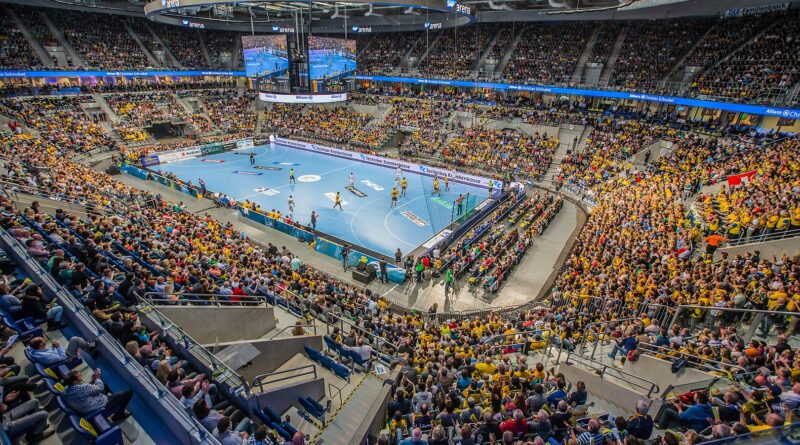
The shift from the preliminary phase to the main round is always decisive, but January 22 in Herning carried unusual weight. The Jyske Bank Boxen welcomed six of Europe’s strongest handball nations, all placed in a group many analysts had already labelled unforgiving.
According to the EHF’s official tournament preview, Group I was considered the toughest section of the championship, combining recent world, Olympic and European title holders. What followed justified that assessment within hours.
Three matches, each with distinct narratives, collectively reshaped the tournament. Germany edged Portugal through depth and discipline. Norway survived Spain in a match that dissolved into chaos. Denmark, backed by a roaring home crowd, ended France’s long unbeaten run.
Structure over flair
Germany’s 32,30 win over Portugal opened the evening with a contest defined by restraint rather than spectacle. Both sides entered the main round carrying points, making the match critical for early control of the group.
Read also: Steve Kerr explains why today’s NBA players never escape the spotlight
According to the EHF match report, the first half was dominated by compact 6,0 defences and patient build up play. The score reached just 11,11 at the break, a reflection of positioning and goalkeeping rather than missed chances.
Portugal briefly unsettled Germany by pushing their defensive line higher, limiting space for the German backcourt. Germany struggled to find rhythm, but Andreas Wolff’s saves kept the contest level. His reading of shots repeatedly denied clear Portuguese opportunities.
A bench driven shift
The turning point arrived early in the second half. German coach Alfred Gislason introduced Miro Schluroff, altering the tempo immediately. Schluroff attacked decisively from distance, scoring seven goals from eight attempts.
According to EHF statistics, his efficiency forced Portugal’s defenders to step out, opening space on the line and wings. Germany’s attack flowed more freely, reducing pressure on their established scorers.
Read also: Casemiro farewell post: 4 months untill end of an era
Portugal remained competitive through Francisco Costa, who delivered 10 goals and surpassed his father Ricardo Costa in Portugal’s all time EURO scoring list. The EHF highlighted the milestone as a landmark moment for Portuguese handball.
Late tension
Despite Germany’s surge, the match stayed tight until the final minute. With 38 seconds remaining, Lukas Zerbe converted a seven metre throw to secure the win.
A late red card for Johannes Golla briefly cast uncertainty, but the EHF Disciplinary Commission later confirmed no additional suspension. Wolff, with 13 saves, was named player of the match.
Afterwards, Golla said, “The young guard grows up fast,” referring to Germany’s emerging depth. Portugal coach Paulo Pereira pointed to fatigue, while Martim Costa admitted Wolff forced his team into “very low efficiency.”
Read also: Barcelona quietly lock in striker for the next generation
A fight to survive
The second match carried even heavier consequences. Spain and Norway both began the main round without points, leaving no margin for error.
The opening half unfolded at breakneck speed. Fast breaks replaced structure, leading to frequent turnovers and goals at both ends. According to the EHF live report, the ball changed possession almost every attack during the opening 20 minutes.
Spain’s Aleix Gómez thrived in transition, while Norway found an unexpected leader in August Pedersen. The winger scored six first half goals, punishing every lapse in Spanish defensive recovery. The teams reached halftime locked at 16,16.
A dangerous gamble
Spain shifted approach after the break, deploying their familiar 7 versus 6 attack. With an extra court player, they stretched Norway’s defence and controlled possession for long spells.
Read also: Saudi clubs set sights on Salah and Vinícius as summer targets
According to EHF analysts, the tactic initially delivered results, slowing Norway’s transitions and creating high percentage chances. Spain built a narrow lead and appeared in control.
The risk, however, proved decisive. Two intercepted passes led to immediate long range goals into an empty Spanish net. In just 20 seconds, momentum swung entirely.
One minute that broke Spain
The final minute encapsulated the drama of the night. Norway led 35,34 after a goal from Tobias Grøndahl. A suspension left their goal unguarded, and Gómez attempted a long shot that missed under pressure.
Spain retained possession, triggering a video review that resulted in another Norwegian suspension. With a two player advantage, Spain attacked once more.
Read also: Ferrari break up Hamilton pairing after troubled season
As the buzzer sounded, contact in the wing area prompted a second review. The referees ruled no penalty and time expired. Norway had survived.
Pedersen finished with 11 goals and earned player of the match. Kauldi Odriozola later said, “I have the feeling we did everything right until the 50th minute... but we did not convert them.” Spain coach Jordi Ribera described it as “a very sad day.”
Norway coach Jonas Wille admitted, “Luck was on our side,” while Kevin Gulliksen called the final review “torture.”
When home becomes power
The closing match brought the loudest atmosphere. France arrived unbeaten in 12 EURO matches. Denmark arrived under pressure, still searching for momentum.
France controlled the first half through defensive discipline. According to the EHF technical summary, Danish shooters struggled with timing and accuracy, while goalkeeper Charles Bolzinger delivered key saves. France led 12,11 at the break.
The goalkeeper who changed everything
The second half belonged to Emil Nielsen. Introduced after halftime, the Danish goalkeeper shifted both rhythm and belief. His saves ignited the crowd and lifted Denmark’s tempo.
Denmark’s attack accelerated, driven by quick positional switches and sharper wing play. Emil Jakobsen delivered a decisive seven minute spell, scoring five goals and pushing Denmark ahead.
France attempted to respond through transition play, but pressure and noise eroded their composure. According to post match comments published by the EHF, Ludovic Fabregas admitted the defence “cracked a little bit at the end.”
Denmark closed out a 32,29 win, ending France’s unbeaten run. Nielsen was named player of the match.
A group transformed
After one night, Group I stood tightly packed. Germany led on four points. France, Denmark, Portugal and Norway followed on two. Spain remained on zero, their semi final hopes fading.
According to the EHF standings, no other main round group showed such narrow margins after the opening day.
Lessons from the pressure cooker
Several patterns emerged clearly. Compact 6,0 defences again proved decisive. The risks of extended 7 versus 6 play were brutally exposed. Depth from the bench separated winners from losers.
Germany and Denmark drew decisive contributions from substitutes, while others leaned heavily on starters who faded late.
Herning sets the tone
January 22 will stand as a defining chapter of the Men’s EHF EURO 2026. Germany asserted control, Norway rediscovered belief and Denmark transformed home energy into momentum. Spain, meanwhile, faced a reckoning that may signal the end of a dominant cycle.
According to EHF observers, the margins are now gone. In Herning, only clarity under pressure survives.
Sources: EHF official match reports, EHF EURO 2026 statistics and post match interviews