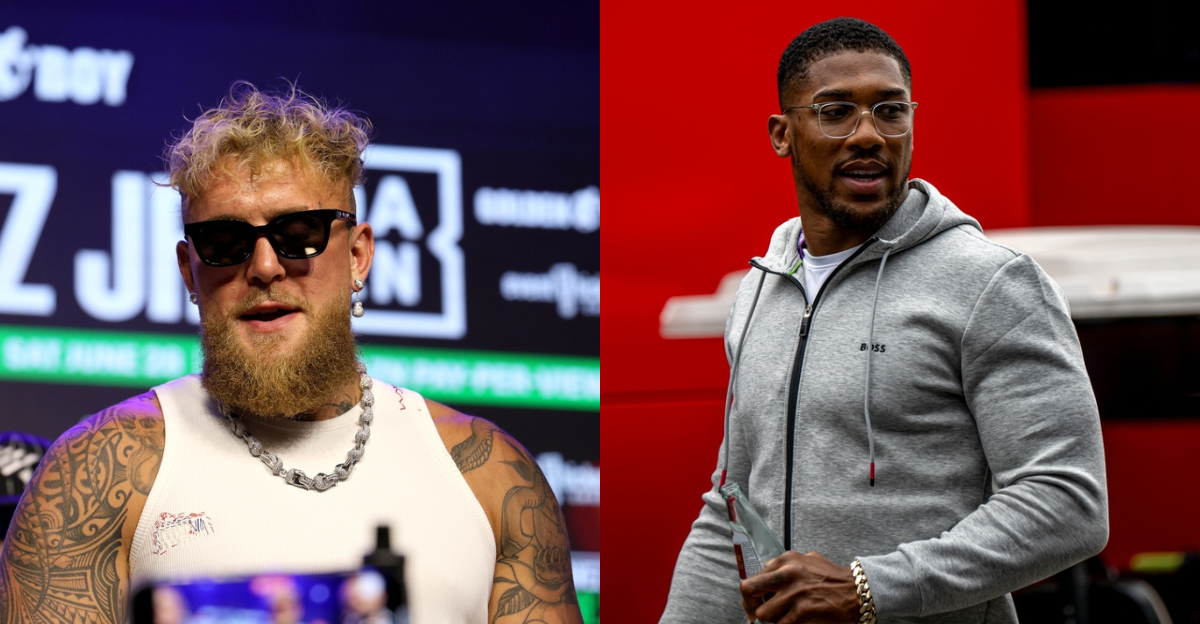
Friday night’s bout was less about competitive suspense than about how modern boxing now works at the intersection of fame, risk, and money.
Jake Paul, the YouTube star turned professional boxer, stepped into the ring against former heavyweight world champion Anthony Joshua in a fight that drew massive attention despite a clear imbalance in experience. The sporting result followed expectations. The business outcome did not.
An experience gap that proved decisive
Paul entered the contest with roughly five years as a professional, facing a fighter who has spent much of the past decade competing at the top of boxing’s most demanding division.
For several rounds, Paul relied almost entirely on movement, circling the larger ring and limiting exchanges in an effort to stay clear of Joshua’s power. It was a survival strategy that required near-perfection.
Read also: Roy Keane goes nuclear on Man City after 114 guilty findings
That margin disappeared midway through the sixth round. Joshua landed a right hand that ended the fight immediately, with ringside coverage later reporting that Paul suffered fractures to his jaw, requiring medical treatment after the stoppage.
Respect in unlikely places
Paul remains a polarizing figure within boxing, often criticized for bouts built around entertainment value rather than rankings. Still, his decision to face an active former world champion earned recognition beyond the sport’s usual supporters.
Former U.S. president Donald Trump was among those who publicly praised Paul for taking the fight, according to media coverage following the event.
The reaction reflected a broader understanding around the matchup: Paul accepted an obvious physical risk, fully aware of what was at stake.
Read also: Here is Foden’s Man City exit route
A payday that overshadows the loss
According to Reuters and ESPN, Paul earned an estimated $92 million for the fight, the largest purse of his career. The figure surpassed his previous earnings, including his widely promoted bout against Mike Tyson.
The scale becomes clearer when broken down. Paul spent just over 16 minutes in the ring, translating to earnings of more than $15 million per round before the stoppage a striking illustration of how audience reach can outweigh competitive balance.
Joshua’s purse was also substantial, but Reuters reported that the former champion is expected to forfeit more than half of his earnings to combined UK and US tax obligations tied to the Netflix-streamed event.
What the fight ultimately showed
In sporting terms, the outcome reinforced the limits of experience gaps at the elite level. In financial terms, it underscored a different reality altogether.
Read also: Rodri breaks silence on Man City verdict with remarkable 2020 comparison
Paul lost decisively. But in an era where attention drives revenue, the night still ranked among the most lucrative of his boxing career.
Sources: Reuters, ESPN, BoxingScene
Read also: The wheelchair champion beat the sub-two-hour man, and London Marathon has its 2027 schedule