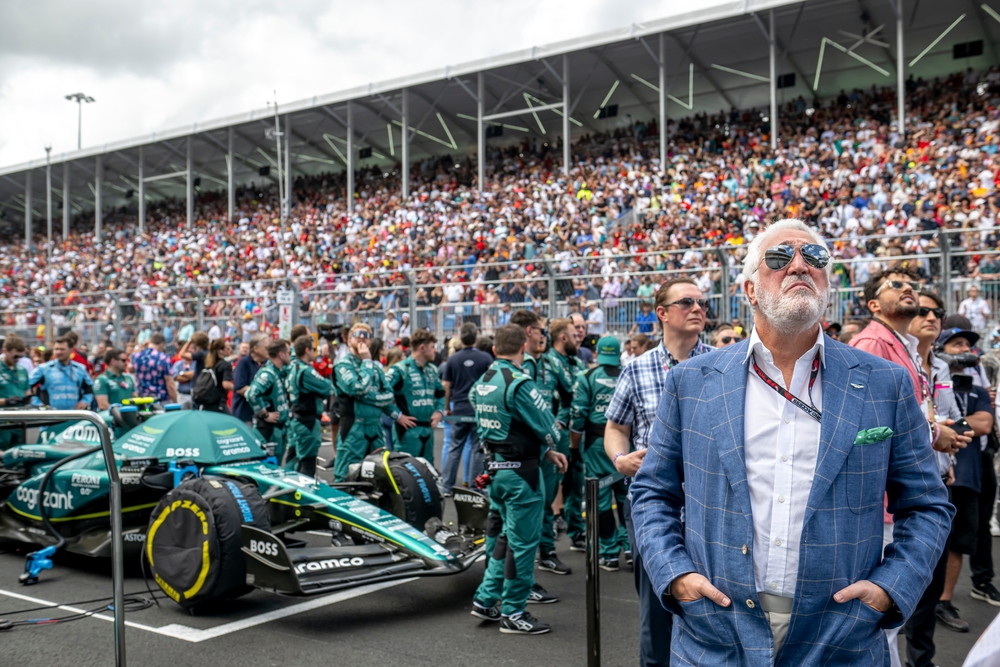
Lawrence Stroll’s patience with Honda is running against a deadline, and it falls this winter. In his Q&A column for the BBC, F1 correspondent Andrew Benson wrote that it is “well known in F1” that the Aston Martin owner spent the earlier part of the 2026 season exploring the possibility of ditching Honda before deciding to stick with them.
If the Japanese manufacturer does not take a meaningful step forward in competitiveness before the 2027 cars arrive, Benson said, the scenario comes straight back on the table.
The context for that patience is thinning. Aston Martin have been consistently off the pace, and GPS analysis by Mark Hughes at the Malaysian Grand Prix showed Fernando Alonso surrendering 2.238 seconds to Max Verstappen on the full-throttle parts of a Sepang lap. Earlier in the season the Honda power unit was so vibration-heavy that it posed a nerve-damage risk to Alonso and Lance Stroll in the cockpit.
Then came a structural signal. Honda replaced Tetsushi Kakuda as its power unit leader with Yoichiro Fukao on 1 October 2026. The trackside general manager, Shintaro Orihara, had already set expectations low for in-season fixes.
Read also: “I take the criticism on the chin”: Virgil van Dijk addresses costly Liverpool mistake
“This is the only major update for this year,” Orihara said.
“The major update will be in 2027.”
Why Red Bull is the only realistic alternative
Mercedes, on paper, could help. In practice they cannot. Benson’s map of the 2026 grid has Mercedes already supplying four teams, McLaren, Alpine and Williams alongside the works outfit, with a stated plan to cut customer numbers from three to two for the next engine cycle.
Ferrari supply three, Haas and Cadillac in addition to themselves. Audi and Honda each supply only one team. Red Bull Powertrains supply only the in-house pair of Red Bull Racing and Racing Bulls, with the Ford-badged power unit.
Benson’s conclusion was direct: in that scenario, “Red Bull would definitely be an option.”
The pitch has a tailwind. McLaren chief executive Zak Brown called the Red Bull-Ford engine “very, very strong” after pre-season testing in Barcelona, and Verstappen’s win at the 2026 Bahrain Grand Prix delivered Red Bull Ford Powertrains its first race victory in only the project’s debut season. The RB22 chassis has held Red Bull back in the overall standings, but the power unit itself has survived its rookie season with its reputation intact.
The FIA’s first-season exemption
The regulatory floor matters here. F1’s engine regulations oblige a manufacturer to supply a customer on request, but there is a carve-out: A manufacturer cannot be forced to supply in its first season of a new engine formula.
2026 is Red Bull Powertrains’ first season as a manufacturer, so for this year the obligation does not apply to them. By 2027 or 2028, the window Benson is pointing to, it would.
Read also: Mikel Arteta delivers worrying Bukayo Saka update after Arsenal’s Bayern Munich draw
Honda has signalled no further power unit upgrade until 2027.
Read also: Imola on standby for F1 season finale as $180m Gulf races face cancellation risk