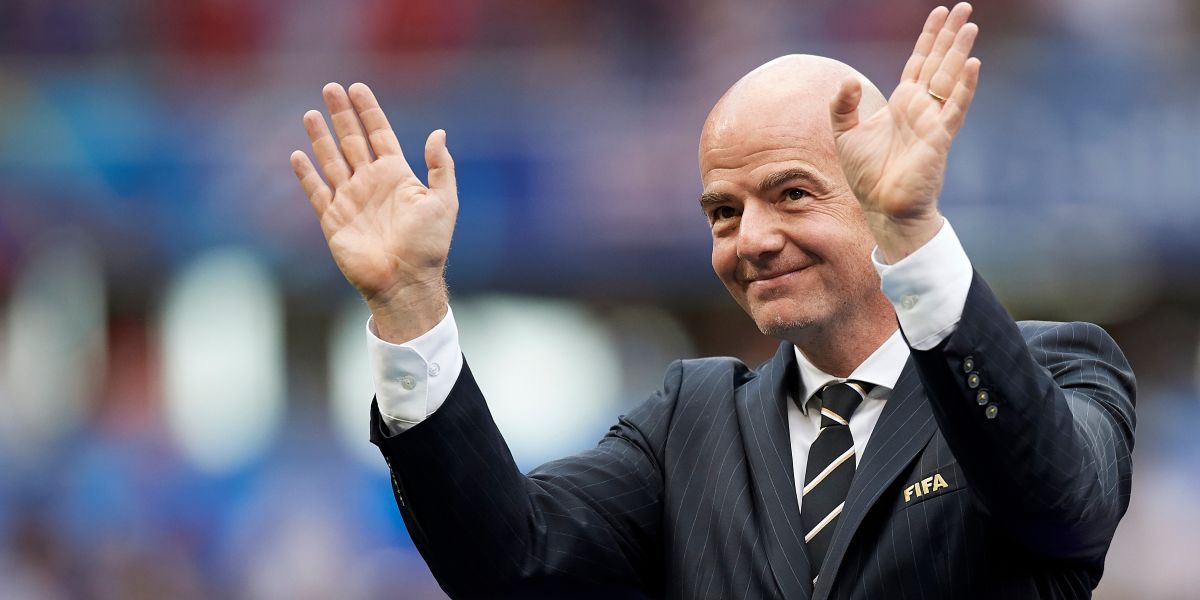
The most consequential intervention of the FIFA crisis has not come from Nyon or Zurich. It came from Luque, where CONMEBOL declared on 6 August that it would not back “any action or procedure” that departs from FIFA’s institutional framework. South America did not defend Infantino personally. It defended the rulebook.
The distinction matters because UEFA is trying to short-circuit that rulebook. European football’s 55 associations have already voted unanimously to boycott FIFA competitions over Infantino’s now-shelved plan to sell minority stakes in the World Cup to private investors, and they have told him to resign or face a no-confidence vote.
What the FIFA statutes actually allow
Under FIFA’s own rules, only the Congress can dismiss the president, and at least 43 member associations, one-fifth of the 211, need to sign a formal request to trigger an extraordinary Congress at which a removal motion could be tabled. UEFA alone has enough votes to clear that threshold. Actually removing Infantino, however, would require a simple majority of the ballots cast, roughly 106 votes.
CONMEBOL’s statement was aimed squarely at that procedure. The South American body warned that “when those principles are set aside, football loses” and said the institutional framework exists as a guarantee for all 211 members. Read against the backdrop of UEFA’s ultimatum, it is a signal to the smaller federations that the correct venue for judging Infantino is a scheduled vote, not a rushed extraordinary Congress.
Read also: Ninth-place Williams put a €30m-a-year bid on Sainz. He is not rushing to sign it
Africa lines up, Latin America closes ranks
A day after CONMEBOL’s statement, CAF’s Executive Committee unanimously reconfirmed its support for Infantino. CAF president Patrice Motsepe framed his own position in personal terms.
“I personally support Gianni Infantino. He’s not just a good friend. He’s a loyal friend. He’s loyal to Africa.”
Africa’s 54 associations are FIFA’s largest single bloc. They do not vote as one, but the political weather in the confederation has now been set. Mexico’s federation, breaking with CONCACAF’s opposition to Infantino, issued a statement echoing CONMEBOL almost word for word: the FMF said it would “neither recognise nor approve any process convened outside of that institutional framework”.
Argentina’s AFA offered outright support for the FIFA president. The pattern is consistent: the associations still backing Infantino are talking about process, not policy.
Read also: F1 CEO fires back at 2026 regulations critics: 'Everyone can have an opinion'
The Rabat arithmetic
FIFA’s next ordinary Congress, and its presidential election, is scheduled for Rabat on 18 March 2027. The candidacy window closes on 18 November this year.
The arithmetic on that day is the arithmetic that matters. UEFA holds 55 votes and has lost Infantino publicly. CONCACAF (41) and AFC (47) both rejected his commercial plan. That is a theoretical opposition of up to 143, well beyond the majority needed to unseat him, if every association followed its confederation’s line.
Nothing in FIFA’s history says they will. Confederations do not control their members’ ballots, and each of the 211 associations votes independently and by secret ballot. Norway’s federation has already broken from the European consensus in the other direction, with its president Lise Klaveness calling for Infantino to step down on the grounds that he lacks “the institutional trust required to govern FIFA stably”. Croatia, England and Albania have withdrawn earlier letters of support.
Where the pressure meets the process
For Infantino, the calculation is straightforward: survive the summer, keep CAF and CONMEBOL public, and the vote comes to him on his own timetable. UEFA has been given two conditions for lifting its FIFA boycott, the withdrawal of the commercial plan and a guarantee it will never return. FIFA has met the first. It has not met the second.
Read also: Duplantis chases a fourth European title in Birmingham on Sunday
The first hard test of the standoff arrives on 5 September, when Poland hosts the FIFA Women’s Under-20 World Cup. If UEFA holds the boycott line, the crisis will continue to escalate into the autumn. If it does not, the March vote in Rabat will look increasingly like the only place the presidency can be settled.
Read also: Two teenagers, one birthday: The AGF signings from its Ugandan academy under scrutiny