Lionel Messi’s legacy in words: From Rosario streets to global
Childhood roots in Rosario
Long before Lionel Messi became a global symbol of footballing brilliance, he was a reserved boy navigating life in Rosario, Argentina. Born on 24 June 1987, he grew up in a working-class neighborhood where football was very commons.
His father, Jorge Messi, worked in the steel industry before later coaching youth teams, while his mother, Celia Cuccittini, was employed at a magnet factory. The family of six lived modestly, shaped by the rhythms of Argentine labor life and the pervasive pull of local football culture.
Friends and relatives from that period often recall how quietly he moved through childhood. Messi spoke little, preferring to communicate through the football. Even in early primary school, his balance and coordination stood out. Children in Rosario often grow up playing on uneven concrete pitches, yet he seemed to glide across them as if they were perfectly smooth.
His footballing foundation began at Grandoli FC, a small neighborhood club where his grandfather Antonio “Tota” Cuccittini pushed coaches to let him join older age groups.
Read also: Retraction of article on Mohamed Salah’s alleged long term contract extension
Antonio’s death in 1997 marked the first major personal loss of Messi’s life, and he later said in interviews with Argentine media that this event shaped his emotional relationship with the sport. His habit of pointing to the sky after scoring began as a quiet tribute to him.
The Newell’s chapter and an unexpected diagnosis
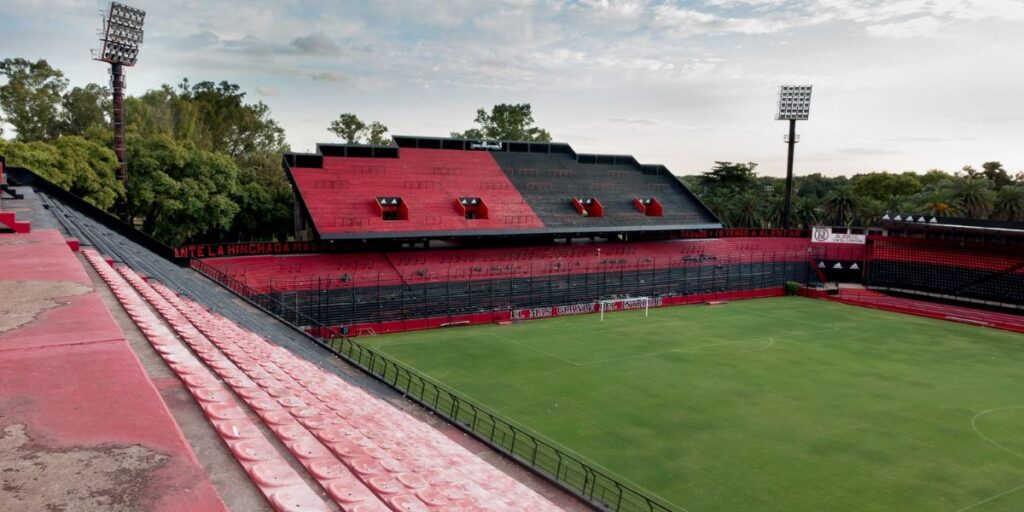
At eight years old, Messi joined Newell’s Old Boys, one of Argentina’s most historic clubs and a central pillar of Rosario’s identity. He soon became part of a youth side later nicknamed “La Máquina del 87,” a team that reportedly scored well over 100 goals per season. According to local sports journalists, Messi contributed nearly half of them, despite being noticeably smaller than his peers.
Around age 10, his parents learned that he had a growth hormone deficiency, a diagnosis requiring daily injections that cost roughly $1,000 per month. Treatment options in Argentina during the late 1990s were limited and expensive, and many families in similar situations relied on partial support from clubs.
Newell’s expressed initial willingness to help but never consistently delivered on the financial commitment. The family struggled, and Messi’s physical development became a point of concern, even as his technical abilities continued to flourish.
Read also: Neymar reflects on emotional strain and decision to seek psychological support
For outsiders not familiar with football, it’s important to understand that youth academies in South America often serve as a pipeline for families seeking financial stability. For a child as gifted as Messi, losing support at this stage meant losing the ladder that many hoped would lift them toward a professional future.
A family’s leap to Barcelona
By the year 2000, with few treatment options left in Argentina, the Messi family considered an opportunity that seemed improbable. Through the involvement of agent Horacio Gaggioli and scout Josep Minguella, FC Barcelona agreed to evaluate the young player. Barcelona, at that time, was building one of the world’s most sophisticated youth development systems, centered at the facility known as La Masia.
Carles Rexach, the club’s technical secretary, watched Messi play and became convinced of his potential. He famously confirmed the club’s intention to sign him on a restaurant napkin, dated 14 December 2000, an anecdote later documented widely in Spanish sports media.
Migration, however, was not simple. For a working-class Argentine family, relocating to Europe meant uprooting not just routines but identities. Celia and the siblings often traveled back and forth in the early years, leaving Messi primarily under his father’s supervision in Barcelona. The emotional cost of this transition is frequently underplayed, yet it was a decisive turning point that separated Messi’s path from the thousands of children who never leave their local clubs.
Read also: Arsenal stumble, and the chase is on
At La Masia, his progression was rapid. Coaches placed him in age groups above his own, and he produced seasons of more than 30 or 40 goals despite limited minutes. Former teammates, including Dani Alves, Xavi Hernández, Andrés Iniesta and Víctor Valdés, later remarked to Catalan press that even at 14 or 15 he looked like “the best player on the field by far.”

Stepping into Barcelona’s first team
Messi’s first unofficial appearance for Barcelona came in 2003, when he played against José Mourinho’s Porto in a friendly as a 16-year-old. His official debut followed on 16 October 2004 against Espanyol. A few months later he scored his first league goal, becoming Barcelona’s youngest scorer at the time.
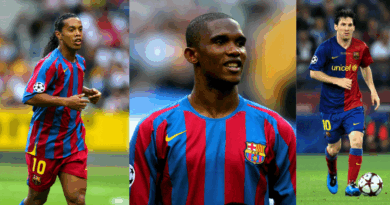
The mid-2000s era of Barcelona was defined by transition. The club had recently emerged from years of instability, and its new stars, Ronaldinho, Deco and Samuel Eto’o, became central figures in Messi’s early development. Ronaldinho, in particular, took him under his wing, later telling Brazilian journalists that Messi reminded him of himself at a younger age.
Barcelona’s 2005–06 season marked Messi’s arrival on the world stage, even though an injury kept him out of the Champions League final. Meanwhile, Argentine fans and media began calling him “the new Maradona,” a label unfairly placed on nearly every talented Argentine forward but one that stuck firmly with Messi after his now-famous 2007 solo goal against Getafe, which visually echoed Maradona’s 1986 “Goal of the Century.”
Read also: Barcelona weighs support and squad needs as Araujo addresses anxiety issues
Guardiola reshapes modern football
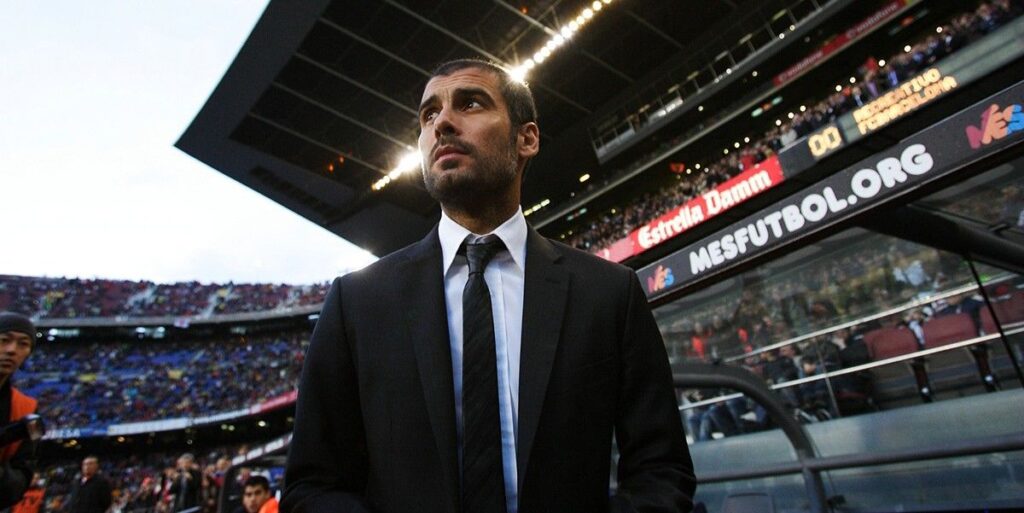
The arrival of Pep Guardiola as manager in 2008 brought one of the most important turning points in modern football. Guardiola introduced a possession-based style that prioritized spatial control, rapid passing and positional interchange. Messi became the centerpiece of this reimagined system.
Under Guardiola, he shifted into the “false nine” role, drifting between midfield and attack to destabilize defenses. The tactical innovation influenced coaches worldwide, from Germany to Japan, and is still studied in coaching courses today.
In 2008, 2009 and 2011 Barcelona lifted the Champions League, winning a historic treble in the 2008,09 season. Messi’s header in the final against Manchester United became one of the competition’s defining images. Between 2009 and 2012 he earned four consecutive Ballon d’Or awards, and in the 2011,12 season alone he scored 73 goals in 60 matches, a statistical outlier rarely seen in team sports.
As the years passed, his game evolved. He dribbled less frequently but became a more complete playmaker, combining passing, spatial reading and finishing in ways that expanded his influence far beyond scoring.
Read also: FIFA announces new match rule for the 2026 World Cup
A changing team and shifting responsibilities
After Guardiola’s departure in 2012, Barcelona entered a period of emotional and tactical change. Tito Vilanova, Guardiola’s former assistant, took over but soon faced a cancer diagnosis. Messi reportedly maintained a close relationship with him, and during the 2012,13 league season scored in 21 consecutive matches, an endurance feat that matched the emotional weight of that period.
Under Gerardo “Tata” Martino in 2013,14, the club tried to manage Messi’s workload amid persistent hamstring problems. The team’s structure became less consistent, and expectations ahead of the 2014 World Cup in Brazil mounted.
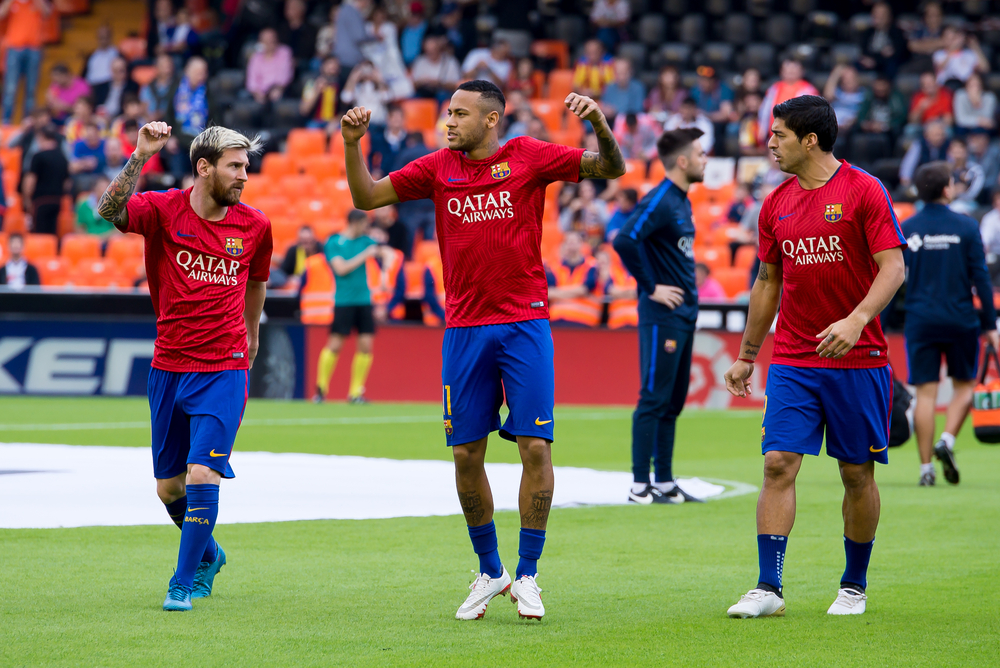
Luis Enrique’s arrival brought renewed energy. He helped form the attacking trio of Messi, Neymar and Luis Suárez, widely referred to as “MSN,” a front line that overwhelmed defenses with a blend of speed, technique and creativity. Barcelona won another treble in 2014,15, and many analysts today argue that Messi played his most complete season during this period, balancing scoring with deep playmaking responsibilities.
The national team, expectations and redemption
Messi debuted for Argentina’s senior team in 2005, although the match lasted only minutes before he was sent off. For years he endured criticism from home supporters, often accused of lacking “Argentine authenticity” because he spent most of his life abroad. This sentiment reflected not just footballing expectations but deeper national anxieties about identity, migration and belonging.
Argentina came close repeatedly, losing the 2014 World Cup final to Germany and falling short in the Copa América finals of 2007, 2015 and 2016. After the 2016 loss to Chile, Messi briefly announced his retirement from the national team, a decision he reversed weeks later.
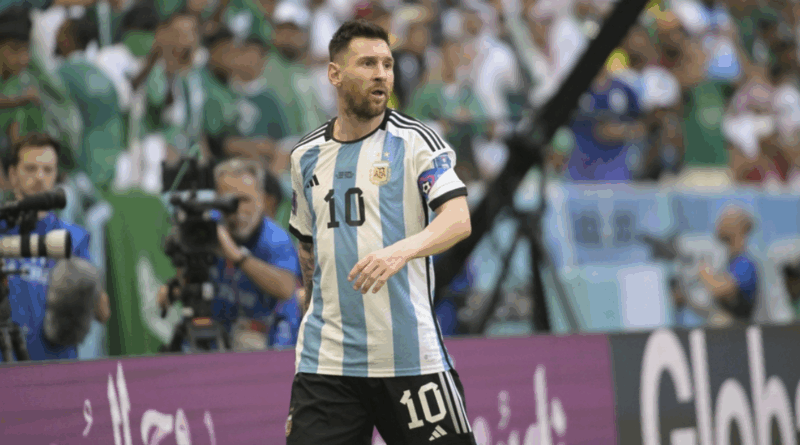
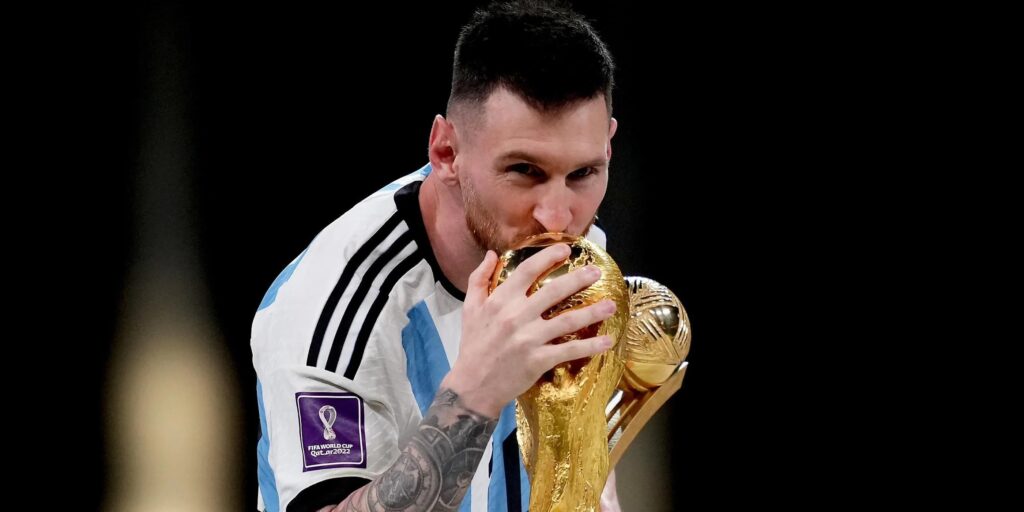
Redemption arrived in 2021 when Argentina won the Copa América. Messi’s performances throughout the tournament were described by many South American commentators as the finest of his international career. The momentum carried into 2022, when Argentina won the Finalissima against Italy and, later that year, the World Cup in Qatar. Messi won the Golden Ball as the tournament’s best player, cementing a legacy that even his earlier critics began to celebrate.
The Barcelona departure and the complicated PSG years
In 2021, Barcelona’s financial collapse forced a scenario few had imagined. Due to La Liga’s strict financial regulations, the club could not register Messi’s renewed contract. The tearful press conference announcing his departure became a global moment, symbolizing not only the end of an era but the consequences of financial mismanagement in elite European football.
Messi joined Paris Saint, Germain, a team centered around star forwards Neymar and Kylian Mbappé. PSG remained dominant in France but struggled in the Champions League, the trophy the club most desired. Messi’s role shifted as he adopted an increasingly pass-first approach, contributing assists and buildup play more than scoring. Off the field, reports in French media described internal hierarchies and expectations that complicated the experience.
Miami and the transformation of American soccer
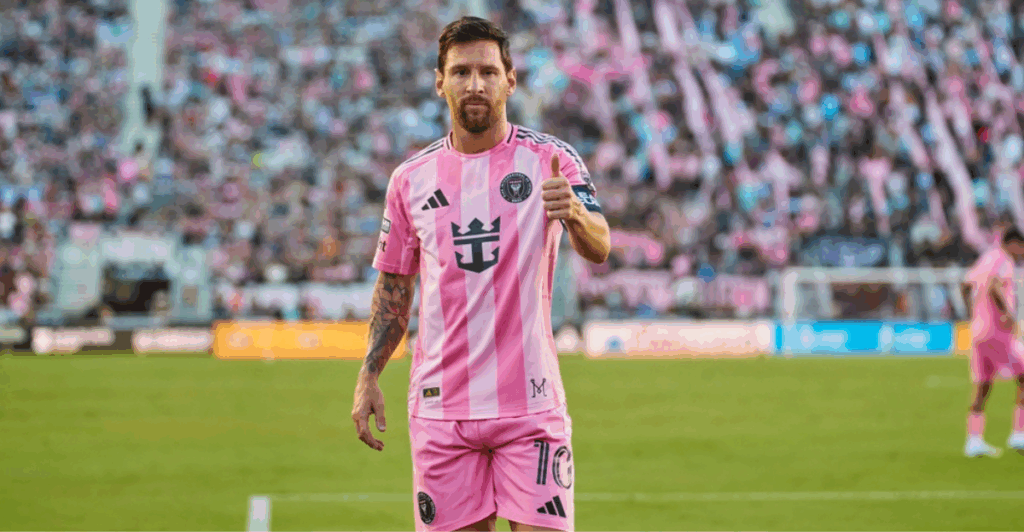
In 2023, Messi surprised much of the football world by choosing Major League Soccer’s Inter Miami, a club co-owned by David Beckham. His contract included an unprecedented package with Apple, Adidas and a future MLS ownership option, reflecting the growing commercial ambitions of American soccer.
The impact was immediate. Ticket prices surged, stadium attendance skyrocketed and Apple’s MLS Season Pass recorded the highest viewership numbers in league history. Messi helped Inter Miami win the 2023 Leagues Cup, the club’s first title.
For U.S. audiences less familiar with global football, Messi’s arrival mirrored past landmark moments in American sports, such as Pelé joining the New York Cosmos in the 1970s or David Beckham’s arrival in 2007. Yet Messi’s move felt broader in cultural scope, symbolizing not only athletic star power but a shift toward the United States becoming a more central player in the global football economy.
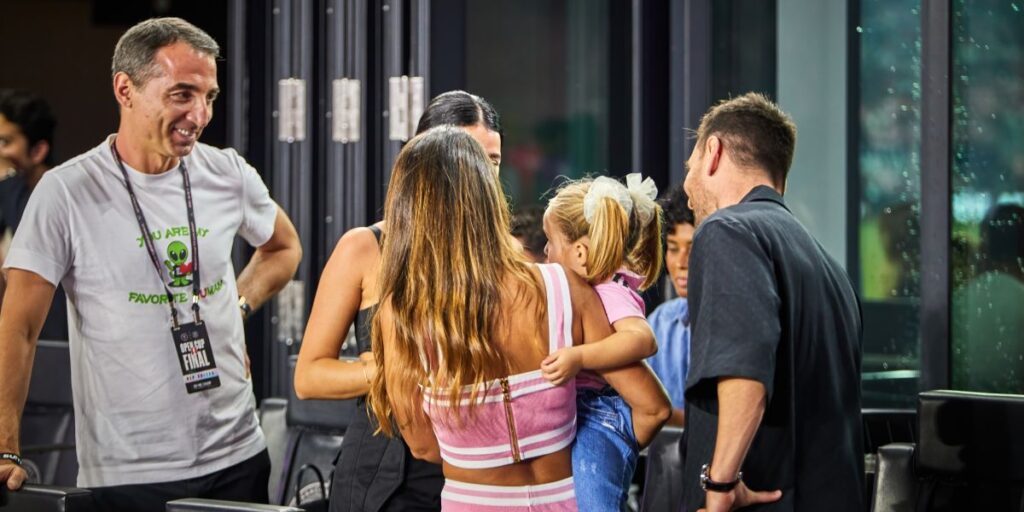
Messi later said in American media interviews that the decision centered on family well-being and lifestyle, emphasizing a desire for balance rather than purely financial incentives.
Style, personality and athletic identity
Messi’s playing style has long revolved around his low center of gravity, allowing him to change direction rapidly. His dribbling is defined by tiny “micro, touches,” a near constant contact with the ball that gives him control on par with the best ball handlers in basketball or the most precise puck carriers in hockey. His first touch is often described by coaches as one of the sharpest ever seen, while his passing vision allows him to detect movements and angles that others overlook.
Despite global fame, Messi maintains a notably private and often introverted personality. He rarely grants long interviews and tends to keep his circle small. Those who have played with him often describe a gentle presence, combined with a fierce competitive instinct that emerges most intensely on the field.
Legacy, influence and the broader cultural impact
Over two decades, Messi collected 10 La Liga titles, four Champions League trophies, the 2021 Copa América, the 2022 World Cup and seven Ballon d’Or awards. He broke numerous records, including most goals for a single club, most goals in a calendar year and one of the highest official assist totals in the sport.
Yet his influence reaches far beyond numbers. In Argentina, he helped unite generational divides between those who idolized Diego Maradona and younger fans who grew up with European football broadcasts. In Europe, he became the symbol of Barcelona’s golden era, a period that redefined tactical standards. In the United States, his arrival accelerated a cultural shift in how Americans consume and value football.
The ongoing debates comparing Messi with Maradona or Cristiano Ronaldo now take place not just in sports bars but in academic discussions, marketing analyses and cultural studies, illustrating how deeply football has woven itself into global identity.
A legacy still unfolding
At this stage in his career, Messi continues to influence both the sport and its surrounding industries. Whether shaping Inter Miami’s rise, contributing to the global growth of MLS or inspiring future generations across continents, his presence remains central to football’s evolving narrative.
What happens next may matter less than what his story already represents, a testament to talent shaped by sacrifice, reinvention and a global game that continues to grow alongside him.