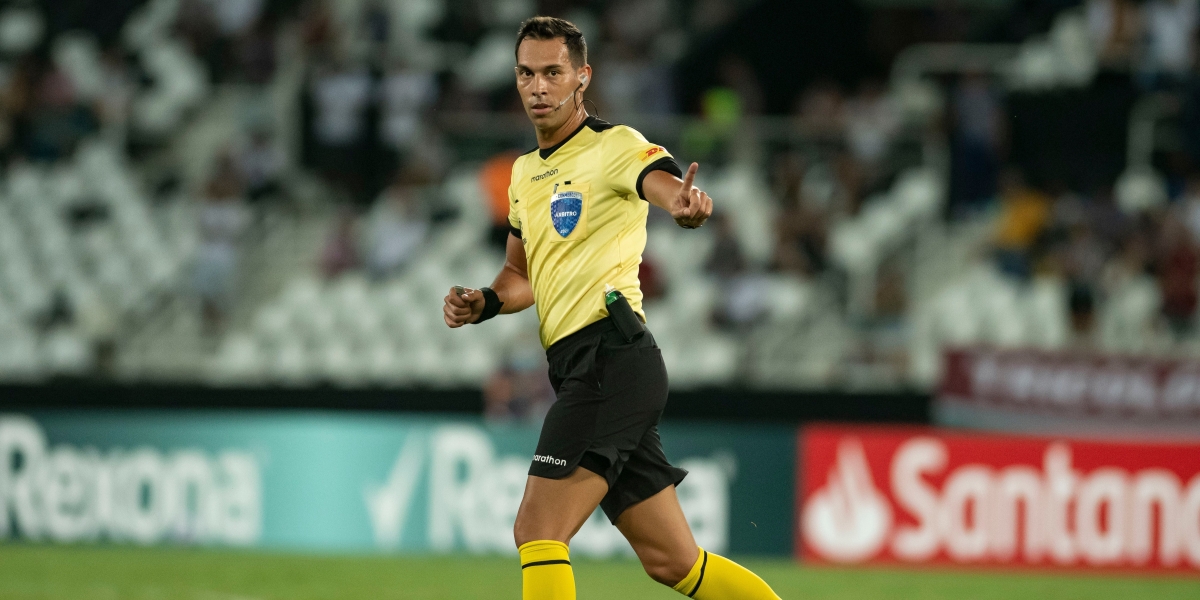
Argentine referee Facundo Tello found himself at the centre of several disputed moments as France defeated Morocco 2-0 to reach the World Cup semi-finals.
The 44-year-old was awarded a rating of 6 out of 10 by L’Équipe following a demanding quarter-final in which several major decisions required the involvement of the video assistant referee.
Tello generally followed FIFA’s instruction to allow physical contests to continue where possible. However, the long interruptions surrounding Kylian Mbappé’s missed penalty and opening goal ensured that the officiating remained one of the main talking points after the final whistle.
Mbappé waits more than three minutes
The most significant delay came after Mbappé was awarded a penalty during the first half.
Read also: ‘If you lie to me, I will leave’: Guardiola’s City warning takes on new weight
Noussair Mazraoui was judged to have fouled the France captain, but the decision was followed by an extensive review of the attacking sequence. VAR examined the challenge on Mbappé as well as a possible earlier foul on Achraf Hakimi.
A total of three minutes and 11 seconds passed between the initial infringement and the penalty being taken. Tello also checked the positioning of the players and ensured that the ball was placed correctly before allowing Mbappé to proceed.
According to L’Équipe’s account of the lengthy delay, Morocco goalkeeper Yassine Bounou eventually saved Mbappé’s effort.
France coach Didier Deschamps expressed his surprise at the sequence when speaking to M6 at half-time.
Read also: Harry Kane’s Bayern future suddenly comes with a Tottenham escape route
“It was a strange situation with that waiting time,” Deschamps said. “He first confirmed his decision, and then there was another check.”
The delay disrupted the rhythm of the match and left Mbappé waiting under considerable pressure before taking the spot kick.
Morocco question Rabiot incident
VAR was involved again when Mbappé opened the scoring in the 60th minute.
Several Moroccan players stopped during the move because they believed Adrien Rabiot had handled the ball while regaining possession. Tello allowed play to continue, and Mbappé produced a curling finish from outside the penalty area.
Read also: ‘I’m not confident’: Red Bull chief delivers troubling verdict on Verstappen’s car
The goal was checked before being confirmed, but the television footage made available to viewers did not establish conclusively whether the ball had touched Rabiot’s hand.
Only one slow-motion replay was shown, and it did not begin early enough to capture the entire incident. The angles used by the VAR officials were not broadcast.
Quoted by Vincent Duluc in L’Équipe, Morocco coach Mohamed Ouahbi told beIN Sports: “Some players stopped because they saw a handball, and there was indeed one. I don’t know whether it should have been called or not, I’m not sure, but that is what happened.”
Ouahbi’s comments reflected Morocco’s frustration, but the available footage offered no definitive evidence that a punishable handball had occurred.
Read also: Man City hit back at Premier League with explosive accusation
Tello allows a physical contest
The quarter-final was Tello’s third appointment of the tournament after he had previously officiated Canada’s 1-1 draw with Bosnia and Herzegovina and South Africa’s 1-0 victory over South Korea.
His approach against France and Morocco was broadly consistent with the more permissive refereeing seen throughout the tournament, with officials encouraged to avoid stopping play for minor contact.
That approach contributed to a physical contest, although Tello did punish Issa Diop for a heavy challenge on Mbappé in the 63rd minute.
Diop received a yellow card, while Mbappé required treatment and was substituted several minutes later. The France captain appeared uncomfortable following the challenge, but no immediate confirmation was provided that his withdrawal was caused by an ankle injury.
Read also: Manchester City CEO says everything is one big “conspiracy theory”
With France preparing for a semi-final against Spain or Belgium, Mbappé’s condition will be closely monitored.
Minor errors in otherwise controlled display
Tello also made several less consequential errors over throw-ins, corners and goal kicks.
Among them was a decision to award Morocco a goal kick after Lucas Digne’s long-range effort appeared to take a deflection shortly before half-time. On another occasion, a corner was awarded when the ball appeared to have gone directly out of play.
Five minutes were added at the end of the first half and six after the second, reflecting the VAR reviews, substitutions and treatment stoppages.
Tello retained control of a difficult match and correctly dealt with many of its physical confrontations. However, the lack of transparency surrounding the Rabiot review and the prolonged wait before Mbappé’s penalty inevitably placed his performance under greater scrutiny.