A narrow margin for error
Monaco has always been one of Formula 1’s most demanding circuits, with little room for mistakes on its narrow streets. But this year’s Grand Prix showed that the challenge does not end when drivers leave the racing line.
Several drivers were penalised for exceeding the pit lane speed limit, highlighting how difficult Monaco’s cramped pit lane can be to manage. The rule was introduced during the 1994 season and remains a key safety measure at every Grand Prix.
For most races in the 2026 season, the pit lane speed limit is 80 kph. At Monaco, however, that limit is reduced to 60 kph because of the tight and congested layout, according to Formula1.com. The issue is likely to become even more pronounced with Cadillac set to join the grid, adding another team to an already crowded pit lane.
Why Monaco creates problems
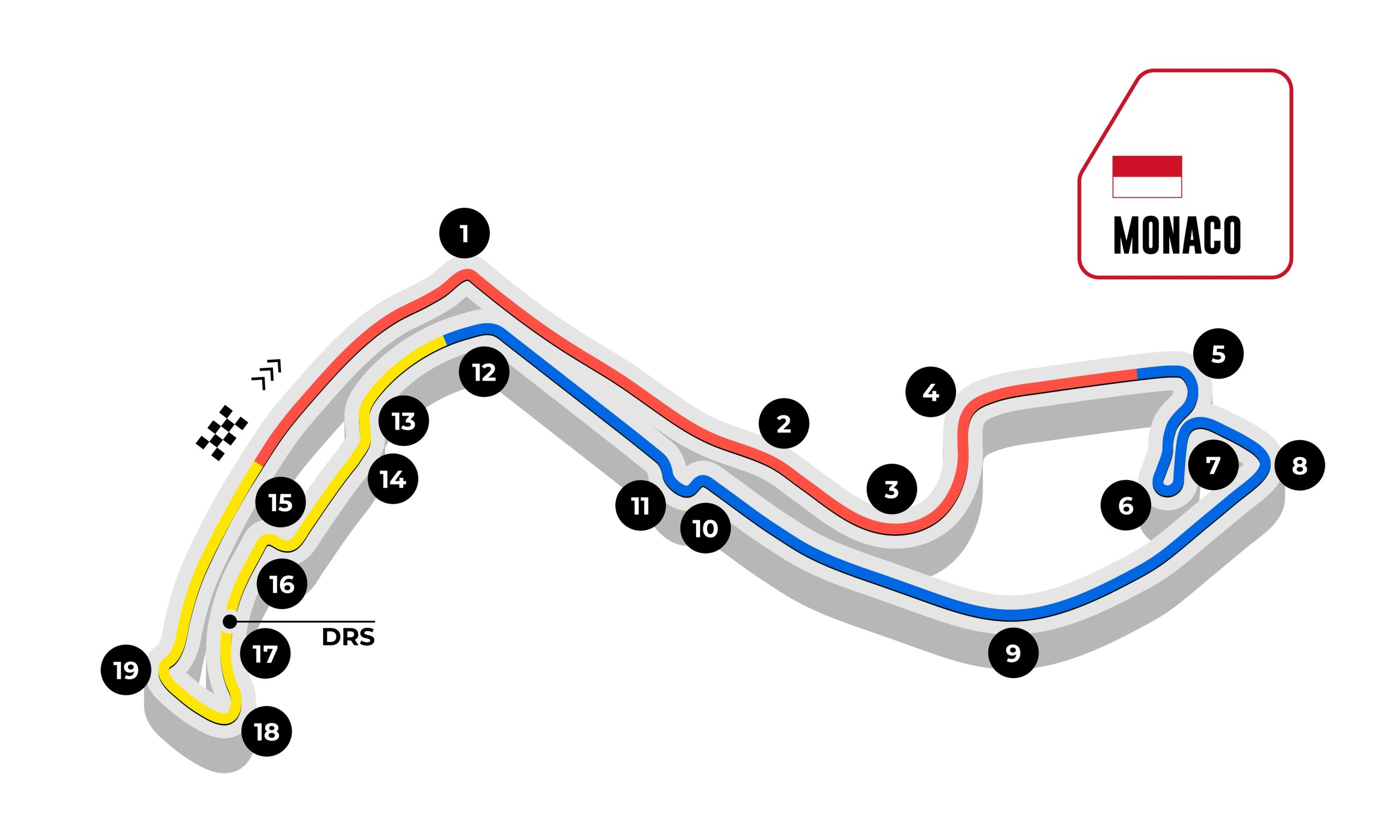
Monaco’s pit lane is unusually awkward. Drivers turn off to the right before the final corner, then make a sharp left shortly after crossing the pit entry line. At the exit, they must negotiate another slight left-hand kink before rejoining the circuit.
Read also: Kylian Mbappe had just hit top form – now Real Madrid have a problem
That layout makes speed control more complicated than it may appear from the outside. Pit lane speed is not measured at one single point. Instead, it is calculated as an average between electronic timing loops and transponders placed along the lane.
At Monaco, a driver who cuts aggressively across the fast lane at entry or exit can reduce the time taken between timing points. Even if the car appears to be only fractionally above the limit, the average speed can still breach the 60 kph threshold.
The margins were extremely small. Five of the six in-race pit lane speeding offences in Monaco were recorded at 60.1 kph, only one tenth above the permitted speed.
Penalties can change a race
The punishment for pit lane speeding depends on when the offence takes place. In practice or qualifying, teams are fined €100 for every kph over the limit, up to a maximum of €1,000.
Read also: Premier League boss breaks silence with damning Manchester City statement
During a race, the consequences are more serious. A driver receives a five-second time penalty, although stewards can impose a harsher punishment if they believe a driver has gained an unfair advantage by speeding.
If the driver makes another pit stop, the car must remain stationary for five seconds before mechanics are allowed to work on it. If the driver does not stop again, the five seconds are added to the final race time.
Monaco shows the cost of small mistakes
The Monaco Grand Prix offered several examples of how quickly a minor infringement can affect a race.
Lewis Hamilton and Oscar Piastri both served five-second penalties during scheduled pit stops. Pierre Gasly did not stop again after receiving his penalty, so the five seconds were added to his result after the race.
Read also: Kasper Schmeichel finds completely new path after football retirement
George Russell’s case was more costly. After being given a five-second penalty, he entered the pits but his car was serviced before the full penalty had been served. That procedural mistake led to a more severe drive-through penalty, which he had to take before the end of the race.
The incidents showed how Monaco’s pit lane can punish even the smallest lapse. On a circuit where overtaking is already difficult and strategy often decides the result, a tenth of a kilometre per hour can be enough to change a driver’s afternoon.
Sources: www.formula1.com
Read also: Andy Murray reveals one major regret about Nadal and Djokovic