Sepp Blatter urges fans to avoid US travel for 2026 World Cup
Former FIFA president Sepp Blatter has joined growing calls questioning whether fans should travel to the United States for the 2026 World Cup, citing political and security concerns surrounding the tournament’s main host nation.
The competition, which will be staged across the United States, Mexico and Canada, has increasingly become entangled in debates over immigration enforcement, domestic politics and international tensions — issues that critics say could affect visiting supporters.
Immigration and safety concerns
Much of the unease centres on the United States’ domestic climate. Reporting highlighted by The Guardian has pointed to the expanding visibility and authority of U.S. Immigration and Customs Enforcement (ICE), raising fears among international visitors about scrutiny at borders and within host cities.
Those concerns have already translated into action. England’s official LGBT+ supporters’ group has announced it will boycott the tournament, arguing that the current environment poses unacceptable risks to its members. Similar anxieties have surfaced elsewhere in Europe, prompting public discussion among fans and football officials alike.
Read also: Trump: "Super Bowl is too far away"; you weren't invited sir?
In the Netherlands, a petition urging a boycott attracted thousands of signatures and forced a response from the Dutch football association. Football authorities and public figures in France and Germany have also moved to address speculation about attendance, underscoring how widely the issue has spread.
Blatter backs calls to stay away
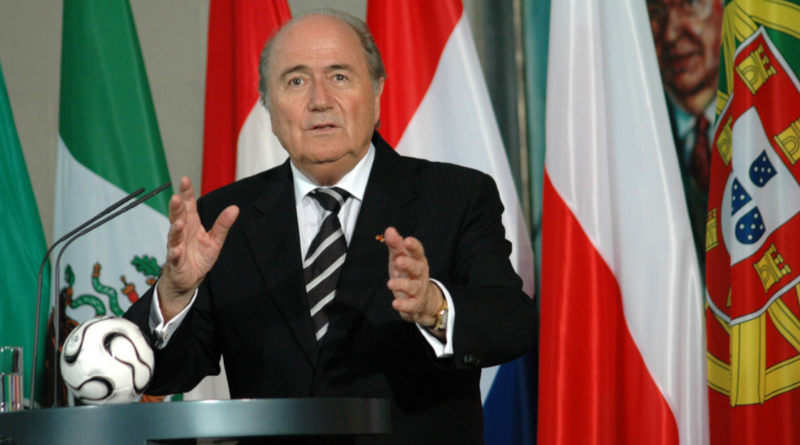
Blatter, who led FIFA from 1998 until 2015, weighed in on the debate on Monday via social media. The 89-year-old appeared to endorse advice that supporters avoid travelling to the United States altogether.
He wrote:
“‘For the fans, there’s only one piece of advice: stay away from the USA!’ I think Mark Pieth is right to question this World Cup.”
Read also: Benched but not sidelined: Carrick’s early test with Sesko
Blatter was referring to Mark Pieth, a Swiss anti-corruption lawyer who worked with FIFA on governance reforms during Blatter’s presidency.
Pieth’s warning
In an interview with Swiss newspaperTages-Anzeiger, cited by The Guardian, Pieth argued that recent developments inside the United States should give supporters pause.
“What we are seeing domestically – the marginalisation of political opponents, abuses by immigration services, et. – hardly encourages fans to go there.
“For fans, just one piece of advice: avoid the United States! You’ll get a better view on television anyway. Upon arrival, fans should expect that if they don’t behave properly with the authorities, they will be immediately sent home. If they’re lucky …”
Read also: Trump turns fire on NFL kickoff rule as culture clash spills into football
His comments reflect a broader concern that immigration enforcement practices could disproportionately affect foreign supporters unfamiliar with U.S. legal and policing systems.
FIFA leadership under scrutiny
Blatter stepped down from FIFA amid corruption scandals in 2015 and was succeeded by Gianni Infantino. In 2023, Blatter and former UEFA president Michel Platini were definitively acquitted over a disputed 2011 payment related to consultancy work.
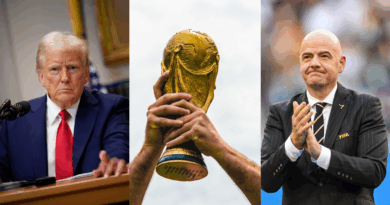
Platini has since emerged as a vocal critic of Infantino, saying last month that the FIFA president has “become more of an autocrat” and “he likes the rich and powerful.” Infantino has cultivated close ties with U.S. President Donald Trump and recently awarded him FIFA’s inaugural Peace Prize — a decision The Guardian reported left some figures within football uneasy.
Infantino has repeatedly defended the 2026 tournament, insisting it will be a force for unity despite global divisions. Pointing to the 2022 World Cup in Qatar, he said:
Read also: Cole Palmer’s price tag grows as Chelsea hold firm on his future
“For the first time in history, also, no Brit was arrested during the World Cup. Imagine! This is something really, really special.”
Whether those assurances will ease concerns remains unclear, as debate over the political and social implications of the 2026 World Cup continues to widen beyond fan groups and into football’s highest ranks.
Sources: The Guardian, Tages-Anzeiger
Read also: Trump drawn into awkward standoff as Paul and White cross paths in Miami