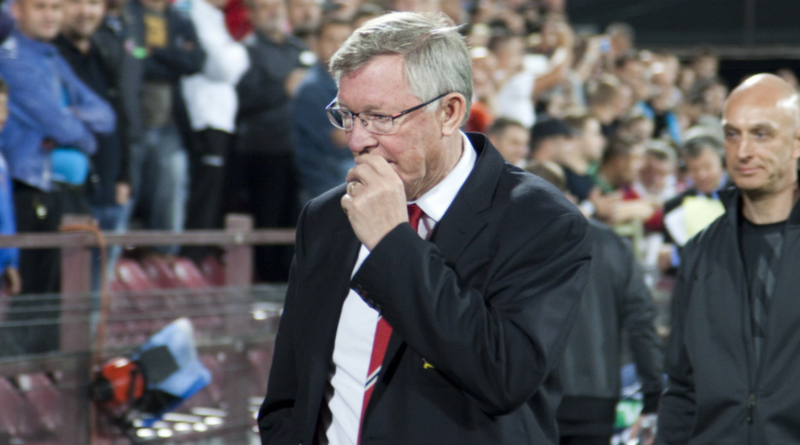
Sir Alex Ferguson has already given his thoughts on Manchester United’s new manager
Manchester United’s decision to place Darren Fletcher in temporary charge has revived memories of how far ahead Sir Alex Ferguson once planned — even during the club’s most successful years.
Fletcher’s interim appointment follows the dismissal of Ruben Amorim earlier this week, after a short spell that failed to steady results or direction. While United begin another search for a permanent manager, the move reflects a pattern that has become familiar since 2013: looking inward during moments of uncertainty.
That approach has shaped much of the club’s post-Ferguson story.
A decade of comparison
Ferguson stepped down in May 2013 after 27 years in charge, leaving behind a team defined by continuity and sustained dominance. His retirement did more than end an era; it created a benchmark that has hovered over every appointment since.
Read also: Russia storms back under its flag as paralympic ban collapses, Kremlin claims victory
United have not come close to replicating that stability in the decade that followed. Managers have come and gone, often under intense scrutiny, with comparisons to Ferguson’s reign never far away.
Amorim’s departure only reinforced that cycle, prompting another short-term solution while broader decisions are deferred.
A future imagined years earlier
Fletcher’s presence on the touchline may feel sudden, but it was not unforeseen. Ferguson had been thinking about the midfielder’s long-term role at the club as early as 2011.
That year, Fletcher was diagnosed with ulcerative colitis, a condition that temporarily threatened his playing career. In interviews given during that period, Ferguson explained that the uncertainty pushed him to prepare Fletcher for life beyond the pitch.
Read also: Michael Schumacher, the private champion fans never really knew
“I started preparing him so that he could be a coach with us. That was, without question, the long-term view of it,” Ferguson said.
He also recalled overhearing Fletcher speak to younger players about standards at the club.
“If you're playing for Manchester United, there's an expectation that you're not showing out there. If you can't do it in a reserve game, then you've got absolutely no chance of playing for Alex Ferguson,” he said.
‘Absolute certainty’
When asked whether Fletcher would eventually move into coaching, Ferguson was unequivocal.
Read also: She changed her flag and felt everything at once, Kasatkina admits she almost cried on court
“Absolute certainty,” he said, pointing to how quickly playing careers pass.
“The best years of your life are playing. After that, it's downhill. Trust me.”
Ferguson added that Fletcher possessed traits that translated beyond the dressing room.
“I think the long-term position will be as a coach, maybe even management. He's got the presence, he's got the sacrifice,” he said, referring to the personal demands of leadership.
Read also: FIFA hands trump a peace prize, then goes silent after airstrikes
Carrying the club’s identity forward
Before stepping into the interim role, Fletcher had been working with United’s youth teams. After his promotion, footage from an Under-18s match last summer resurfaced on social media, offering insight into his approach.
“The fast attacks, it’s proper United,” Fletcher said at the time, explaining that he showed young players clips of former stars to reinforce those principles. “Trying to show a bit of that Man United DNA.”
He also outlined how he wanted his teams to respond tactically.
“If teams want to come out and press, we've got the ability to play around them,” Fletcher said.
Read also: Could Marcus Rashford return to Manchester United after Amorim exit?
Whether Fletcher’s stint lasts weeks or longer, his presence reflects a continuity Ferguson once anticipated even as the club itself continues to search for lasting stability.
Sources: Manchester United club interviews; archived interviews with Sir Alex Ferguson; social media footage.