The single largest broadcast market for the men’s World Cup is Europe.
Media rights across the continent were worth roughly $1.4bn for the 2026 edition, more than North America ($1bn plus), Asia and Oceania ($700m plus), South America ($360m) and Africa ($200m) combined.
The United Kingdom alone was worth $350m, France $150m and Germany $120m.
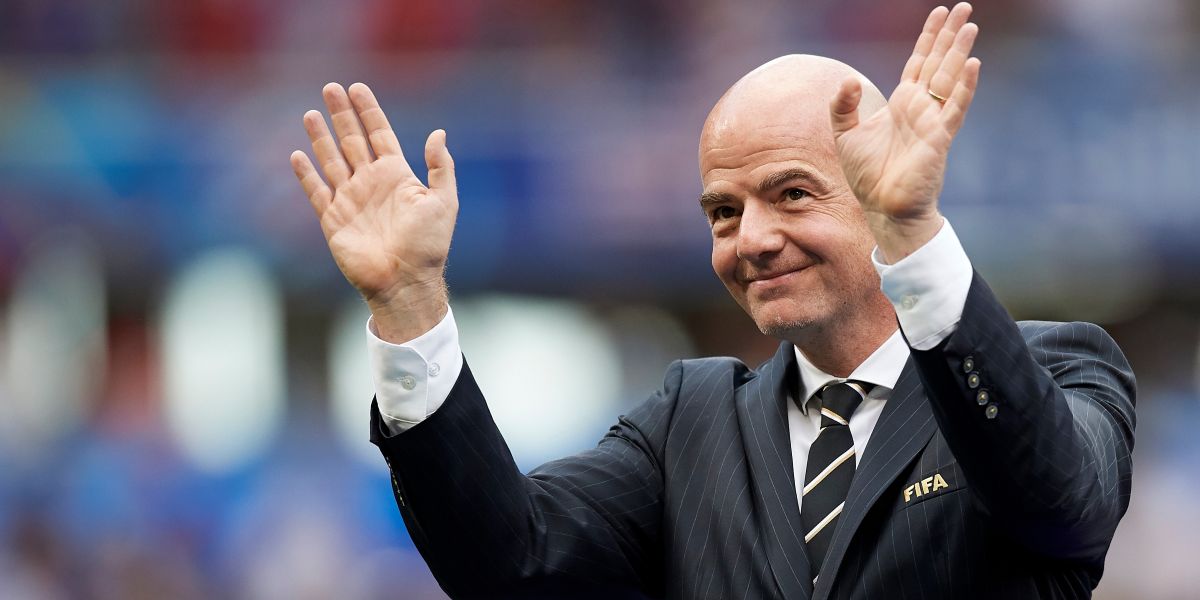
That is the number Gianni Infantino needs private investors to sign off on when he asks them to value the tournament at $20bn.
FIFA’s plan is to spin the men’s and women’s World Cups and their commercial rights into a new subsidiary, FIFA Forward Enterprise (FFE), and sell a 20 percent stake for $4.2bn to a group led by Thrive Capital, the venture firm founded by Josh Kushner.
JP Morgan is structuring the entity. Federations that vote through the plan by September 19 receive an immediate $20m payment, which Infantino has framed as a democratisation of the game.
Europe walks out in a single afternoon
Europe’s answer arrived on Thursday. UEFA’s 55 member associations voted unanimously to withdraw from every FIFA competition for as long as the FFE proposal is alive.
The wording of the resolution left no interpretive room: no team from any UEFA country will play in a FIFA event, women’s or men’s, senior or youth, unless the sell-off is abandoned in its entirety and FIFA gives binding assurances it will never again open its competitions to private ownership.
Read also: Spain fans petition to strip Lionel Messi of Princess of Asturias award
Hans-Joachim Watzke, vice-president of the German Football Association, described the plan as “an outright attack on football”.
EU sports commissioner Glen Micallef dismissed the private-equity blueprint with a single line:
“This isn’t baseball.”
CONCACAF’s 41 member associations convened for their own crisis meeting the same afternoon, reportedly to consider a boycott of their own.
Read also: 'We lost the World Cup during the hydration break': Ancelotti takes blame for Brazil's Norway shock
Where the $20bn actually comes from
FIFA’s headline $15bn cycle revenue for 2026 is dominated by two lines: media rights, worth more than $3.8bn and roughly 60 percent of the total, and commercial sponsorship, worth about $2.8bn across a full slate of partners.
The $20bn equity valuation attached to FFE is a multiple on those flows: an analysis by Paul Quinn put it at roughly 1.3 times the record 2023-2026 cycle revenue, or about five times annualised revenue for perpetual World Cup and tournament rights.
Both multiples implicitly rely on UEFA remaining part of the competition. If Europe’s broadcast revenues were removed, roughly 37 percent of the current media-rights base would disappear. Strip out the biggest sponsor markets, too, and the sponsorship line would likely also come under significant pressure.
That would leave Thrive Capital investing in a tournament facing significant governance uncertainty and a substantially reduced commercial footprint.
Read also: The end is getting closer: Novak Djokovic reveals when he plans to retire
The concentration in Europe is why the boycott has bite. A withdrawal by CONMEBOL would remove Brazil and Argentina but only $360m of media rights.
A withdrawal by UEFA takes Germany, France, England, Spain, Italy and 50 more federations, and the biggest cash flow in the model.
SoftBank was here in 2018
FIFA has been in this position before. In 2018 Infantino pursued a $25bn SoftBank-led financing plan for two new competitions, an expanded Club World Cup and a global Nations League, and was seen off by member opposition, chief among them UEFA.
The current proposal carries an added problem: no independent valuation, fairness opinion or competitive sale process has been disclosed.
Read also: Jonas Vingegaard breaks his silence after surgery with first recovery update
FIFA’s own numbers show the money is not needed. The 2026 cycle produced record revenue, and the $4.2bn raise is roughly equal to the cost of the $20m payment being offered to each of the 211 member federations to secure their vote.
Infantino has told federations they have until September 19 to say yes. UEFA has told them the price of a yes is Europe walking out of the tournament they are being asked to sell.