Matildas went further but earned far less
Australia’s two senior national football teams have found themselves on opposite sides of an extraordinary World Cup pay divide. The Matildas finished fourth at the 2023 Women’s World Cup, while the Socceroos were eliminated in the round of 32 at the 2026 men’s tournament.
Despite the Matildas progressing three rounds further, the women’s team generated approximately A$8.9 million from FIFA’s tournament payment system. The Socceroos received around A$15.8 million, creating a reported difference of A$6.9 million.
According to a NewsWire report published by news.com.au, Australia’s men would have received approximately A$38.6 million had they matched the Matildas’ fourth-place finish. That would have been more than four times the amount associated with the women’s historic campaign.
A historic tournament changed Australian football
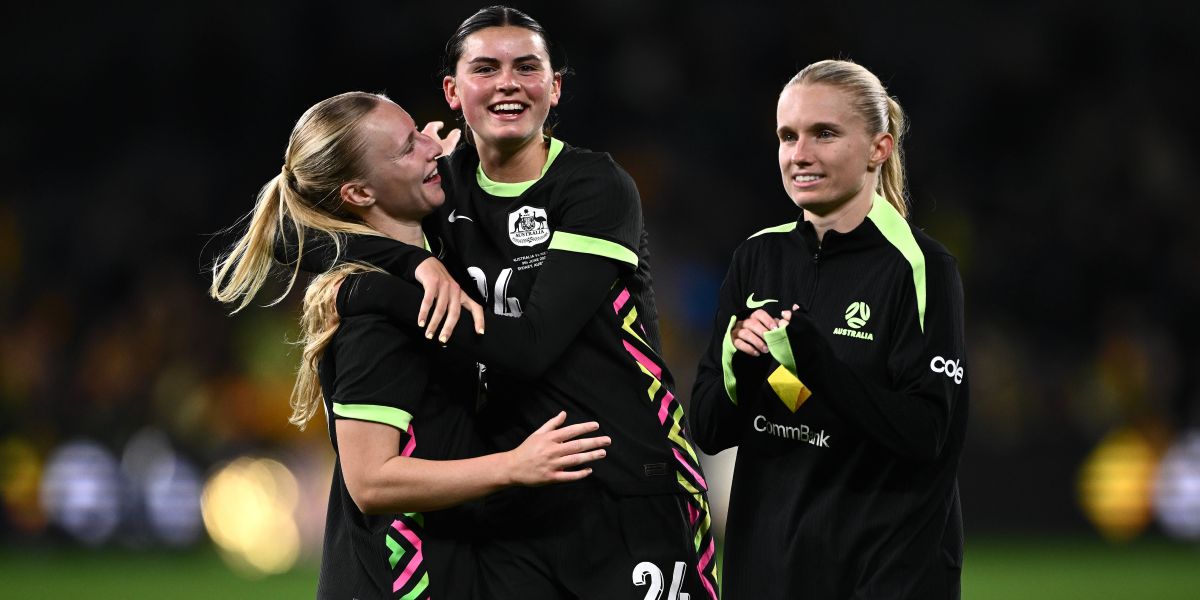
The Matildas captivated the country during the 2023 World Cup in Australia and New Zealand. Victories over Denmark and France carried Tony Gustavsson’s side into the semi-finals, making them the first Australian senior team to reach the final four of a FIFA World Cup.
Read also: ‘Money has no smell’: Saudi Arabia’s $75m esports spectacle takes over Paris
Their quarter-final penalty shootout against France became one of the most-watched television events in Australian history. Although defeats against England and Sweden left the Matildas without a medal, fourth place remains the country’s best finish at a senior World Cup.
FIFA’s payment model awarded Football Australia US$2.455 million for finishing fourth, while each of the 23 players was allocated US$165,000. As detailed in FIFA’s official 2023 payment breakdown, those two elements produced a combined allocation of US$6.25 million, approximately A$8.9 million using the conversion applied in the Australian report.
Socceroos’ dream ends in penalty heartbreak
The Socceroos advanced from their group at the expanded 2026 World Cup before facing Egypt in the round of 32. Emam Ashour gave Egypt an early lead, but an own goal from Mohamed Hany brought Australia level during the second half.
Neither team found a winner during extra time, sending Australia into the first World Cup penalty shootout in the country’s history. Egypt prevailed 4-2, with Jackson Irvine and Awer Mabil the only Australian players to convert their penalties.
Read also: “Why are they using it?”: Chelsea fans fear injury nightmare on battered Sydney pitch
According to Football Australia’s official match report, the defeat ended a campaign in which Australia had progressed beyond the group stage for only the third time. Their comparatively short run still produced a considerably larger FIFA payment than the Matildas received after reaching the semi-finals.
The gap becomes even harder to ignore
The A$6.9 million comparison is striking, but the hypothetical fourth-place figures reveal an even greater divide. A fourth-place finish at the men’s World Cup carried a reported reward of around A$38.6 million, compared with the Matildas’ A$8.9 million allocation in 2023.
That represents a difference of almost A$30 million for achieving the same finishing position. The tournaments operate in different commercial cycles and generate different levels of revenue, but the figures demonstrate how far women’s football remains from financial parity at FIFA’s biggest competitions.
FIFA increased its overall distribution to the 48 men’s teams to US$871 million before the 2026 tournament. As announced by FIFA in April 2026, every participating association was guaranteed US$10 million in qualification money and US$2.5 million for preparation before additional tournament-related contributions were considered.
Read also: Nine records gone in 48 hours as swimmers tear up Games history
“It’s much broader than that”
Women Sport Australia president Chantella Perera said the figures reflected a problem extending well beyond the Matildas and Socceroos. She argued that women’s competitions had increasingly demonstrated their commercial value through audiences, participation and sponsorship.
“It’s much broader than that,” Perera said. “What we’ve seen in women’s sport historically is there have been the facts and the data to support the revenue these tournaments provide.”
“I think conceptually we agree there should be parity for men and women, but we understand there’s still a business decision to be made,” she added. “Obviously an investment still needs to be made across women’s sport.”
Australia already has an equal-pay structure
The World Cup figures are determined by FIFA rather than Football Australia. Domestically, the Matildas and Socceroos operate under a collective bargaining agreement designed to provide equal employment conditions, high-performance standards and revenue-sharing principles.
Read also: Coach addresses Jannik Sinner's mysterious collapse: "We have to live with these episodes."
The agreement does not mean both teams receive identical World Cup payments when FIFA’s tournament allocations are different. Instead, it governs how Football Australia and the players divide the money generated by their respective campaigns.
The Professional Footballers Australia agreement explains that FIFA World Cup payments are shared equally between the players and Football Australia on a 50-50 basis. It also notes that equal prize money at the 2027 Women’s World Cup would bring the Matildas and Socceroos considerably closer in overall earnings.
Asian Cup figures tell the same story
The imbalance is also visible within Asian football. The top four teams at the 2026 Women’s Asian Cup shared approximately A$2.58 million, while the men’s 2023 Asian Cup offered a total prize pool of around A$21.2 million.
The Matildas’ popularity, attendances and television audiences have transformed women’s football in Australia. Participation has continued to grow since the 2023 World Cup, while the team remains one of the country’s most recognisable sporting brands.
Read also: Infantino's inner circle cracks: senior adviser Cordeiro quits FIFA over World Cup sale plan
The numbers nevertheless expose an uncomfortable reality. The Matildas made history, reached the final four and inspired an entire country, yet the Socceroos still earned A$6.9 million more after their World Cup ended at the first knockout hurdle.