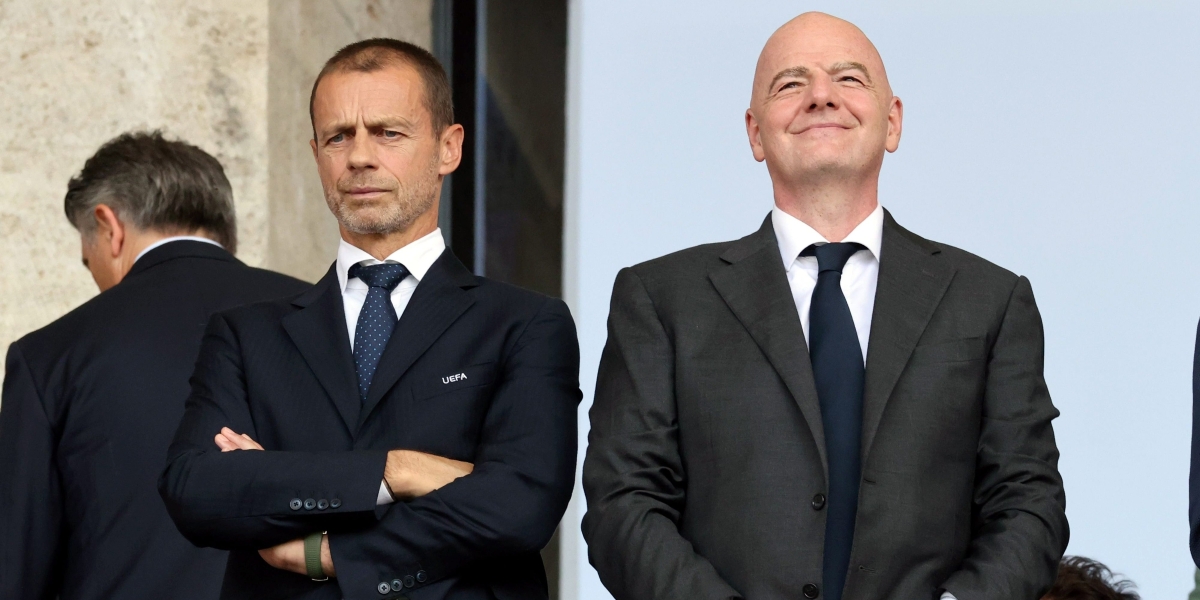
European football’s governing body, UEFA, is set to convene an emergency virtual meeting with its 55 member associations later this week to address FIFA’s controversial proposals for private investment in its flagship competitions. The discussions are expected to include the unprecedented possibility of a World Cup boycott, according to reports.
FIFA’s plan involves establishing a new commercial subsidiary to manage its major events, including the men’s and women’s World Cups and the Club World Cup. This new entity would then allow external investors to acquire stakes, a move FIFA asserts will enable greater financial distribution to football associations globally, aiming to extend development funding to $10 billion and offering each of its 211 member associations up to $20 million in one-off capital.
However, UEFA has expressed significant apprehension, fearing that the plan would grant excessive influence over football’s premier competitions to private interests. The European body issued a strong condemnation of FIFA’s proposals even before their official publication on Tuesday, stating that FIFA had “crossed a line.” This sentiment is echoed by a senior source within the English game, who told BBC Sport that the “threat posed by Fifa’s plan is one of the biggest the game has faced and is on a par with the European Super League,” referencing the ill-fated 2021 breakaway attempt.
European football’s strong stance
The Football Association (England) was notably not consulted prior to FIFA releasing its proposals, highlighting the growing chasm between the two powerful bodies. This latest dispute follows previous tensions, including FIFA’s 2021 push for a biennial World Cup, which UEFA staunchly opposed.
Read also: Kylian Mbappe had just hit top form – now Real Madrid have a problem
UEFA’s potential boycott threat carries significant weight within global football. While representing a quarter of FIFA’s 211-country membership, its members include many of the world’s most successful teams. European nations have consistently dominated recent World Cups:
- This summer’s tournament saw six of the eight quarter-finalists, and the eventual winners Spain, hail from Europe.
- In the 2022 World Cup, five quarter-finalists were European.
- The 2018 edition featured six European quarter-finalists.
FIFA’s pursuit of increased revenue streams could also lead to major competitions being played more frequently and with more participants, a prospect that further concerns UEFA regarding player welfare and the integrity of the international football calendar.
A history of tension
The current standoff is the latest in a series of disagreements between FIFA and UEFA. UEFA president Aleksander Ceferin notably boycotted the World Cup final this month, underscoring the deep-seated friction between the two organisations. Initial plans for FIFA’s private investment scheme were first reported by the Financial Times and The Times.
The virtual meeting this week will be a critical juncture, as UEFA’s member associations weigh the implications of FIFA’s commercial strategy against the potential for a drastic response, including a boycott of football’s showpiece event.
Read also: Premier League boss breaks silence with damning Manchester City statement
Read also: Kasper Schmeichel finds completely new path after football retirement