A ballistic missile tore into King Khalid International Airport in Riyadh over the weekend, killing at least 12 people and wounding around 300. The dead included four Saudi citizens, two Bangladeshi residents, and nationals from the United States, Jordan, Palestine, Syria, Sudan, and Egypt, according to Al Jazeera. It was the third attack on a Saudi airport in a week and the deadliest strike on the kingdom in more than a decade.
The Houthis claimed it. “Our armed forces targeted King Khalid Airport in Riyadh at midday with a ballistic missile that hit its target,” their military spokesman Yahya Saree said in a statement after an earlier strike the same week. UN Secretary-General Antonio Guterres said he was “deeply shocked” and demanded that such attacks “must cease immediately.” UN special envoy Hans Grundberg called the strikes “a grave escalation.”
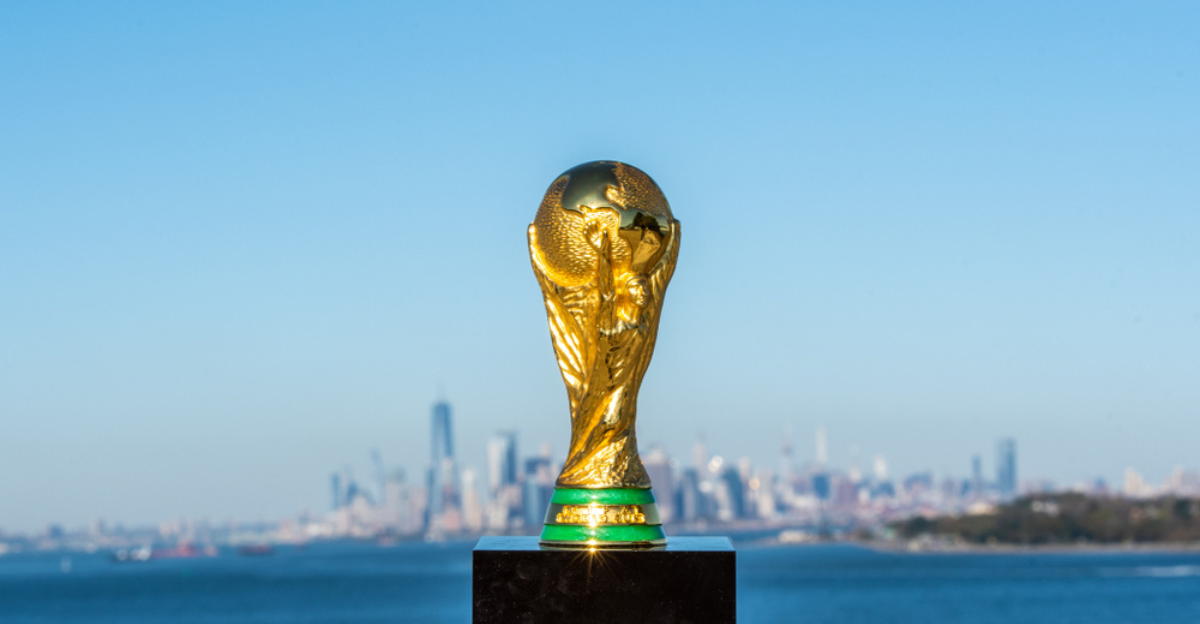
The infrastructure now under missile fire is also central to the 2034 FIFA World Cup. King Khalid International is the main gateway to Riyadh, which is set to host eight of the tournament’s 15 stadiums, including the opening match and the final at King Salman International Stadium.
A region at war with itself
The security picture around every Saudi venue has deteriorated sharply through 2026. A UN-brokered truce in Yemen that had largely held since 2022 collapsed in July, and Houthi forces have since captured roughly 150 kilometres of Red Sea coastline while the internationally recognised government has launched a counter-offensive, Al Jazeera reported. More than 100,000 people have been displaced since the ceasefire fell.
Read also: De Zerbi met Bentancur with a kiss, not a dressing-down, after the Old Trafford red card
Running alongside that is the Iran war, which began in late February 2026 after US and Israeli strikes on Iranian nuclear sites. Saudi territory was drawn in within days, with missile attacks on Prince Sultan Air Base and the Ras Tanura oil refinery, and the conflict has rumbled on through the year. Every one of the 15 proposed World Cup venues sits inside the known range of Iran’s ballistic missile arsenal.
Billions already in doubt
The economic question is already visible on the construction sites. Saudi Arabia has quietly suspended the $2.5bn NEOM stadium, the 46,000-seat venue meant to perch 350 metres above the ground inside The Line megaproject, Middle East Eye reported on 4 October. The construction intelligence platform MEED Projects classified the project as “on hold” with no end date. Of the 15 stadiums, 11 are new builds; only a handful were under active construction earlier in the year, and the rest largely exist as renderings and planning documents.
Airlines are reacting faster than the builders. Lufthansa and Air India suspended service to King Khalid International after the October strikes, and more than 300 flights were cancelled at the airport on the day of Saree’s missile claim.
What FIFA can and cannot do
FIFA has written itself unusually wide latitude. Its tournament regulations state that the governing body can “cancel, reschedule or relocate one or more matches … for any reason at its sole discretion, including as a result of force majeure or due to health, safety or security concerns,” a clause it has leaned on before.
Read also: Amorim picks his most attacking lineup yet for Sassuolo trip
Precedent for actually moving a senior tournament is thin but real. Colombia pulled out of hosting the 1986 World Cup over economic strain and Mexico took it on. The 2003 Women’s World Cup was moved from China to the United States at short notice because of the SARS outbreak. In 2019, FIFA switched the Under-17 World Cup from Peru to Brazil over organisational concerns.
Saudi Arabia was awarded the 2034 tournament by acclamation in Zurich in December 2024 as the sole bidder. FIFA president Gianni Infantino, who has leaned heavily on his relationship with Crown Prince Mohammed bin Salman, has not publicly addressed whether the past week’s attacks change FIFA’s planning. The tournament’s exact dates are still being set, with FIFA signalling openness to a January 2035 slot to avoid both Saudi summer heat and Ramadan.
The next scheduled fixed point is the FIFA presidential vote in March 2027, when Infantino faces re-election and the governance of the Saudi tournament will be back in front of the 211 member associations.
Read also: Gordon’s first for Barcelona: La Liga leaders extend perfect start to eight wins