More than a painful pause
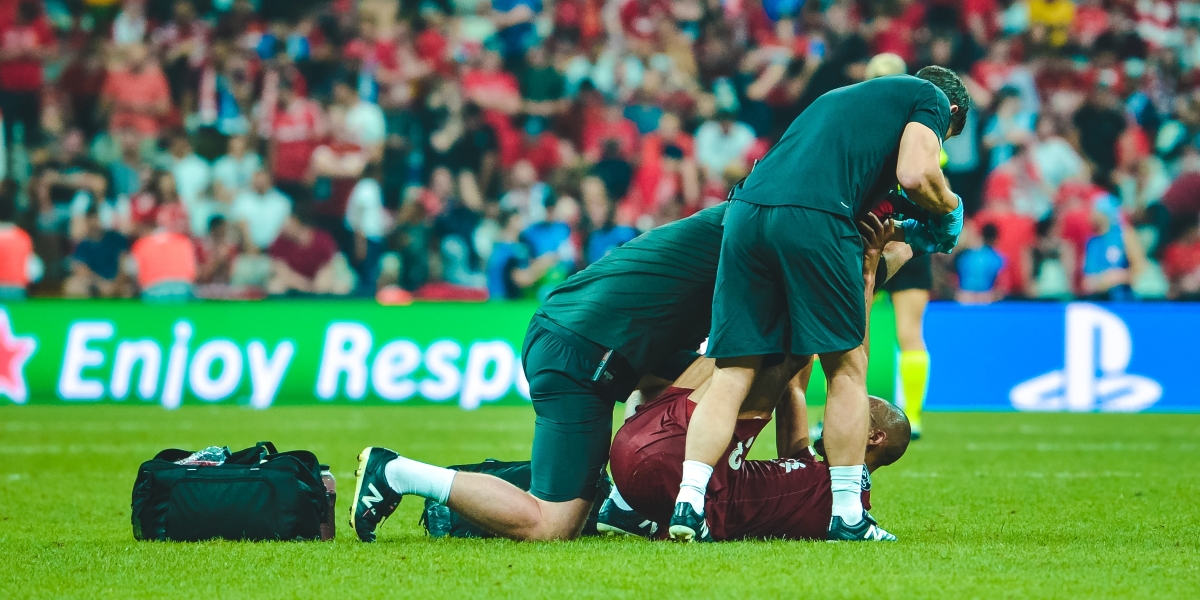
At a World Cup played across North America in summer conditions, cramps are not just a minor inconvenience. They can change a match.
Players may be able to continue after treatment, but once the body has reached the point of cramping, the risk of it happening again remains high. That makes prevention almost as important as treatment, particularly in knockout matches where extra time and penalties can push players far beyond their usual limits.
According to DR Sporten, cramps are caused by a combination of factors rather than one simple trigger. Fatigue, dehydration, lack of salt, low carbohydrate levels and poor neuromuscular control can all play a role.
Stretching can still help in the moment. It may calm the affected muscle and restore some of the control between nerve and muscle. But it does not solve the underlying problem if the player is exhausted, dehydrated or running low on energy.
Read also: AI predicts 2026 F1 Drivers' Championship
Rune’s battle offers a warning
The issue is familiar in elite sport beyond football.
Danish tennis player Holger Rune has dealt with serious cramp problems during his career, and his work with Team Danmark has shown how detailed the prevention process can become.
According to Team Danmark, Rune’s support team has tested how his body responds in match conditions, including his fluid and salt balance and his carbohydrate strategy.
That is the kind of work football teams will also rely on during the World Cup. Players can lose large amounts of fluid during a match, especially in high temperatures, and they cannot always replace it quickly enough while the game is still being played.
Read also: Russia threatens Romania after gymnastics flag dispute
Team Danmark nutritionist Cecilie Refsgaard has described the key areas as fluid, salt, carbohydrates and targeted muscle preparation. In practical terms, that means knowing how much a player sweats, what the player loses through sweat, and what the body needs before, during and after competition.
Pickle juice and quick resets
Rune has also used less conventional methods.
His mother and manager, Aneke Rune, told DR Sporten that Viktor Axelsen had once advised him to try pickle juice when he was suffering from cramps.
“When Holger suffered from cramps, Viktor Axelsen gave him advice with pickle juice,” she said. “It is not scientifically documented that it works, but it works for Holger. It is extremely salty and sour, and it simply gives the senses and muscles a reset within a relatively short time.”
Read also: Argentine footballer loses wife and two children in earthquake horror
Pickle juice has become a familiar sight in some sports because athletes believe the sharp taste can trigger a rapid response in the nervous system. It should not be seen as a cure, and it does not replace proper preparation, but some athletes feel it helps them in the moment.
Rune has also tried salt shots and mental reset techniques, including deep breathing, to reduce tension when the body is under pressure.
New rule could change decisions
At this World Cup, the medical question is also a tactical one.
According to IFAB, an outfield player who receives on-field assessment or treatment must leave the pitch and stay off for one minute once play has restarted.
Read also: Clarke steps down after restoring Scotland’s belief, ending their FIFA World Cup 2026 campaign
There are exceptions, including goalkeeper injuries, head injuries, collisions between team-mates, serious injuries and situations where the injured player is due to take a penalty.
That matters in a knockout match. A player with cramp may want immediate treatment, but the team must also consider whether it can afford to play temporarily with ten men. The rule is designed to protect the flow of the game and reduce time-wasting, but it could make cramp management even more delicate.
Not always game over
A cramp does not necessarily end a player’s match.
Thøger Persson Krogh, chief physician at the Sports Medicine Center at Regionshospital Nordjylland and a doctor for Team Danmark, told DR Sporten that a player can sometimes be reset quickly enough to continue.
Read also: The 2026 World Cup just got serious as last 32 fixtures produce huge clashes
“It doesn’t have to be game over if a player gets cramp. You can temporarily reset it by stretching. It actually helps and restores some of the nerve-muscle control that has gone awry,” he said.
That could be crucial late in matches. A player who cramps near the end of extra time might still be able to take a penalty if the medical staff can ease the problem quickly enough.
For coaches, doctors and players, the message is clear. Cramps are not just about pain. They are about preparation, heat, nutrition, fatigue and timing.
At this World Cup, one tight muscle could end up influencing far more than one player’s night.