Why does the Spanish Super Cup take place in Saudi Arabia?
When Barcelona and Real Madrid met in Jeddah this January, the match delivered drama on the pitch but once again highlighted how far Spain’s Super Cup has travelled from its domestic roots. Once a brief curtain-raiser, the competition has become a mid-season event staged thousands of miles from home, a shift that continues to divide opinion across Spanish football.
The 2026 edition of the tournament was held in Saudi Arabia, where the Super Cup has now been staged in five of the past six years. Only the 2021 competition returned to Spain, after coronavirus travel restrictions made overseas hosting impractical.
Why the tournament moved
The Spanish Football Federation agreed a deal with Saudi authorities in 2019 to relocate the Super Cup for an initial three-year period. That agreement was later extended through to 2029, with reports suggesting discussions are ongoing about a further five-year extension.
While the federation has not published financial figures, it receives payments from the Saudi government to stage the competition in the Middle East. The move reflects a broader effort to expand Spanish football’s global reach, though critics argue the commercial upside comes at the expense of accessibility for domestic supporters.
Read also: Axelsen’s ranking slide raises alarm
Format and scheduling
The modern Super Cup features four teams: the top two finishers in La Liga and the finalists from the Copa del Rey. If a club qualifies through both competitions, the next highest-placed league side is invited instead.
The competition consists of two semi-finals followed by a final, all played at the host venue. It was moved from summer to January to avoid clashes with pre-season schedules, replacing the former two-legged format played at club stadiums.
Barcelona edge Clasico final
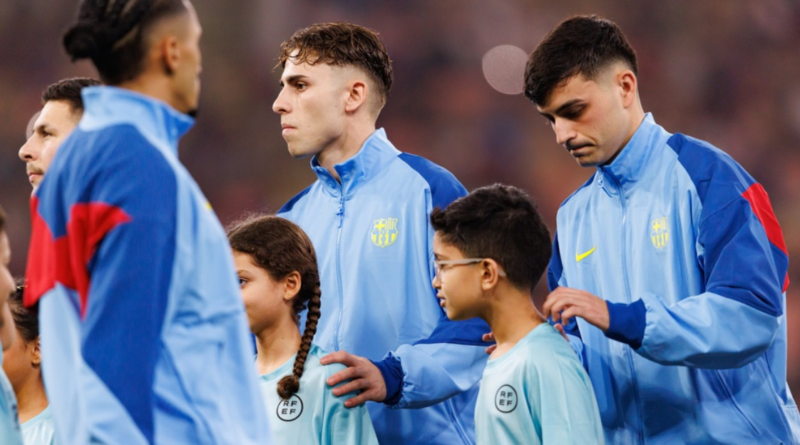
Barcelona defeated Real Madrid 3–2 in the final at the 62,000-capacity King Abdullah Sports City stadium, securing the trophy after a closely fought Clasico.
Barcelona had reached the final with a dominant 5-0 win over Athletic Club, scoring four times in the first half. Real Madrid booked their place with a 2-1 victory over Atletico Madrid, setting up the season’s second meeting between the rivals following their league encounter in October.
Read also: Arbeloa had to console Real Madrid players after exit: No player took accountability
Supporter concerns
BBC Sport has reported that many supporters regard the Super Cup as less significant than La Liga, the Copa del Rey and European competitions, a perception reinforced by its Saudi location. Fans cited high travel costs and logistical challenges, with one Real Madrid supporter describing the event as “a scam”.
Players have echoed those concerns. Athletic Club captain Inaki Williams said: “Taking a national competition out to another country does not make things easy for [fans] to move and follow the games.” His team-mate Unai Simon added: “Fewer fans [will come] each time.”
Prize money
According to Spanish newspaper Marca, the tournament carries a total prize fund of approximately £19.9m (€23m). The money is distributed unevenly, with allocations influenced by factors such as historical success, titles won and television audiences.
For Spanish football’s authorities, the Super Cup remains a lucrative global showcase. For many fans, however, it is a competition that feels increasingly distant — even when the football itself delivers.
Read also: VAR puts offside back under scrutiny as Wenger proposal returns
Sources: BBC Sport, Marca
Read also: Bird shit and winter jackets: Top badminton players withdraw from India Open