Winners, losers and wildcards: Key takeaways from the 2026 World Cup draw
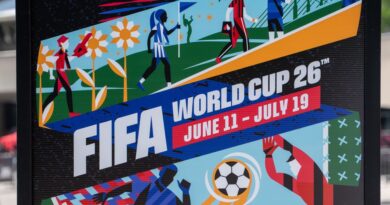
The 2026 World Cup picture became much clearer on Friday as the official draw in Washington DC laid out the first real contours of a tournament unlike any before it.
The expanded 48-team format debuting next summer across North America already promised new wrinkles. The draw only amplified them. With sports icons helping unveil the groups, the evening had the feel of a show, but the consequences for the teams were anything but theatrical.
Three co-hosts. Dozens of shifting expectations. And, as GOAL’s early reporting noted, plenty of nations reassessing their chances before a ball has even been kicked.
A promising window opens for the United States
Of all the immediate beneficiaries, the United States may have walked away smiling the widest. According to GOAL, the draw delivered the friendliest possible scenario for Mauricio Pochettino, who just a few months ago found himself under scrutiny after a difficult start and widely reported tension with Christian Pulisic. But a five-match unbeaten run has steadied the ship, and Friday’s grouping only reinforced that momentum.
Read also: Jeff Kent finally breaks through, and a Hall of Fame controversy explodes in his shadow
Australia, Paraguay and the weakest UEFA play-off pathway make up Group D. No group is truly soft in a World Cup, but this comes close. And considering the Americans’ emphatic 5–1 victory over Uruguay in recent weeks one of their most confident performances in years belief inside the camp should rise. The U.S. haven’t reached a quarter-final since 2002. Quietly, they may feel that drought could be challenged.
France receive a sharper test than expected
France, meanwhile, learned quickly that seeded status doesn’t guarantee comfort. GOAL’s breakdown emphasized that Norway, arguably the most dangerous Pot Three option, landed directly alongside Didier Deschamps’ side.
Erling Haaland alone changes the temperature of any group, but Norway’s physical, vertical style presents additional tactical headaches.
And then there’s Senegal. In excellent form, loaded with athleticism and coming off a cycle in which they routinely challenged top-tier nations, the African champions add another layer of unpredictability.
Read also: Trump team pressed on travel restrictions amid rising World Cup concerns
Their historic upset of France in 2002 still lingers in memory. Les Bleus should advance, of course. But a slow start could turn this group tense very quickly.
Belgium’s veterans gain unexpected daylight
Belgium’s “Golden Generation” has been on the downslope for years, and their uneven qualifying run did little to convince skeptics. But the draw handed them breathing room. GOAL notes that with Iran, Egypt and New Zealand forming their group, Belgium have a clear opportunity to settle into the tournament rather than survive it.
Kevin De Bruyne and Romelu Lukaku remain central figures, and if fit, still carry enough quality to dictate matches at this level. Egypt represent the toughest hurdle, but even that test feels manageable for a squad with Belgium’s experience. For a nation long stuck between potential and disappointment, this bracket offers a welcome reset.
Scotland’s path tightens again
Scotland’s return to the main stage comes with familiar trepidation. In its assessment, GOAL highlighted how Brazil now under Carlo Ancelotti and showing signs of reorganization still wield enough attacking talent to overwhelm weaker sides.
Read also: Why Europe is backing away from Vinícius Júnior, and who’s ready to move for him
Morocco, unbeaten in 19 straight matches and fresh off a historic 2022 semifinal run, bring equally significant problems.
It’s a tall order. Scotland showed remarkable steel in their decisive qualifying win over Denmark, and they’ll likely need that same edge to reach the last 32. Nothing here is impossible, but little will come easily.
Spain’s route looks smooth for now
Spain, the world’s No.1-ranked team, were always going to enter as contenders. The draw simply made their road cleaner. GOAL points out that Uruguay’s inconsistency under Marcelo Bielsa, Saudi Arabia’s step back since their 2022 shock win over Argentina, and Cape Verde’s inexperience collectively reduce any immediate threat.
Spain have spent the last several years refining their possession structure while integrating younger talent, and this group gives them space to settle without the pressure of an early showdown. If form holds, a deep run feels not just likely but expected.
The dream final that won’t happen
For more than a decade, fans have imagined one scenario above all: Lionel Messi and Cristiano Ronaldo meeting in a World Cup final, a definitive punctuation mark to an era the two superstars have defined. That fantasy ended with Friday’s draw. GOAL confirmed that Argentina and Portugal landed on the same half of the bracket, closing the door on a championship clash.
Still and this is notable both teams were handed agreeable group-stage opponents. So while the Hollywood ending is gone, a knockout meeting remains firmly on the table. A quarter-final between the two would still stop the sporting world in its tracks.
The broader picture
Draws don’t decide tournaments, but they do reveal pressure points. The 2026 edition, with more teams, more host cities and more logistical complexity than any previous World Cup, will produce surprises long before the knockout rounds begin.
What Friday provided was the first mapping of opportunity and danger: a soft landing for the U.S., tension for France, renewed hope for Belgium, and a bracket that keeps the Messi–Ronaldo storyline alive if not quite in the form fans once imagined.
Read also: England is betting big on AI, and what the data reveals may shock the football world
Now the waiting begins. Squads will evolve, form will shift, and plans will once again be redrawn. But for the first time, the road to 2026 finally feels real.
Sources: GOAL, AFP