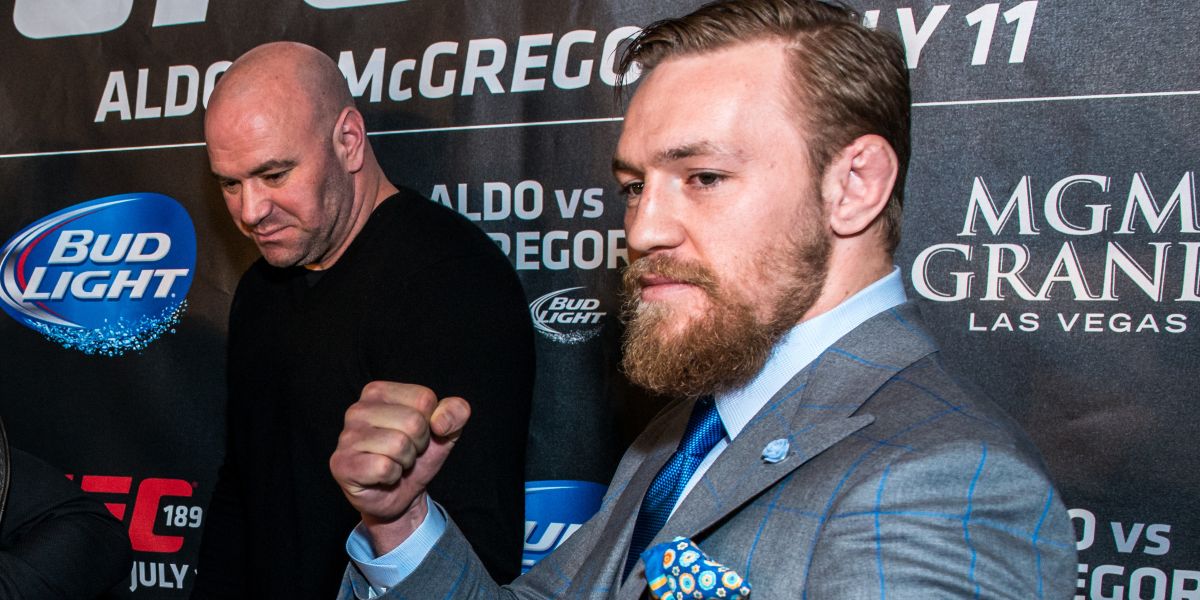
Conor McGregor, the former two-division UFC champion, is reportedly facing accusations of using “powerful, banned drugs” during his extensive recovery from a severe leg injury. These allegations surface just weeks before his highly anticipated return to the octagon on July 12, where he is scheduled to fight fellow former champion Max Holloway in Las Vegas, Nevada.
The accusations, detailed in a report by The New York Times, claim McGregor utilized these substances under the guidance of sports doctor Neal ElAttrache. ElAttrache, who also serves as head physician for the Los Angeles Dodgers and Los Angeles Rams, oversaw McGregor’s leg surgery following his tibia break against Dustin Poirier in July 2021. That fight, a trilogy bout, ended in a first-round TKO loss for McGregor and marked his last UFC appearance five years ago.
The doctor’s referral and manager’s defence
According to the report from The New York Times, ElAttrache expressed concern that McGregor’s bones might fuse slowly or not at all after the injury. This led him to recommend consultations with physicians specializing in bone healing and metabolism. While ElAttrache stated he did not prescribe any steroids or hormones to McGregor directly, he confirmed referring him to a specialist who did. “I purposely wasn’t involved with his evaluation by the consultant nor with prescribing medication,” ElAttrache told The New York Times.
Audie Attar, McGregor’s manager, did not confirm or deny the use of performance-enhancing drugs but emphasized the extreme nature of the injury. Attar told The New York Times that “even with surgery there was a real risk Conor might not walk again, a high likelihood he would face numerous lifelong side effects that would limit his mobility and serious doubts he would ever return to the octagon.” He added that McGregor’s recovery involved “a combination of a gruesome surgery, intense physical therapy and appropriately prescribed medicines.” Attar also voiced strong objections to the disclosure of what he termed his client’s “purported personal medical records,” calling it “an unfathomable breach of health and privacy protections.”
Read also: UK Tax-service (HMRC) is coming after Manchester City now
USADA history and the looming comeback
McGregor has never tested positive for a banned substance in a drug test. However, his history with anti-doping protocols has drawn scrutiny. He notably left the USADA testing pool in 2022 and had not been tested since approximately the time of his fight with Poirier. He subsequently re-entered the USADA testing pool in October 2023. Furthermore, McGregor received an 18-month suspension from the UFC’s anti-doping program, Combat Sports Anti-Doping (CSAD), running from September 20, 2024, to March 20, 2026, due to three “whereabout failures.”
Despite these allegations, McGregor’s comeback fight remains scheduled. He will headline UFC 329 against Max Holloway in a five-round welterweight bout at the T-Mobile Arena in Las Vegas. This fight marks his first UFC appearance in half a decade, a period now overshadowed by questions regarding his recovery methods.
Read also: The huge job Jose Mourinho rejected for Real Madrid – and why it could already haunt him