Before Germany’s 2006 World Cup became a national fairy tale, it looked dangerously close to becoming a footballing failure.
The home tournament is now remembered as the Sommermärchen, a month of noise, flags and restored pride. But the mood before the opening match was very different.
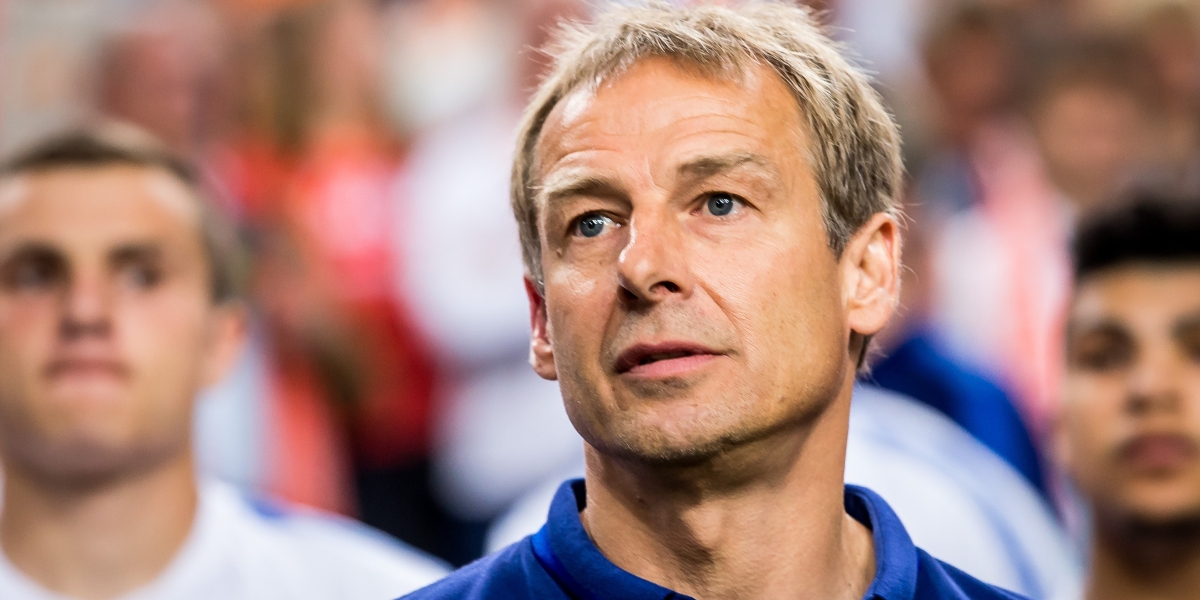
German football was uncertain, heavily criticised and searching for a new identity under Jürgen Klinsmann.
According to ZDFheute, the ZDF documentary Schland in Sicht! looks back at the period before the 2006 World Cup, when German football was described as being “on the brink” and Klinsmann’s revolution was threatening to fail.
Read also: Dana White on ownership of new Las Vegas NBA Team: “YES”
A revolution under pressure
Klinsmann did not arrive as a cautious reformer.
He wanted to modernise the national team, change training methods and place greater trust in a younger, more athletic generation of players. That ambition made him different, but it also made him vulnerable.
Before the tournament, there were doubts about his methods, his staff and the direction of the team.
Germany were hosting the biggest football event in the world, but the national side did not enter it with complete public confidence. The pressure was enormous, and Klinsmann’s project still looked unfinished.
Read also: Abu Dhabi United Group financed them for years
The team that changed the mood
Then the tournament began.
Germany’s young team played with speed, energy and a sense of freedom that quickly changed the national mood. What had looked uncertain before the World Cup started to feel exciting once the ball was rolling.
The team did not win the tournament, but it did something that mattered deeply at home. It made the country believe in the national side again.
Germany finished third, but the emotional impact went far beyond the final placing. The side reconnected with supporters and gave the country a summer that still carries a special place in German football memory.
Read also: Aymeric Laporte exposes ugly side of Pep Guardiola relationship
The birth of the Sommermärchen
The phrase Sommermärchen did not survive because Germany lifted the trophy.
It survived because the tournament felt bigger than the results.
Across the country, public screenings, packed stadiums and a renewed sense of national celebration changed how the team was seen. Klinsmann’s side became a symbol of a more open, modern Germany.
What had begun with criticism and doubt became one of the defining football stories of the country’s modern era.
Read also: Manchester City face new panel that could reopen the 115-charge verdict
A sharp contrast to 2026
The timing of ZDF’s look back is not accidental.
The article around the documentary also reflects on Germany’s current World Cup disappointment under Julian Nagelsmann. ZDF’s Nils Kaben writes that the latest exit has exposed the “second-class” state of German football and places Nagelsmann at the centre of the failure.
That contrast gives the 2006 story renewed weight.
Klinsmann was also questioned before a World Cup. His ideas also faced resistance. But once the tournament began, his team found energy, connection and belief.
Read also: UK Tax-service (HMRC) is coming after Manchester City now
That is what Germany are missing now.
A memory Germany still chases
The 2006 World Cup remains powerful because it offered a rare football transformation.
A team seen as uncertain became a team that electrified a country. A coach under pressure became the face of a national reset. A home tournament that could have collapsed became a summer fairy tale.
Nearly two decades later, German football is still trying to recreate that feeling.
The lesson from 2006 is not that every crisis ends well.
It is that sometimes, if the team is brave enough and the country is ready to follow, the story can still change.