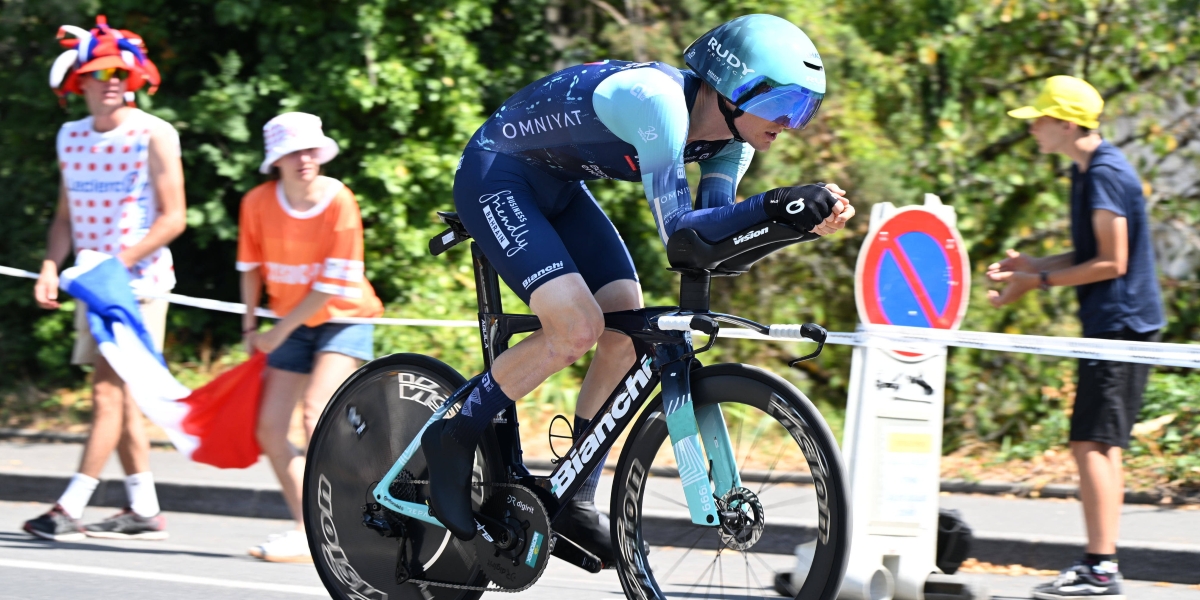
Mohorič raises concerns over equal treatment
Matej Mohorič has called for greater consistency in the Tour de France’s anti-doping programme after revealing that he underwent a test at 5am.
The Bahrain Victorious rider said the timing significantly reduced his opportunity to recover. Stages often finish late, meaning riders may not return to their hotels and complete their evening routines until close to midnight.
According to Jaka Lopatič and Alenka Teran Košir’s report for Siol, Mohorič said:
“We are paying for cycling’s past.”
Read also: Harry Kane’s Bayern future suddenly comes with a Tottenham escape route
He also claimed that a French rider near the top of the general classification had not faced the same early-morning procedure. The comment was understood to refer to 19-year-old Paul Seixas, who was fourth overall after stage 16.
Mohorič’s complaint concerned the timing of the controls rather than whether Seixas had been tested at all. As reported by 20 Minutes, Seixas and his Decathlon CMA CGM teammates were visited at around 8pm on the rest day, well before the overnight testing window.
TV 2 Sport analyst Tyler Hamilton rejected the suggestion of French favouritism, arguing that nationality was not influencing the selection of riders.
Pogačar and Vingegaard tested overnight
The controversy began after Jonas Vingegaard and Tadej Pogačar were woken for unannounced controls before stage 15. Vingegaard was tested at 2am, while Pogačar underwent his test at 5am.
Read also: ‘I’m not confident’: Red Bull chief delivers troubling verdict on Verstappen’s car
According to Jeremy Whittle’s report for The Guardian, the International Testing Agency obtained approval from a Paris judge before conducting the controls.
UCI regulations normally protect riders from testing between 11pm and 6am unless they have specified a testing window during that period, consented to the control or there is a serious and specific reason for testing.
The existence of a night-time control does not in itself establish an anti-doping violation. Testing decisions can be informed by several factors, including biological data, changes in performance or confidential information.
As Adam Becket described for Cycling Weekly, the ITA acknowledged the effect on sleep and recovery but maintained that testing outside normal hours may be necessary in limited and justified circumstances.
Read also: Man City hit back at Premier League with explosive accusation
Entire peloton tested on rest day
The wider testing programme has extended far beyond the race leaders. All 166 riders remaining in the Tour provided blood samples during the second rest day.
According to Chris Marshall-Bell’s Cycling Weekly report, those controls took place between 8pm and 11pm. Every rider had also been tested in the days before the Grand Départ in Barcelona.
Cycling Weekly reported that riders from five teams had received unannounced controls between 11pm and 6am during the race. At least one rider was tested at 5am during the opening week, meaning Pogačar and Vingegaard were not the first to face an overnight visit.
The rest-day blood samples formed part of the Athlete Biological Passport programme. Rather than directly detecting a prohibited substance, the passport tracks biological markers over time and can identify changes that warrant further investigation. Cycling introduced the system in 2008.
Read also: Manchester City CEO says everything is one big “conspiracy theory”
Testing debate goes beyond nationality
Mohorič’s comments have drawn attention to the consistency of the testing schedule, but they do not provide evidence of preferential treatment for French riders. Seixas was tested alongside the rest of the peloton, although at a less disruptive hour.
The broader dispute is therefore about proportionality: how anti-doping authorities can remain unpredictable and effective without unnecessarily damaging riders’ sleep and recovery during the most demanding race of the season.
Read also: Laporta on Man City verdict: Barcelona president breaks silence on football’s biggest scandal