Portugal’s president has hailed a remarkable sporting breakthrough after the country collected three gold medals at the World Rowing Under 23 Championships in Duisburg.
João Veloso, Diogo Gonçalves, Pedro Rodrigues and Tomás Neves all returned from Germany as world champions, transforming what began as a promising weekend into an unprecedented success for Portuguese rowing.
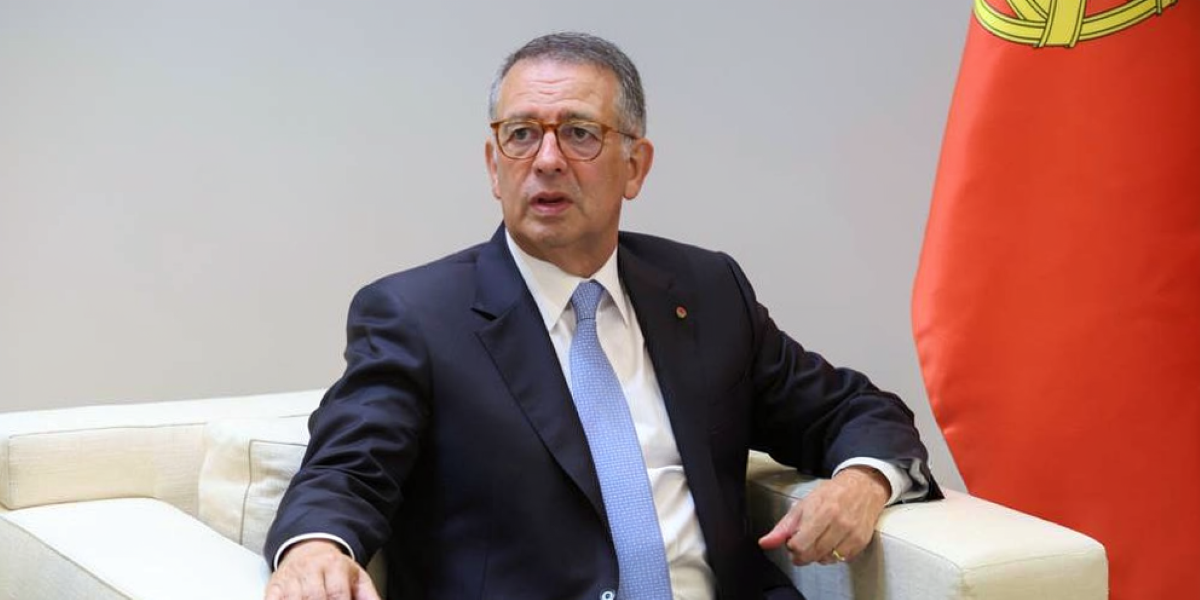
The achievement prompted an official response from António José Seguro, who became Portugal’s president in March.
According to the statement published by the Portuguese presidency, Seguro described the results as a historic landmark and “one of the greatest achievements ever” in Portuguese rowing.
Read also: Kyle Shanahan's serious car crash went undisclosed for 11 days
President declares moment of national pride
Seguro congratulated the four athletes, their coaches, the Portuguese Rowing Federation and the clubs involved in their development.
The president said the victories represented “a source of profound pride for all Portuguese people” and demonstrated what could be achieved through talent, persistence and high-level preparation.
He also presented the success as an example for younger generations, arguing that the results had elevated Portugal’s international standing in a sport where the country has traditionally struggled to compete with the largest rowing nations.
The message was significant because this was not simply another successful junior competition.
Read also: German president makes stunning U-turn over Hitler-era Olympic anniversary
Portugal had never previously won a gold medal at the Under 23 World Rowing Championships. By the end of the weekend, it had won three.
First gold opens the floodgates
The breakthrough began with Pedro Rodrigues and Tomás Neves in the men’s double sculls.
Their victory on Saturday secured Portugal’s first world title in the history of the Under 23 competition, immediately establishing the pair as pioneers for the national programme.
The following day produced an even greater surprise.
Read also: Haaland replies to random Instagram posts with one-word comments, and the internet can't get enough
As detailed in Diário de Notícias’ report on Portugal’s results, Veloso won the lightweight men’s single sculls before Gonçalves claimed victory in the open-weight men’s single.
Within approximately one weekend, Portugal moved from having no Under 23 world rowing titles to possessing three.
Veloso survives dramatic finish
Veloso’s lightweight final was decided by less than one second.
The Portuguese rower completed the 2,000-metre course in 6 minutes and 59.96 seconds. Greece’s Angelos Athanasiadis Kaoudis finished only 0.66 seconds behind him, while Kazakhstan’s Artem Matussevich took bronze in 7 minutes and 1.56 seconds.
Read also: Neymar denies 'malicious lies' over alleged dressing room abuse at Santos
The narrow margin ensured that Veloso could not relax until the final stroke.
His victory was not entirely unexpected. World Rowing had identified him as one of the leading contenders before the championships after he won the opening World Cup event of the season in Seville.
Veloso nevertheless had to manage the pressure of entering the competition as a favourite in a field containing several established international medal contenders.
Gonçalves produces dominant response
Gonçalves followed with a more commanding victory in the open-weight single sculls.
Read also: Sánchez sparks World Cup power struggle with bold message to Morocco and Portugal
He finished in 6 minutes and 54.18 seconds, almost four seconds ahead of Greek silver medallist Nikolaos Cholopoulos. Denmark’s August Wisholm secured bronze only six hundredths of a second behind Cholopoulos.
The result represented a significant progression for Gonçalves, who had won bronze in the same discipline at the previous Under 23 World Championships.
Rather than merely returning to the podium, he moved decisively to the top of it.
His success also completed an extraordinary sequence in which every Portuguese crew to win gold belonged to the same closely connected training group.
Four friends who live and train together
The foundations of the historic weekend were established long before the athletes arrived in Duisburg.
Veloso, Gonçalves, Rodrigues and Neves train together at Montemor-o-Velho and have shared accommodation in Coimbra. Their relationship has created an unusually competitive environment in which the four continually push one another.
In World Rowing’s feature on Portugal’s young squad, Veloso explained that only three seconds separated the four athletes during domestic selection trials.
“Everybody was side-by-side, nobody was left behind, everybody was pushing,” he said.
Neves similarly credited their progress to the atmosphere within the group.
“We push ourselves and each other to be better, and I think that this is the result,” he said.
Those comments proved prophetic. Less than two months later, all four were world champions.
Rowing fights for attention in football country
Portugal’s success is particularly striking because rowing occupies a relatively small place within the country’s sporting landscape.
Football dominates media coverage, sponsorship and public interest, leaving sports such as rowing with fewer participants and considerably less financial visibility.
Rodrigues acknowledged that reality before the championships.
“We don’t have many rowers in Portugal. Our main sport is football, and rowing is not the main sport,” he told World Rowing.
The four athletes entered the discipline through different and sometimes accidental routes. Gonçalves turned towards rowing after concluding that he did not have the ability required to pursue football, while Rodrigues was encouraged to try it by a friend.
Their three world titles now give the Portuguese federation an opportunity to attract greater attention, participation and financial support.
Olympic dream moves closer
The success in Duisburg also strengthens Portugal’s hopes before the Los Angeles Olympics in 2028.
All four athletes have already spoken about reaching the Games. Their performances against international opposition suggest that the target is no longer merely aspirational.
World Rowing described the Under 23 championships as the leading annual competition for young rowers and an important bridge between junior racing and senior international competition. More than 600 athletes from 49 countries entered the 2026 event.
Portugal has never won an Olympic medal in rowing.
That history places a heavy burden on any emerging generation, but the results from Germany provide genuine evidence that the gap to the world’s strongest programmes is narrowing.
A small delegation delivers an enormous result
Greece and the United States finished at the top of the overall medal table with four gold medals each.
Portugal ended only one title behind them despite arriving without the depth or resources available to those larger programmes.
The presidency’s reaction therefore went beyond the conventional congratulatory message issued after an international medal.
Seguro described the weekend as evidence of the quality and ambition developed within Portuguese rowing over several years.
Four athletes entered the championships carrying the hopes of a relatively small sporting community.
They returned with three gold medals, three firsts for their country and the attention of Portugal’s new president.