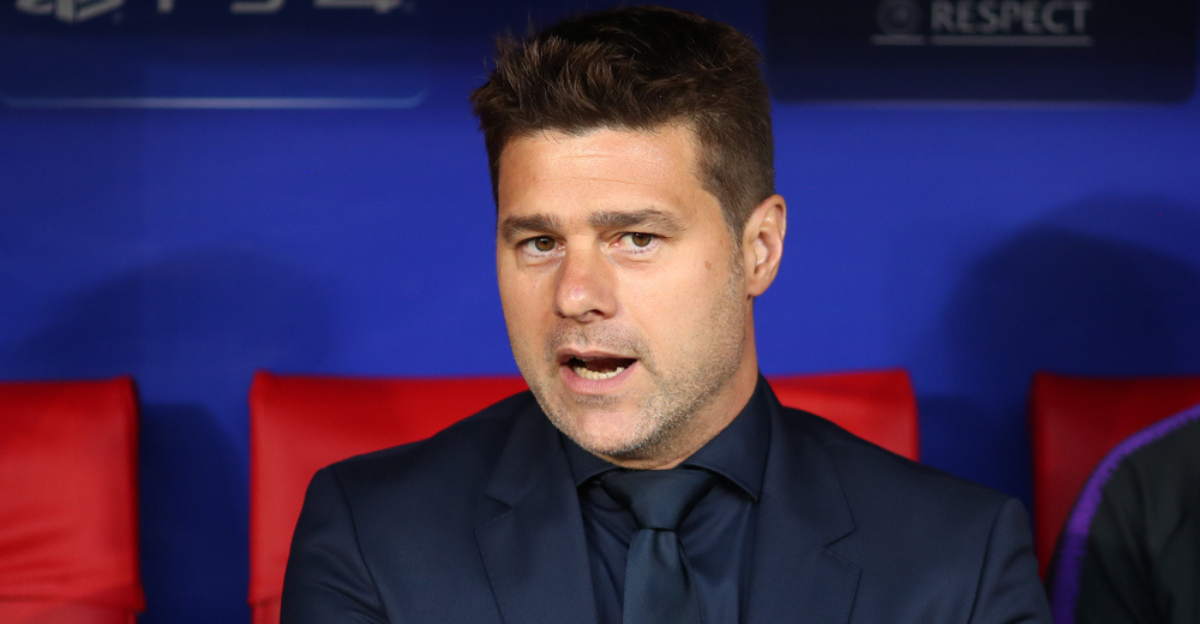
Mauricio Pochettino has signed a new four-year agreement that will keep him in charge of the United States men’s national team through the 2030 World Cup cycle. The extension was officially announced on August 3, meaning the story is no longer based solely on a report from Fabrizio Romano. According to U.S. Soccer’s official announcement, Pochettino and his staff will continue leading the senior team while assuming a broader role across the federation.
The timing is important because the 2026 World Cup is no longer an upcoming objective, as suggested in the original version of the story. The tournament has already concluded, with the United States eliminated by Belgium in the round of 16. U.S. Soccer has therefore renewed Pochettino’s contract after assessing his first World Cup campaign rather than before it.
U.S. Soccer chooses continuity after a mixed World Cup
The United States produced several encouraging performances during the home tournament. Pochettino’s side won its group outright, defeated Bosnia and Herzegovina 2-0 in the round of 32 and recorded more victories in a single World Cup than any previous USMNT team. The Bosnia victory was also the country’s first win in a World Cup knockout match since 2002.
The campaign nevertheless ended heavily, with Belgium winning 4-1 in Seattle. The United States again failed to move beyond the round of 16, a stage it has now exited four times since reaching the quarter-finals in 2002. The extension shows that the federation viewed the tournament as evidence of progress, even though the team did not achieve its stated ambition of reaching the latter stages on home soil.
Read also: Did he really say that? Mourinho's return to Real Madrid begins with a classic Mourinho remark
Discussions over Pochettino’s future had reportedly begun several months before the World Cup. According to The Guardian’s report on the agreement, negotiations accelerated after the tournament, but U.S. Soccer had already made clear that it wanted him to remain. The final decision was therefore not simply an emotional reaction to the excitement generated during the competition.
His new job extends beyond the senior team
Pochettino’s expanded responsibilities are one of the most significant elements of the agreement. He and his coaching staff will advise U.S. Soccer on the national-team pathway, youth development, coach education, cooperation with professional leagues and other technical areas. Their primary responsibility remains the USMNT, but their knowledge will now be used across a much larger part of the American football structure.
Pochettino said there was “tremendous potential to make the Men’s National Team program even stronger.” He also explained that the connection created with American supporters during the World Cup increased his belief in the project. His stated ambition is to leave an influence that extends beyond the results of the senior national team.
That broader role creates a closer link between the 2030 squad and the players currently progressing through the younger age groups. Important youth tournaments and the 2028 Olympic Games in Los Angeles will take place during the new contract period. Pochettino’s staff will not necessarily coach those teams directly, but they are expected to influence how players and coaches move through the system.
Read also: World Cup cult hero Vozinha seals remarkable Colo-Colo move at 40
A full cycle changes the equation
Pochettino originally joined the United States in September 2024 and had less than two years to prepare for the home World Cup. He used that period to assess a large player pool, introduce new standards and build a tactical identity, but it was never a conventional four-year national-team cycle. The new contract gives him sufficient time to develop younger players and make longer-term decisions without an immediate World Cup deadline.
The United States will compete in the 2027 Concacaf Nations League and Gold Cup, followed by the same two competitions in 2029. Those tournaments will provide competitive tests before World Cup qualification and allow Pochettino to gradually reshape the squad. He has already identified goalkeeper and central defence as areas where greater quality and depth will be required.
Quoted by The Associated Press in its report on the extension, Pochettino said the United States had learned that it could compete and that the difference from the world’s best teams was not insurmountable. He also stressed that promising young players must now be prepared specifically for 2030. The next four years will show whether those beliefs can be converted into a stronger and deeper squad.
Continuity comes at a considerable price
The federation did not disclose the financial terms of the new contract. The Guardian reported that Pochettino was expected to receive an increase on the approximately $6 million annual salary attached to his previous agreement. That was already the largest coaching investment made by U.S. Soccer.
Billionaire hedge-fund manager Ken Griffin, who helped finance the original contract, is again providing the principal philanthropic support. Scott Goodwin, Adam Freede and commercial partners are also contributing. The arrangement allows U.S. Soccer to retain a high-profile coach without placing the entire cost directly on the federation’s ordinary operating budget.
The investment increases the expectations surrounding Pochettino. He is not merely being retained to maintain the existing level or regularly win regional competitions. U.S. Soccer has publicly stated that its long-term ambition is to compete for men’s World Cups and make football one of the country’s leading participation sports.
The second-cycle risk has not disappeared
American coaching history offers several warnings about keeping the same manager for consecutive World Cup cycles. Bruce Arena reached the quarter-finals in 2002 but failed to advance from the group in 2006, while Jürgen Klinsmann was dismissed before the 2018 tournament despite previously receiving an extension. Gregg Berhalter was rehired after the 2022 World Cup and then removed following the United States’ group-stage elimination at the 2024 Copa América.
Pochettino himself acknowledged that four years is a very long period in football and that circumstances can change quickly. His agreement provides stability, but it does not guarantee that he will remain in the position regardless of results. U.S. Soccer has made a long-term commitment, yet performances in qualification and regional tournaments will still shape his future.
Read also: Reports: Spurs step up pursuit of Liverpool star
There is also a danger that the ideas and relationships developed during the first cycle could lose their freshness. Pochettino must continue challenging established players while avoiding excessive loyalty to the squad used in 2026. The most important measure of his second spell may be whether he is prepared to replace familiar names with younger alternatives.
The 2030 challenge will be very different
The next World Cup will not provide the United States with home advantage. As described by FIFA’s official guide to the 2030 tournament, Morocco, Portugal and Spain will stage the main competition, while Argentina, Paraguay and Uruguay will each host a centenary celebration match. The United States must therefore qualify and then perform in a considerably different environment.
The setting could carry personal significance for Pochettino. The Argentine has strong connections to Spain through his playing and coaching career and spoke about the new contract from his home in Barcelona. A tournament staged partly in Spain and Argentina would place him at the centre of a World Cup with direct links to both his professional life and his country of birth.
Sentiment will not determine whether the extension succeeds. The United States must become more reliable against elite opposition, improve its defensive depth and develop enough alternatives to survive injuries or poor form. Reaching the same stage in 2030 would be difficult to present as sufficient after another four years of work.
Read also: Infantino reportedly turns to Trump as $20 billion FIFA gamble collapses
The real test begins after the celebration
Retaining Pochettino gives U.S. Soccer clarity at a time when many national teams will begin rebuilding. The coach already understands the player pool, the federation and the demands of the American sporting environment. Starting again with a new manager would have meant losing much of the work completed before and during the home World Cup.
The decision is nevertheless a wager rather than a reward without conditions. Pochettino has been given the full cycle he did not have before 2026, an expanded technical role and substantial financial support. In return, the United States will expect him to produce a team capable of going further than the round of 16 when the World Cup reaches Spain, Portugal and Morocco in 2030.