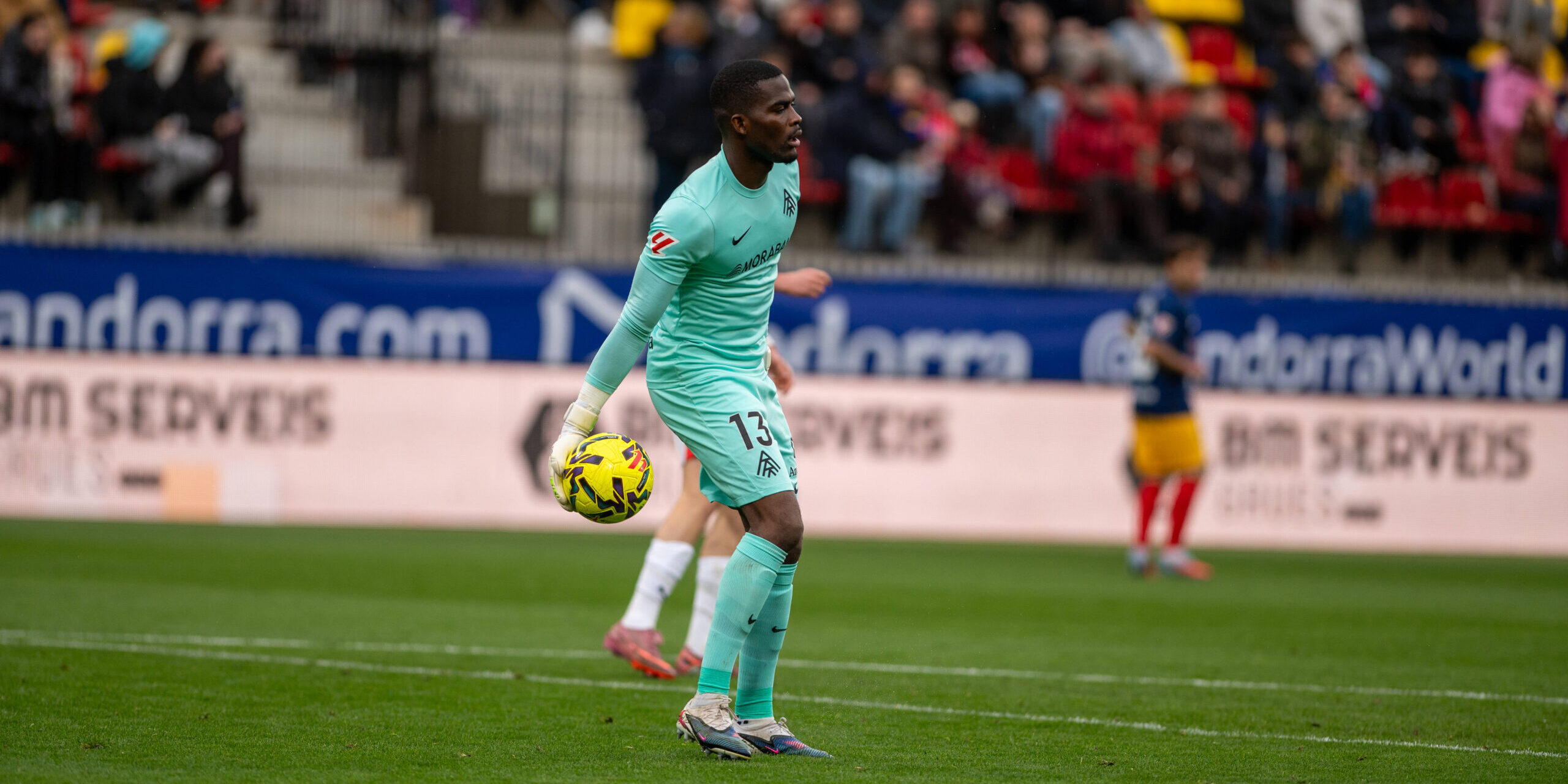
The 30-year-old De Miguel died at 8am on Tuesday at the Hospital Universitario de Nuestra Señora de Candelaria in Santa Cruz, hours after a collision with Owono in the dying seconds of a LaLiga 2 match at Tenerife’s Estadio Heliodoro Rodríguez López. The score was 2-2, seven minutes into stoppage time, when the goalkeeper’s raised knee struck De Miguel in the chest. The striker lost consciousness, suffered a cardiac arrest in the ambulance, and was never revived.
Owono was sent off immediately. The referee’s match report described the challenge as a brutal impact, the leg raised, excessive force in a ball-contested situation.
What Spanish law actually requires
Article 142 of the Spanish Penal Code covers involuntary manslaughter. According to Infobae, gross negligence carries one to four years in prison, while less serious negligence attracts a fine of three to 18 months.
The decisive line is not between a hard challenge and a soft one. It is between a sporting infraction and a criminal act.
Read also: Fernandes defends Carrick and rejects ‘lies’ about Manchester United dressing-room rift
“The red card sanctions a rule violation; criminal responsibility, by contrast, requires proof of facts that fit a criminal offense,” Infobae wrote, summarizing the view of criminal lawyers consulted on the case.
The outlet set out three things a prosecutor would have to show: a breach of a duty of care that is criminally significant, a causal link between the impact and the death, and a reading of the specific circumstances: where the ball was, how the players were positioned, how hard the contact was, and what the medical evidence shows. Temporal proximity alone, Infobae stressed, is not enough.
Spain’s Supreme Court has done this before
Spanish courts have convicted footballers over on-pitch violence. Vozpopuli pointed to ruling 379/2025 from the Supreme Court’s criminal chamber, in which a player who kicked an opponent in the back after being sent off was sentenced to six years for aggravated injuries. He was ordered to pay €714,000 in damages, with a further €54,700 added when his appeal was dismissed.
That case involved a kick delivered after the player had already left the pitch, an intentional act rather than a contested play. The question hanging over the Owono incident is the one Vozpopuli framed as decisive: the difference between negligence and intent. The collision happened while the ball was in play.
Read also: Shakhtar chief turns on Gianni Infantino over controversial Russia decision
The sporting penalty runs on a separate track
Alongside any criminal investigation, Owono faces a disciplinary case. The Spanish Football Federation’s Article 102 covers violent conduct toward an opponent and prescribes a four-to-twelve-match ban when it causes serious harm. Vozpopuli noted that the code contains no specific provision for a fatal outcome.
FC Andorra marked De Miguel’s death with a brief statement.
“With broken hearts and devastated, we want to send our most sincere condolences to the family of Jesús de Miguel, to all his teammates, friends, and to CD Tenerife. Rest in peace,” the club said.
No criminal case has been formally opened against Owono. Any decision on whether to charge him will come from Spanish prosecutors once the medical and refereeing evidence has been examined.
Read also: New report exposes huge pay-gab in women cycling
Read also: Raphinha refuses to discuss Barcelona win after footballer’s tragic death