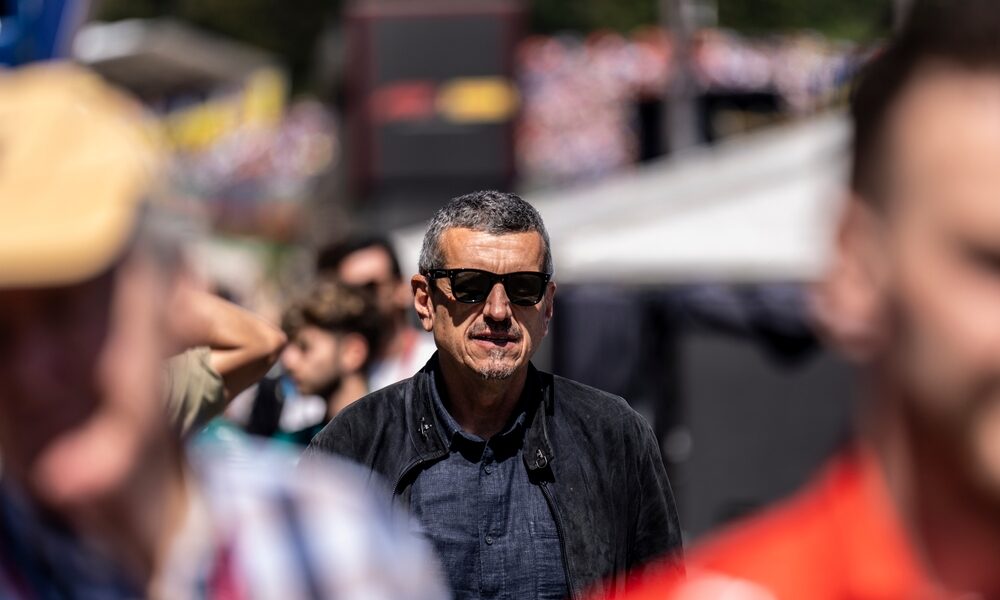
Steiner does not think Mercedes has demoted Russell to number two. He thinks something more specific has happened over the summer break.
Speaking on his Red Flags podcast, the former Haas team principal said the message to Russell was framed not as a hierarchy but as a mission for the run-in.
“I wouldn’t call him a number two driver, but ‘You need to support Kimi to win the world championship, this is your mission for this season now’,” Steiner said.
“That, I think [is what] happened. If you want to win, this is what you have to do.”
Read also: Huge Super League twist as Real Madrid head back towards old allies
The evidence he points to is fresh. At Zandvoort on Sunday, Mercedes asked Russell to move over for Antonelli late in the race, after a virtual safety car for Esteban Ocon reshuffled the strategy. Antonelli, on fresher tyres, took second. Russell held third from Ferrari’s Lewis Hamilton.
Russell did not push back publicly. “Kimi was ahead of me anyway, so he deserved to finish ahead,” he told reporters, conceding the swap was “the right decision” given the pace difference on the softer compound.
The McLaren warning
Steiner’s argument for why Mercedes had to act is a cautionary one, and he did not have to look far for the example.
“Otherwise, you take the risk, as you just said rightly before, McLaren last year,” Steiner said on the podcast. “You get down to the last race to lose that world championship, not to win it, to lose it.”
Read also: Zidane is in focus, Deschamps is in the dark
That framing matters because the numbers do not leave Mercedes much room to gamble. Antonelli sits on 242 points after the Dutch Grand Prix, 59 clear of Russell, who is tied on 183 with Hamilton in second.
Why Wolff can enforce it now
The other half of Steiner’s theory is about the man giving the order. He does not think Wolff, in 2016, could have handed the same instruction to Lewis Hamilton in the middle of a title fight with Nico Rosberg.
“They could afford to do it. Toto, in his career, is in a different place as well. Now, he’s clearly the leader. In 2016, it was his third year or whatever,” Steiner said.
“Toto has become this guy, who I think can tell anybody what to do. At the time, to tell Lewis Hamilton what to do, it’s different.”
Read also: Harry Kane’s Ballon d’Or response says plenty without saying much
Wolff himself has not framed the Zandvoort call as a policy shift. He described team orders as “always harsh” and said the principle was agreed in the Sunday morning strategy meeting: “We’re not losing time with each other if there’s competitors breathing down your neck.”
Mercedes trackside engineering director Andrew Shovlin gave a more mechanical account of what happened at Zandvoort, saying Kimi had the grip to get through and that letting the two race would have cost time to the Ferraris behind.
Russell, for his part, endorsed the underlying principle. “We’ve always said as a team, when we’re on different strategies, we’re never going to fight,” he said after the race.
The next round is the Italian Grand Prix at Monza on Sunday 6 September, Antonelli’s home race, with lights out at 3pm local time.
Read also: Roy Keane gives Manchester City stars brutal message over medals after guilty verdict
Read also: Where Erling Haaland could end up if he leaves Man City