The correction that changed the meaning
It lasted only a few seconds.
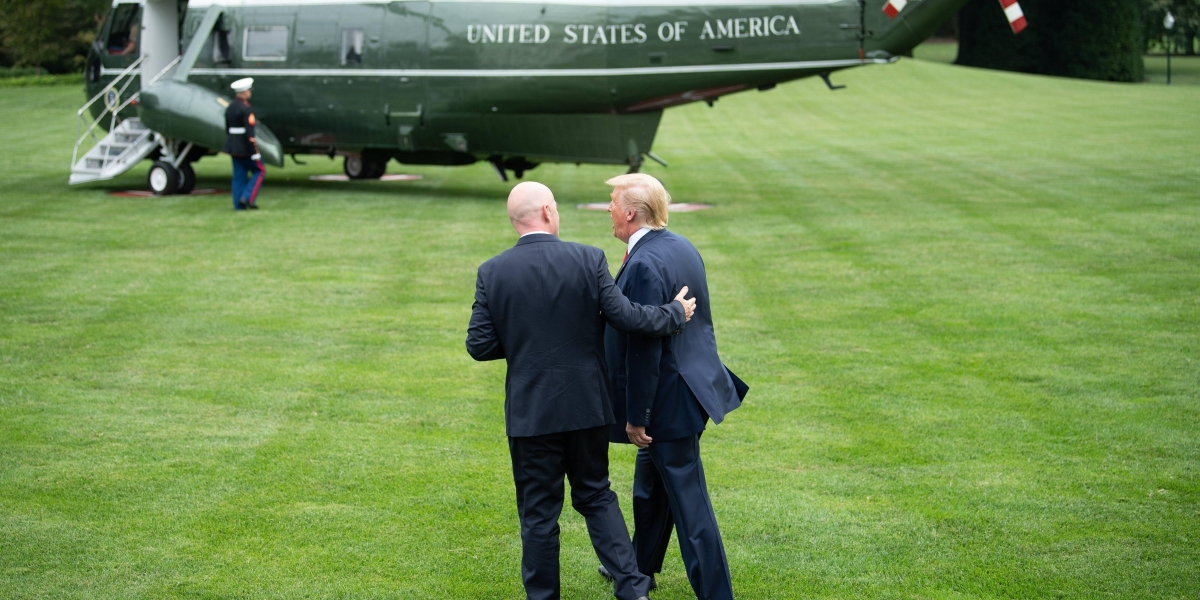
Donald Trump was speaking at a FIFA reception inside Trump Tower on 17 July, two days before the World Cup final between Spain and Argentina. Gianni Infantino was standing close enough to interrupt him.
Trump had turned to one of the tournament’s most controversial incidents: his personal intervention after United States forward Folarin Balogun received a red card against Bosnia and Herzegovina.
The president had called Infantino and asked FIFA to review the punishment. Balogun’s automatic one-match suspension was subsequently lifted, allowing him to face Belgium in the round of 16.
Read also: Harry Kane’s Bayern future suddenly comes with a Tottenham escape route
“Gianni made yet another of his many good decisions,” Trump told the room.
Infantino immediately corrected him.
“Well, it’s not me.”
The exchange appears in the lengthy official transcript published by The American Presidency Project. It may initially have sounded like little more than an awkward attempt by Infantino to protect the formal independence of FIFA’s disciplinary bodies.
Read also: ‘I’m not confident’: Red Bull chief delivers troubling verdict on Verstappen’s car
In light of the extraordinary governance crisis that followed, however, those six words carry considerably more weight.
Trump had publicly credited Infantino with delivering a favourable disciplinary outcome after receiving a personal telephone call. Infantino appeared to understand immediately why that description was dangerous.
It implied that the FIFA president could influence a decision that was supposed to belong to an independent judicial process.
Trump had already tested FIFA’s boundaries
Balogun was sent off after a VAR review showed his boot landing on the ankle of Bosnia and Herzegovina defender Tarik Muharemović. A red card normally produces an automatic suspension for the following match.
Read also: Man City hit back at Premier League with explosive accusation
Trump subsequently confirmed that he had telephoned Infantino. He insisted that he had requested only a review and had not demanded a particular result.
“All I did was ask for a review,” Trump said on 6 July, according to the Associated Press account of his intervention. “I didn’t say, ‘You have to do this.’”
FIFA eventually deferred Balogun’s suspension. The decision was celebrated in the United States but criticised elsewhere as an alarming example of political access reaching directly into football’s disciplinary system.
Trump attempted to distance Infantino from the formal ruling at the time, saying he believed that a committee had made the decision. Eleven days later at Trump Tower, however, he reverted to a more personal interpretation: Infantino had made another good decision.
Read also: Manchester City CEO says everything is one big “conspiracy theory”
Infantino’s instant denial demonstrated the tension at the heart of their relationship.
Trump treats access, intervention and personal influence as evidence of effective leadership. FIFA, at least institutionally, must insist that its president cannot personally determine disciplinary cases.
That clash between personal power and formal procedure is now also central to UEFA’s campaign against Infantino.
Trump chose his side after the scandal broke
The Trump Tower reception took place before FIFA Forward Enterprise became public knowledge. There is no evidence that Trump’s remarks that evening concerned the investment project, or that he knew its details at the time.
Read also: Pogacar’s home Euros go on without him, and now without Van der Poel too
The chronology is important.
Reports about the proposed commercial subsidiary emerged on 28 July. The project would have placed major FIFA commercial assets, including rights connected to its most valuable competitions, inside a new company. Private investors were expected to pay approximately $4.2 billion for a 20 per cent stake.
The proposal triggered an immediate revolt. UEFA accused FIFA of attempting to sell something it did not own, while opponents questioned the valuation, the absence of an open bidding process and the reported lack of prior approval from FIFA’s Council and member associations.
Infantino abandoned the plan on 1 August.
Trump then entered the conflict publicly on 10 August. In a direct statement on Truth Social, he called Infantino “fantastic” and warned that FIFA would make a “terrible mistake” if it considered replacing him.
“If he is gone, it will never be as successful or profitable again,” Trump wrote.
The message did not engage with the substance of UEFA’s complaints. Trump said nothing about the project’s valuation, FIFA’s approval procedures, the role of its Council or whether the organisation’s commercial rights should have been offered to private capital.
Instead, he framed the dispute around one individual. In Trump’s account, Infantino had presided over an enormously profitable World Cup and was therefore indispensable.
UEFA’s argument was almost precisely the opposite: no president, regardless of commercial performance, should become bigger than the institutions that granted him authority.
The Kushner connection makes the silence more interesting
The controversy also leads unusually close to Trump’s extended family.
Thrive Capital, founded by Josh Kushner, was positioned to become a leading investor in FIFA Forward Enterprise. Josh Kushner is the brother of Jared Kushner, who is married to Trump’s daughter Ivanka and served as a senior adviser during Trump’s first presidency.
This connection does not establish that Donald Trump participated in the negotiations, influenced FIFA’s choice of investor or stood to benefit from the proposed transaction. No credible public evidence currently demonstrates any of those things.
Nor has Josh Kushner or Thrive Capital been accused of criminal wrongdoing in the contemplated Swiss proceedings.
But the relationship is journalistically significant because Trump issued an emphatic defence of Infantino without acknowledging that the project at the centre of the crisis involved a company founded by the brother of his son-in-law.
That omission now matters more because UEFA is trying to obtain evidence directly from Thrive.
As Associated Press reported in its account of UEFA’s US court filings, European football’s governing body has asked a federal court in Manhattan for access to documents and testimony from the investment company. A separate application in Florida seeks evidence from FIFA-linked entities based in Coral Gables.
UEFA says the material could support a future criminal complaint in Switzerland concerning possible criminal mismanagement by Infantino and potentially other FIFA officials. The allegations remain untested, and no criminal liability has been established.
The American applications seek to uncover how the commercial project was conceived, structured, valued and approved. That may include internal communications capable of showing who participated in the negotiations, what information was shared and how FIFA arrived at the proposed valuation.
Two entirely different ideas of leadership
Trump and UEFA are effectively offering competing definitions of good sports governance.
Trump’s defence rests on results. The World Cup generated record business, attracted enormous crowds and gave the United States a global spectacle. In his telling, Infantino deserves personal credit for that success.
UEFA’s case rests on process. Commercial growth cannot excuse secrecy, concentrated authority or the possible circumvention of FIFA’s elected bodies. Success belongs to the organisation and its 211 member associations, not to one president.
The Balogun exchange captured that disagreement before the wider crisis had even begun.
Trump believed he was complimenting Infantino by attributing a controversial decision to him. Infantino recognised that the compliment threatened FIFA’s claim that its disciplinary institutions operate independently.
Now UEFA is asking a similar question on a far larger scale: Did Infantino merely lead the process surrounding FIFA Forward Enterprise, or did he exercise personal power over decisions that belonged to FIFA’s collective governing bodies?
Trump’s support may become evidence of the problem
Trump has not publicly addressed UEFA’s legal requests, the possible Swiss complaint or the detailed allegations surrounding the abandoned transaction.
His only clear intervention in the leadership battle has been to declare Infantino irreplaceable.
That support may help the FIFA president politically, particularly among associations impressed by the commercial success of the World Cup and the prestige of his relationship with the White House. But it also reinforces the image UEFA is trying to build: a FIFA organised around personal alliances, privileged access and decisions associated more closely with Infantino than with the institution itself.
None of that proves criminal conduct. It does, however, explain why the tiny exchange at Trump Tower deserves a second look.
Trump said Infantino had made the decision.
Infantino said it was not him.
UEFA now wants the documents that might reveal which description comes closest to the truth.