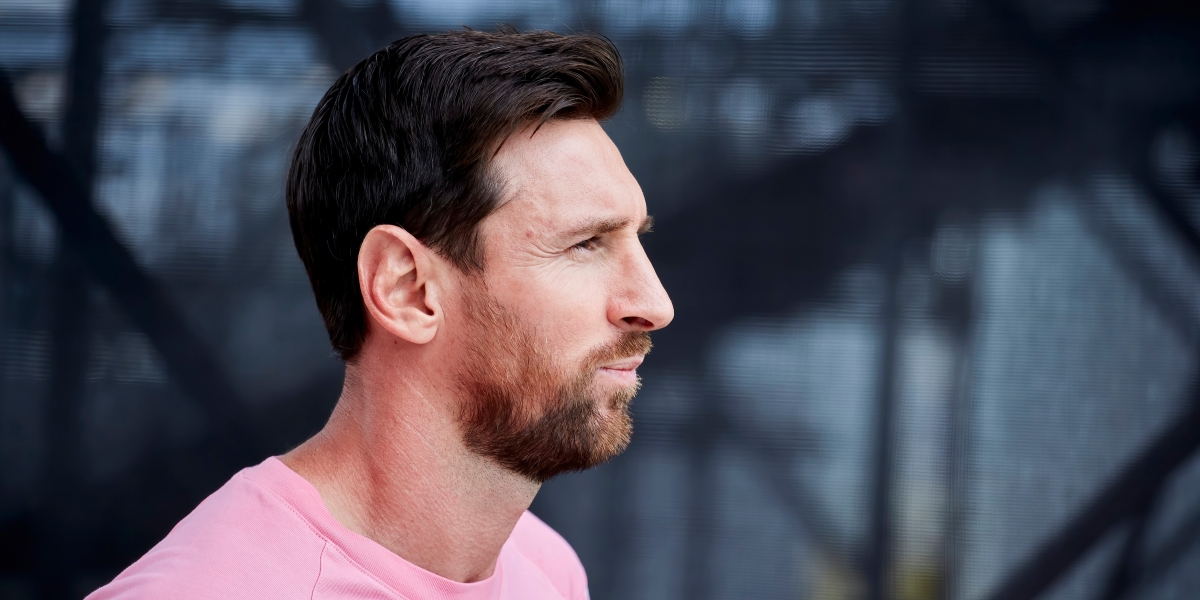
Lionel Messi had spent more than 20 years trying to find the perfect ending with Argentina. In the end, he discovered that football rarely offers one.
The 39-year-old confirmed on Monday that he is retiring from international football, closing an Argentina career that produced 207 appearances, 125 goals, two Copa América titles and, above everything else, the World Cup he had spent so much of his life chasing. His final appearance came in the 2026 World Cup final, where Argentina’s attempt to retain their crown ended with a 1-0 defeat against Spain.
Yet the most revealing part of Messi’s announcement was not simply that he was leaving.
It was when he had already decided to do it.
Read also: Arsenal’s €70m price tag stalls AC Milan pursuit of Gyökeres
According to the Argentine Football Association, Messi wrote his handwritten farewell on July 21, just two days after the World Cup final. He kept it private for more than a month before finally publishing it on August 31. Near the end of the message came a devastating explanation: after the death of his father Jorge on August 8, Messi said he was even more convinced that the time had come.
“I emptied myself; I have nothing left to give,” Messi wrote, before ending the letter with perhaps the most significant words of all: “Thank God for making me Argentine.”
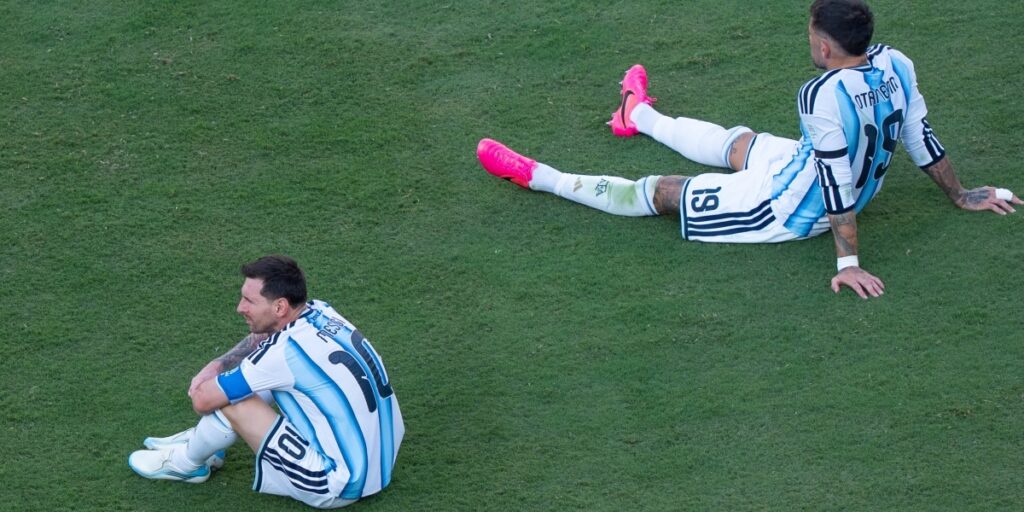
His father’s final wish changed everything
To understand why the retirement became final, it is necessary to go back beyond the defeat against Spain.
Jorge Messi had been far more than Lionel’s father. He had accompanied and advised him from childhood, helped oversee the move from Rosario to Barcelona and remained a central figure throughout almost the entirety of his professional life. Jorge died at the age of 68 in Rosario after a long illness, only weeks after Argentina’s World Cup campaign had ended.
Read also: Abu Dhabi United Group financed them for years
Messi subsequently revealed something that made his final World Cup particularly difficult to view in purely sporting terms. His father’s health had deteriorated shortly before the tournament, but Jorge had continued urging his son to play one last World Cup. Messi later explained that he had told his father Argentina would reach the final, hoping that would give him enough time to recover sufficiently to travel and watch him. Argentina did reach the final. Jorge was not able to be there.
Messi also admitted that physically he never felt completely right during the tournament. He had wanted to bring another World Cup home to his father but said his body was no longer responding as he hoped. That context makes the retirement letter read differently. The defeat against Spain may have been the sporting endpoint, but the death of Jorge Messi appears to have removed much of the remaining uncertainty.
His mother, Celia Cuccittini, provided perhaps the saddest family reaction of all. She said the family had known about Lionel’s decision beforehand but was still devastated when it became public. She also recalled something Jorge had repeatedly wondered aloud before his death: what he would do when Lionel eventually stopped playing. Within the space of a few weeks, the family lost Jorge and then watched Lionel close the chapter that had defined almost all of their adult lives.
Three Argentina players had already been given a clue
For most of the football world, Messi’s announcement arrived unexpectedly.
Read also: Dana White on ownership of new Las Vegas NBA Team: “YES”
Inside the Argentina dressing room, however, there had apparently already been a warning.
According to a report by Infobae, three members of Argentina’s World Cup squad later revealed that Messi had suggested before the final against Spain that the match could be his last for the national team. The names of those players were not disclosed, but the detail changes the atmosphere surrounding that final considerably.
Some Argentina players therefore walked out at New York New Jersey Stadium knowing there was at least a possibility that they were not simply playing for another World Cup trophy. They could also have been playing the final international match of the greatest player in their country’s history.
What followed was brutally simple. Argentina lost. Messi left the field without another World Cup. Two days later, away from cameras, he sat down and wrote the words that would eventually end his international career.
Read also: Aymeric Laporte exposes ugly side of Pep Guardiola relationship
It was not the triumphant farewell many had imagined for him.
But there was an extraordinary historical twist in the identity of the team that ended it.
Spain nearly had Messi, then became his final opponent
More than two decades before Spain defeated Messi in his final Argentina match, Spanish football had been trying to persuade him to play for them.
Messi had moved to Barcelona as a teenager, and his talent quickly became impossible to ignore. FIFA’s own account of his early international history says the Spanish federation attempted to convince him to represent Spain while Argentina suddenly became increasingly conscious that one of the most extraordinary talents of his generation was developing thousands of miles away in Catalonia.
Read also: Manchester City face new panel that could reopen the 115-charge verdict
The story includes an almost unbelievable detail.
When the Argentine federation eventually sent Barcelona the fax containing Messi’s first call-up, his name was written incorrectly as “Leonel Mecci”. Messi’s father Jorge corrected Argentine officials when they contacted the family and made their preference clear: his son wanted Argentina.
That administrative scramble eventually produced one of the most important decisions in football history.
Messi would go on to become Argentina’s record appearance-maker and record scorer. He would lose finals, be accused in some quarters of feeling more Catalan than Argentine, briefly quit international football, return, win the Copa América and finally lift the World Cup.
Then, 22 years after Argentina rushed to secure his international future while Spain showed interest, Messi played the last match of his Argentina career against Spain.
The circle could hardly have closed more neatly.
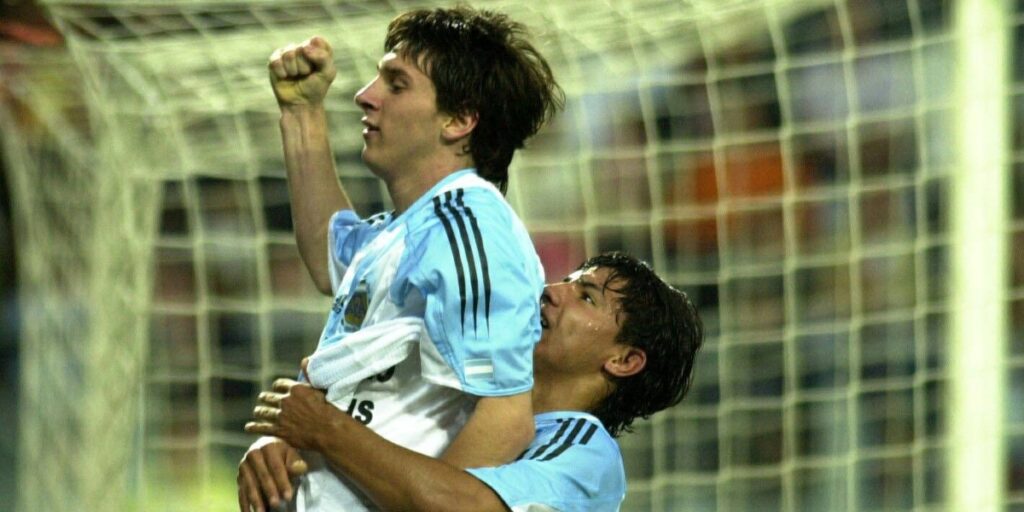
It was not the first time Messi had said goodbye
There is another remarkable symmetry to the story.
Ten years ago, Messi retired from Argentina for the first time.
After Argentina lost the 2016 Copa América Centenario final against Chile at MetLife Stadium, Messi missed his penalty in the shootout and announced that his time with the national team was over. The accumulated pain had become too much. Argentina had lost the 2014 World Cup final and the Copa América finals of 2015 and 2016, while Messi was still facing questions about why his astonishing Barcelona success had not been replicated internationally.
That retirement did not last.
Messi returned and continued chasing the one thing that appeared destined to remain beyond him. Copa América glory finally arrived in 2021. The Finalissima followed in 2022. Then came Qatar and the image that fundamentally changed his relationship with Argentina forever: Messi lifting the World Cup.
His second international retirement therefore arrives exactly a decade after his first, but from an entirely different position.
In 2016, he walked away feeling beaten.
In 2026, he walks away as a world champion.
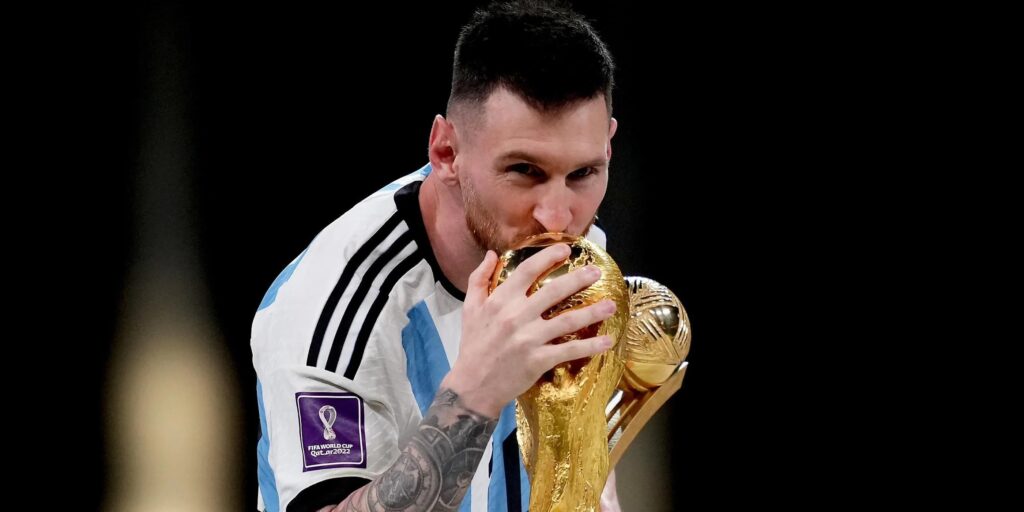
Enzo Fernández had spent his childhood calculating whether this moment would come sooner
The reactions from Messi’s teammates reveal how unusual his position inside this Argentina generation became.
For some, he was simultaneously captain, teammate and childhood idol.
Enzo Fernández provided one of the most striking examples. After Messi’s first retirement in 2016, Fernández was still a child hoping to become a professional footballer. He revealed after Monday’s announcement that he used to calculate the age difference between himself and Messi, working out how many years Messi might have left and how quickly he would need to reach Argentina’s senior team if he ever wanted to share a pitch with him.
The childhood calculation eventually became reality in a way Fernández could hardly have imagined.
He did not merely play with Messi. He shared dressing rooms and major tournaments with him and became a world champion alongside the man he had grown up watching.
Rodrigo De Paul offered a different perspective. His tribute concentrated on the Messi that supporters rarely saw: the internal battles, pressure, criticism and the attention he paid not only to teammates but to workers around Argentina’s training base. De Paul said he had long wanted Argentines to understand the private person behind the number 10.
Lisandro Martínez looked even further into the future, saying his daughter would one day be proud that her father had shared a team with Messi. Lautaro Martínez highlighted the lessons Messi had left behind about recovering from setbacks, continuing to work and believing after disappointment. Leandro Paredes admitted that he thought he had prepared himself emotionally for the announcement, only to discover that he had not.
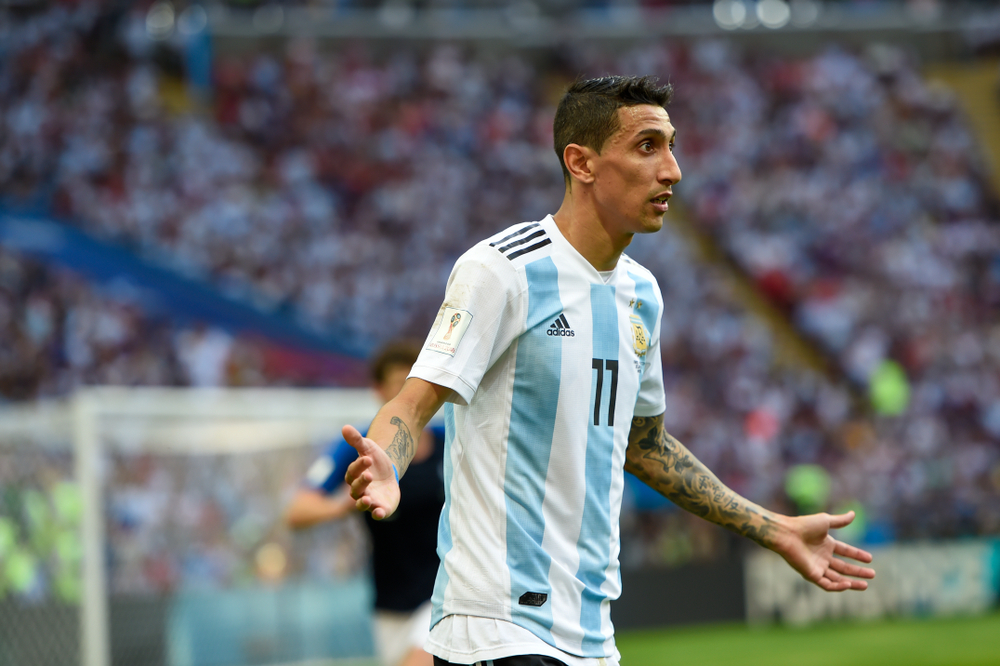
Ángel Di María’s message carried particular significance because he had lived almost the entire journey alongside Messi. Di María thanked him not only for what he achieved but for choosing Argentina in the first place, a reference that becomes considerably more meaningful when viewed alongside Spain’s early interest.
Antonela’s reaction was really about their children
Antonela Roccuzzo’s response focused less on statistics and more on what Messi’s three sons had witnessed.
She reflected on the years of setbacks before the trophies arrived and the fact that Thiago, Mateo and Ciro had grown up watching their father continue after disappointment. They had also been there when the journey finally reached its defining moment in Qatar, seeing him lift the World Cup after years in which that achievement had appeared increasingly unlikely.
For Messi, that distinction matters.
His first Argentina years were filled with uncomfortable comparisons to Diego Maradona and doubts over whether he could ever truly belong to the national imagination in the same way. By the end, his children had watched him transform from the superstar who supposedly could not deliver for Argentina into the captain of one of the country’s most celebrated teams.
It also explains why the final line of his farewell carries so much weight.
“Thank God for making me Argentine” is not merely a patriotic sign-off. It feels like an answer to a debate that followed Messi for years.
Argentina’s reaction went far beyond football
The scale of the response demonstrated that Messi’s retirement was no longer simply a sporting event.
The Obelisk in Buenos Aires was illuminated in Argentina’s light blue and white colours as supporters gathered in the capital. The national team’s official account told Messi that Argentina would love him for the rest of their lives.
FIFA president Gianni Infantino went significantly further, saying Messi’s international career had inspired millions and “redefined” football. FIFA, UEFA, CONMEBOL, MLS and the Olympic movement all marked his departure.
The reaction also crossed sports.
Tennis legend Gabriela Sabatini responded. Argentina’s basketball federation gathered messages involving members of its famous Golden Generation, including Manu Ginóbili, Luis Scola, Andrés Nocioni and Carlos Delfino. NBA Latin America posted its own tribute, while Formula 1 driver Franco Colapinto described Messi as an inspiration. Even Japan’s ambassador to Argentina publicly thanked him.
Politics briefly became unusually united as well.
President Javier Milei paid tribute, while former president Mauricio Macri wrote about the prestige Messi had created for Argentina internationally. In a country where political divisions can be exceptionally intense, Messi remained one of the relatively few cultural figures capable of producing a similar emotional response across opposing camps.
International newspapers treated the announcement similarly. L’Équipe reduced the moment to the blunt “Messi and Argentina: it’s over”, while newspapers across Europe and South America placed the retirement prominently on their front pages.
Messi leaves behind a football team, and a huge business
Argentina must now replace far more than a forward.
Messi became the most valuable individual face of an enormous commercial expansion around the national team. According to Bloomberg Línea, AFA had only six associated commercial brands in 2017. Today that figure exceeds 100, with Argentina’s success on the pitch and Messi’s global appeal helping the federation turn the national team into an international business platform.
That is why the immediate reaction of major brands was so revealing.
Adidas, which accompanied Messi through six World Cups, described the journey as one that would last forever. Netflix turned his retirement into a joke about struggling to recover from a “season finale”. Noblex mimicked the handwritten format of Messi’s letter, while Gillette, Quilmes, Carrefour and other brands quickly produced their own farewell campaigns.
The commercial challenge for AFA is therefore unusual.
Argentina still have world-class footballers and remain one of the strongest national teams on the planet. But the federation is moving from an era in which the greatest player of his generation was simultaneously captain, sporting centrepiece and global marketing asset.
Replacing Messi on the team sheet is difficult.
Replacing what he represented to Argentina’s global brand may be impossible.
Argentina may still try to bring him back one last time
Retirement might not necessarily mean supporters have seen Messi in Argentina colours for the absolute final time.
Infobae reports that AFA wants to explore the possibility of staging a farewell appearance for Messi at River Plate’s Monumental stadium. Argentina’s first post-World Cup international window runs from September 21 to October 6, although Messi has not confirmed that he is willing to participate and the details remain unresolved.
It would presumably be ceremonial rather than a reversal of his international retirement.
For AFA, however, the temptation is obvious. Messi’s final competitive Argentina appearance took place in New Jersey. After 207 matches, allowing Argentine supporters to say goodbye to him on home soil would give the story a different final image.
There are also more practical questions to answer.
Someone must inherit the number 10. Nicolás Paz, Thiago Almada, Julián Álvarez and Lautaro Martínez have already been identified in Argentine coverage as potential candidates, although Lionel Scaloni has made no public decision.
And even Scaloni’s own future represents another uncertainty. Argentina are not simply beginning a cycle without Messi. They are beginning the process of deciding how much of the team built around him will survive into the road towards the 2030 World Cup.
Then came a message from Rosario
Within hours of the announcement, attention inevitably returned to Newell’s Old Boys.
Messi played for Newell’s as a child before leaving Rosario for Barcelona, and the possibility of one final spell at his boyhood club has followed the closing stages of his career for years.
This time, the invitation came directly from inside the current Newell’s dressing room.
After Newell’s drew 0-0 with Estudiantes, goalkeeper Josué Reinatti was asked about Messi’s retirement and publicly said the club was waiting for him, reviving the dream of an ending in Rosario. There is no indication that Messi is currently planning such a move, but the timing ensured the suggestion travelled quickly around Argentine football.
The possibility becomes more intriguing because of what Messi himself recently said about the rest of his career.
He has a contract until 2028, but that no longer guarantees anything
Officially, Messi’s immediate future is straightforward.
He remains an Inter Miami player and signed an extension running through the end of the 2028 MLS season. The agreement was announced in October 2025 as part of the club’s long-term project around Miami Freedom Park.
On the pitch, there is remarkably little evidence of a player simply fading away.
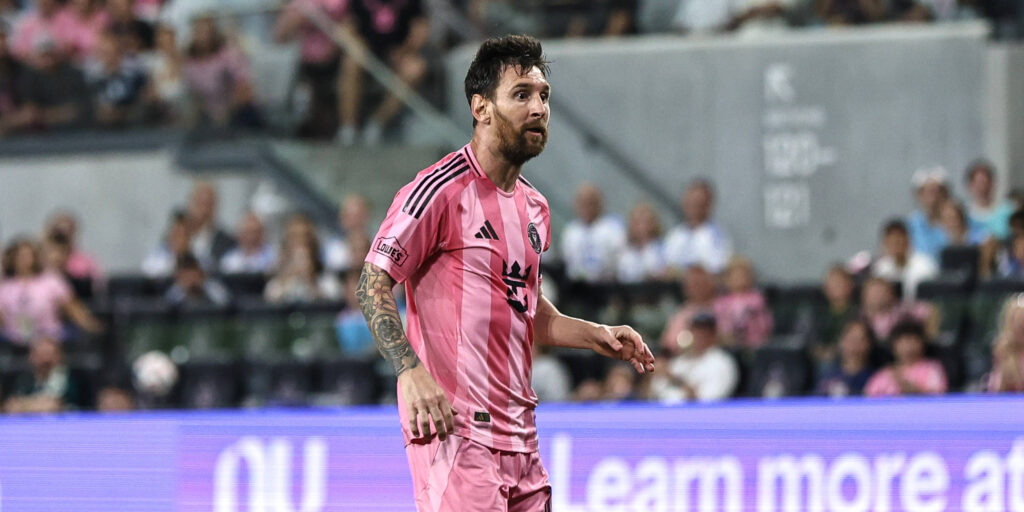
Two days before announcing his Argentina retirement, Messi scored four goals and added an assist as Inter Miami destroyed CF Montréal 7-1. It was his first four-goal performance in MLS.
That creates one of the strangest contradictions surrounding his retirement.
He looks capable of continuing.
Yet emotionally, he has recently sounded far less certain.
After Jorge Messi’s death, Lionel publicly admitted having substantial doubts about how much longer he wanted to keep playing football at all. The Guardian subsequently noted that his Argentina retirement inevitably raises the question of whether he will actually complete a contract that runs another two seasons beyond 2026.
For Newell’s supporters, that uncertainty leaves the door open to fantasy. For Inter Miami, it creates a question that may become increasingly important. For everyone else, it is a reminder that Argentina’s goodbye may be the beginning of football’s broader goodbye to Messi.
From “Leonel Mecci” to an Argentine immortal
There is an almost absurd contrast between the beginning and the end.
Argentina once sent Barcelona a fax containing the name “Leonel Mecci”.
Twenty-two years later, the player they were trying to bring into their national-team structure leaves with 207 appearances, 125 goals and virtually every major international honour available to him.
His first senior Argentina appearance lasted less than a minute before he was sent off against Hungary in 2005. Years later came the World Cup final defeat of 2014, two Copa América final losses, accusations that he cared more about Barcelona, the retirement of 2016 and the eventual decision to return.
Had that been the end of the story, Messi’s international career would still have been extraordinary.
Instead, he stayed long enough to rewrite it.
He won the Copa América in 2021. He lifted the Finalissima. In Qatar, he finally lifted the World Cup. He added another Copa América in 2024 and, at 39, dragged one final Argentina campaign all the way to another World Cup final.
He did not win that final.
Spain, the country that had once hoped he might play for them, denied him the storybook ending.
But perhaps that is why the farewell works.
Messi spent much of his Argentina career discovering that international football did not care about the ending he wanted. He lost. He was criticised. He walked away. He came back. Eventually, everything that had once seemed impossible happened anyway.
Now Argentina must discover what comes after him.
And Lionel Messi, for the first time in more than two decades, will be watching with everyone else.