FIFA launches its counterattack
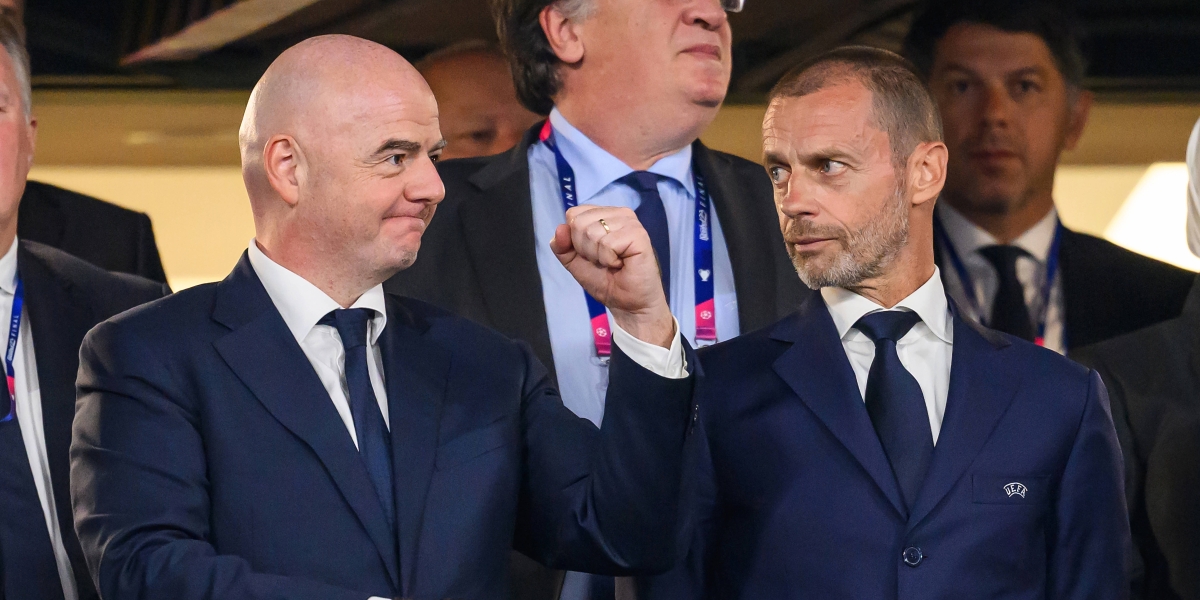
The battle over Gianni Infantino’s abandoned plan to sell part of FIFA’s commercial business has entered a new and increasingly hostile phase. After UEFA opened four proceedings in the United States to obtain documents and testimony, FIFA has responded by accusing European football’s governing body of conducting a coordinated “smear campaign” against the organisation and its president.
According to the Associated Press account of FIFA’s filings, the governing body claims UEFA is using the American legal system to support a political attack rather than a sufficiently developed foreign court proceeding. FIFA argues that UEFA’s contemplated Swiss criminal complaint remains speculative and that the European confederation does not have the authority to launch the type of criminal case described in its applications.
The response does not merely reject UEFA’s allegations surrounding FIFA Forward Enterprise. FIFA has introduced a much broader and potentially explosive defence: that UEFA opposed the project because additional money for smaller football nations could threaten Europe’s economic and sporting dominance.
“If soccer is strengthened in the developing world, global competition increases, which ultimately reduces UEFA’s market power and provides more competition for its flagship tournaments,” FIFA argued in its filing, as reported by Front Office Sports.
Read also: ‘If you lie to me, I will leave’: Guardiola’s City warning takes on new weight
FIFA also claimed that better funding might encourage players to represent their countries of origin and remain in domestic leagues outside Europe. According to the organisation, UEFA’s opposition was therefore not only about governance, transparency or the protection of the World Cup, but also about preserving the advantages enjoyed by European football.
Court has not rejected UEFA’s request
The latest procedural decision requires careful interpretation. A federal judge in Florida has not dismissed UEFA’s application, approved its allegations or refused access to the requested documents. The court has simply allowed FIFA (AMERICAS), Inc. and FWC2026 US, Inc. to submit a formal response before a decision is made.
The public docket for the Florida proceedings identifies the case as number 1:26-mc-25872 before Judge Jose E. Martinez. FIFA’s American entities have until 28 September to present their full opposition. The underlying request for discovery therefore remains pending, and UEFA has not yet received judicial permission to compel the production of evidence.
FIFA is also attempting to intervene in three related cases. UEFA’s Florida application targets FIFA’s American operations and the company responsible for the 2026 World Cup. Two proceedings in New York seek information from proposed investor Thrive Capital, its founder Josh Kushner and financial adviser J.P. Morgan, while the Colorado case targets former Liberty Media chief executive Greg Maffei and BANN Ventures.
Read also: Harry Kane’s Bayern future suddenly comes with a Tottenham escape route
The four applications were filed under Section 1782 of the United States Code, which can allow evidence located in America to be obtained for use in foreign proceedings. FIFA contends that the mechanism is being misused because the Swiss criminal proceeding described by UEFA does not yet exist. UEFA maintains that American law permits discovery for a foreign case that is reasonably contemplated, even if it has not yet formally begun.
UEFA wants to open the secret files
At the centre of the dispute is FIFA Forward Enterprise, the proposed subsidiary that would have taken control of valuable commercial rights connected to the men’s and women’s World Cups and the Club World Cup. FIFA planned to sell investors a permanent 20 per cent stake for approximately $4.2 billion, implying a total enterprise value of about $20 billion.
UEFA alleges that the transaction was developed for more than a year by a small group surrounding Infantino, without proper involvement from the FIFA Council, the confederations or the organisation’s 211 member associations. It has also questioned why there was no open auction or independent valuation before Thrive-linked capital was selected to lead the proposed investment.
In its original application against Thrive Capital and Josh Kushner, UEFA described the $20 billion valuation as “absurdly low” and alleged that the planned transaction could have benefited Infantino and a small circle around him. These remain UEFA’s allegations, and no court has established that Infantino acted criminally or sought personal financial gain.
Read also: ‘I’m not confident’: Red Bull chief delivers troubling verdict on Verstappen’s car
The European confederation wants access to internal valuations, communications, financial analyses and records showing who participated in the negotiations. It argues that documents held by the proposed investors and advisers could establish when the project was conceived, what representations were made about FIFA’s internal approvals and whether the $4.2 billion price represented an arm’s-length valuation.
FIFA questions UEFA’s legal standing
FIFA’s counterargument focuses partly on whether UEFA can credibly present itself as a potential victim of criminal mismanagement. The global governing body says the project was withdrawn before any shares were sold and argues that UEFA cannot demonstrate the financial loss required to support its proposed use of Article 158 of the Swiss Criminal Code.
It has also questioned why UEFA turned to courts in the United States instead of first pursuing information or remedies in Switzerland. FIFA claims disputes within football’s governing structure should be handled through the agreed institutional and arbitration processes rather than through a series of public legal applications in several American jurisdictions.
UEFA’s position is that the collapse of the transaction did not repair the alleged damage to FIFA’s governance, reputation and commercial relationships. Its case is based not only on whether money ultimately changed hands, but on how a plan involving FIFA’s most valuable assets could allegedly be developed and presented without the knowledge of key elected officials.
Read also: Man City hit back at Premier League with explosive accusation
The American judges are not being asked to decide whether Infantino committed a criminal offence. Their immediate task is narrower: determining whether UEFA should be allowed to subpoena documents and testimony that could later be submitted to Swiss authorities.
The fight is now about who controls world football
FIFA’s latest filing transforms the conflict from a dispute over transparency into an argument about the balance of power in the global game. UEFA portrays itself as the defender of collective governance against an increasingly presidential FIFA. FIFA now presents UEFA as a wealthy regional power using legal and political pressure to prevent resources from reaching competitors outside Europe.
That accusation could prove persuasive among smaller member associations, particularly those dependent on FIFA development funding. UEFA represents 55 of FIFA’s 211 members, but every national association receives one vote in the presidential election. A narrative in which Europe is defending its financial privilege could therefore become a powerful campaign instrument for Infantino ahead of the March 2027 FIFA Congress.
The legal fight is consequently operating on two levels. In court, the parties are arguing over jurisdiction, standing, confidentiality and access to evidence. Outside court, they are fighting to define what FIFA Forward Enterprise represented: either a secretive attempt to place football’s commercial future in private hands or a development project destroyed by a European establishment afraid of losing power.
Read also: Manchester City CEO says everything is one big “conspiracy theory”
For now, UEFA has not won access to the documents, and FIFA has not defeated the applications. The Florida court has merely ensured that FIFA will be heard before the first major decision is made. What began as a battle over a failed $4.2 billion investment proposal has now become a direct struggle over who can claim to speak for world football.