The individual ban has been lifted
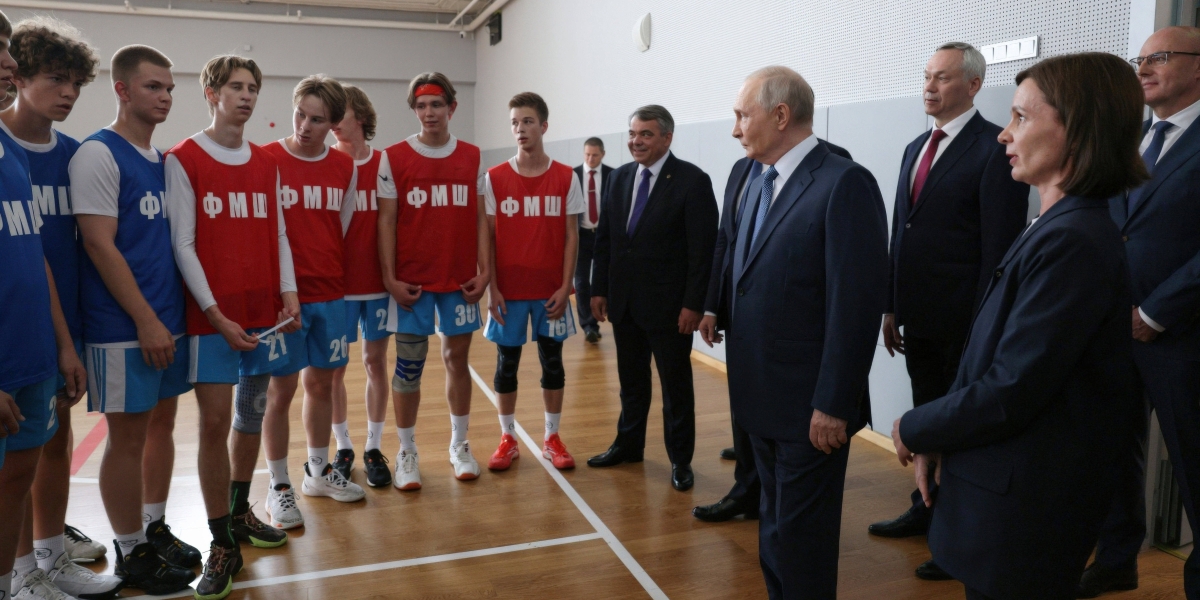
Russian and Belarusian basketball personnel can once again take part individually in competitions organised under FIBA’s authority. The decision applies to players, coaches, referees, commissioners and other officials across traditional basketball and 3×3. It takes effect immediately and is considerably broader than a limited exemption for a small number of elite athletes.
According to the official statement from FIBA’s Executive Committee, individual players from both countries may now participate in all FIBA competitions, while officials can once again be nominated for appointments. That means the first visible sign of reintegration may not necessarily be a Russian star returning to the court. It could be a referee, commissioner or coach appearing at an international event.
The wording is important because an individual return is different from the readmission of a country. Russia and Belarus have not been restored to national-team competitions, and their clubs have not received approval to return to international tournaments. FIBA has removed restrictions attached to individuals while preserving, at least temporarily, the exclusion of collective representatives from both countries.
This distinction allows FIBA to reopen part of the system without immediately rewriting qualification groups, competition formats or security plans. A Russian player contracted by a club outside Russia can participate, and an eligible official can be considered for international duties. However, Russia cannot yet send a senior national team back into World Cup qualification, while Russian clubs remain outside FIBA’s international club competitions.
Read also: Zidane is in focus, Deschamps is in the dark
Referees make the decision more sensitive
The inclusion of referees and commissioners gives the decision a particularly delicate dimension. Players and coaches are openly associated with the clubs employing them, but match officials are expected to represent neutrality and institutional authority. Their return could therefore generate controversy even when no Russian or Belarusian team is involved in the game.
Eligibility does not guarantee that a referee will receive an appointment. FIBA retains control over licensing, selection and nomination procedures, and tournament organisers must still consider experience, performance and logistical requirements. Nevertheless, the previous nationality-based barrier has been removed, allowing Russian and Belarusian officials to re-enter the pool from which appointments can be made.
That creates immediate questions FIBA’s announcement does not fully answer. The federation has not explained whether individuals will undergo political neutrality screening, whether military or state affiliations will be assessed, or whether special conditions will apply when officials are assigned to matches involving Ukraine or countries that have strongly opposed Russian reintegration.
Those questions matter because confidence in refereeing depends not only on whether a decision is technically correct, but also on whether the official is accepted as independent by both teams. Even the appearance of a political conflict could place unnecessary pressure on referees and competition organisers. FIBA may therefore be legally able to nominate an official while still deciding that certain appointments are operationally unwise.
Read also: Harry Kane’s Ballon d’Or response says plenty without saying much
December could change the entire competition map
The larger decision has been postponed until the FIBA Central Board meets in December 2026. At that meeting, the governing body intends to consider the possible return of Russian and Belarusian national teams and clubs across all age categories, in both basketball and 3×3. The process will also cover their possible involvement on the road to the Los Angeles Olympics in 2028.
FIBA says it will work with the International Olympic Committee, the Association of Summer Olympic International Federations and other governing bodies for Olympic team sports. The discussions will address logistical problems, player safety and the creation of an adequate anti-doping programme. These are not minor technical details. They determine whether teams can travel, where matches can be staged and whether opponents can be expected to play without political or security crises.
The December meeting is not a guarantee that the teams will be restored. FIBA has promised “concrete decisions” that can be implemented, but those decisions could involve a continued ban, a phased return or a limited structure containing neutral venues and special conditions. The important change is that collective reintegration is no longer an indefinite question. It now has a formal decision point.
Any return would create immediate competition-policy problems. Qualification campaigns are already under way, groups have been drawn and schedules have been published. Inserting national teams midway through a pathway could require new preliminary rounds, expanded groups or exceptional qualification routes. Giving Russia or Belarus direct access without an ordinary qualification process would raise questions of fairness, while delaying them could interfere with preparations for Los Angeles 2028.
Read also: Roy Keane gives Manchester City stars brutal message over medals after guilty verdict
A 3×3 case reveals the confusion
The current uncertainty is already visible in 3×3 basketball. Earlier in 2026, Russian and Belarusian under-21 teams received exceptional authorisation to compete in selected conferences of the FIBA 3×3 Youth Nations League in China and Malaysia. That permission represented a limited collective return at youth level before FIBA had settled its broader policy.
The Russian men’s and women’s teams subsequently won their conference, giving them a sporting basis to seek places at the FIBA 3×3 Under-23 World Cup. The Belarusian women also finished second in their conference and could have entered the qualification discussion. Yet neither country appeared in the final list for the tournament in Wuhan.
The Ukrainian Basketball Federation’s account of the decision shows the practical contradiction. Russian and Belarusian teams were allowed into a competition forming part of the pathway, but were then excluded from its principal championship. Athletes could compete and achieve the necessary results without receiving a route to the prize those results were meant to unlock.
That example illustrates why December’s decision cannot be treated as a simple political declaration. FIBA will need rules covering ranking points, qualification results, previously completed tournaments and the status of teams that were permitted to participate only in selected parts of the international system. Without a clear transition model, reintegration could create sporting disputes regardless of the political arguments surrounding it.
Read also: Where Erling Haaland could end up if he leaves Man City
FIBA has changed position in four months
The speed of the shift is also significant. At the FIBA Europe General Assembly in May, representatives confirmed the existing status of Russian and Belarusian teams. The official account of that meeting placed the issue among the geopolitical challenges facing European basketball but offered no indication that a broad individual return was imminent.
FIBA now says its new policy follows two decisions by the IOC. Restrictions recommended for Belarusian athletes and teams were lifted on May 7, while the suspension of the Russian Olympic Committee was provisionally removed on July 7. FIBA has chosen to align itself with that change in direction, although international federations still retain considerable authority over their own competitions.
The move fits a broader pattern across international sport. Governing bodies are increasingly separating individuals from national teams, allowing athletes and officials to return before restoring flags, anthems and collective representation. This phased approach is presented as a way to protect individual sporting rights while leaving the most politically sensitive questions unresolved.
Basketball exposes the limits of that model particularly clearly. It is fundamentally a team sport, and most of its largest competitions are built around national sides or clubs rather than individual entry. Allowing one player or referee to return is administratively possible. Reintroducing a national team requires opponents, venues, qualification routes, security guarantees and a competition format that can accommodate it.
Read also: Javier Tebas breaks silence on what should happen to Man City next
Reintegration has started, even if Russia remains absent
FIBA has not restored Russian or Belarusian basketball in full, but it has crossed an important threshold. Individual exclusion is over, officials may again receive nominations and the possible return of teams now has a scheduled decision point. The governing body has moved from maintaining a blanket barrier to designing the conditions under which the barrier can gradually be dismantled.
The most immediate reporting angle lies with the referees and officials because their presence could become visible before any national team returns. The largest story, however, remains the December meeting. If FIBA readmits Russian clubs or national sides, it will need to explain not only why the political conditions have changed, but how the new teams can enter competitions already in progress without compromising safety or sporting fairness.
Russia is still absent from the international team landscape, but the architecture for its return is now being constructed. The players and referees have been allowed through the first door. In December, FIBA must decide whether to open the arena to their teams as well.