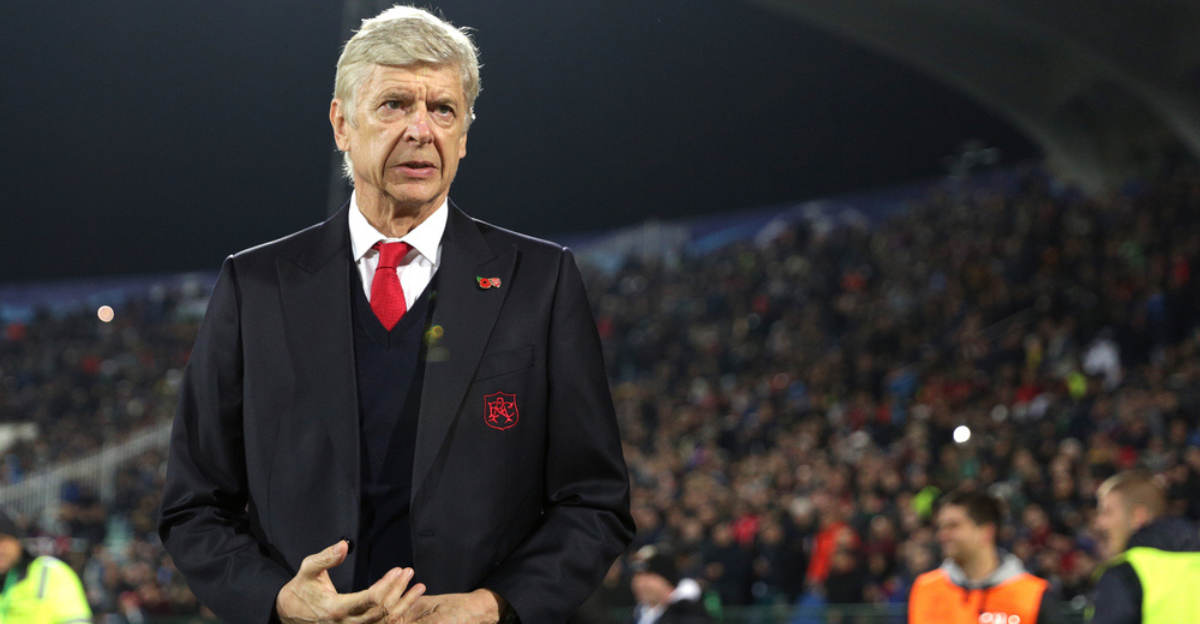
An Arsenal fan account has shared a tribute attributed to Jamie Carragher that presents Arsène Wenger’s later years at the club as a struggle to remain among England’s elite while losing important players and operating under financial restrictions.
“I respect the man called Wenger,” begins the quotation in the Arsenal News post. The account does not identify an original interview, broadcast or recording, and the wording could not be independently verified as Carragher’s. However, Wenger’s own documented comments provide substantial background to the argument it makes.
When European football became a financial necessity
Arsenal’s move from Highbury to Emirates Stadium in 2006 changed more than the club’s surroundings. The borrowing required to finance the development restricted spending and placed additional importance on maintaining Champions League qualification.
Wenger later described the years between 2006 and 2014 as his most demanding period. Speaking to BT Sport in May 2017, as reported by FourFourTwo, he explained that Arsenal had substantial repayments to make while trying to remain competitive.
Read also: Essex batter Robin Das charged by multiple counts of rape
He said “we had to sell our best players and we had to stay at the top”.
Wenger’s account placed European qualification at the centre of that balancing act. Champions League income was needed while the club paid for its new home, leaving him to rebuild teams without allowing results to fall far enough to jeopardise that revenue.
The financial fair play claim needs context
The social media tribute specifically links Arsenal’s player sales to compliance with financial fair play rules. That explanation requires a distinction between regulatory requirements and the financial pressures created by the stadium project.
According to UEFA’s explanation of its financial fair play programme, the regulations were approved in May 2010, with the break-even assessment covering financial years ending in 2012 and 2013 and taking place during 2013/14.
Read also: Michael Schumacher accident mystery finally explained 13 years later
Arsenal had moved stadium four years before those regulations were approved. Wenger’s description of the period emphasised restricted finances, repayments and the need to sell players. It therefore does not establish that every significant departure was required to comply with FFP.
Consistency alongside the missing trophies
Wenger’s record also gives the discussion a broader perspective. Arsenal finished in the Premier League’s top four for 20 consecutive seasons before that run ended with fifth place in 2016/17, as Sky Sports reported at the time.
His achievements extended well beyond qualification. As recorded in Arsenal’s retrospective on his career, he won three Premier League titles and seven FA Cups, including the unbeaten league campaign of 2003/04.
Those successes do not remove the criticism surrounding the trophy drought between 2005 and 2014. They do, however, help explain why his legacy remains more complicated than a count of trophies won during that period. Wenger was expected to pursue silverware while maintaining the European income that, by his own account, was essential to financing Arsenal’s future.
Read also: Erling Haaland’s reaction to Man City verdict revealed by Norway teammate
Read also: Marcelo got Roberto Carlos’ number: “I never called him”