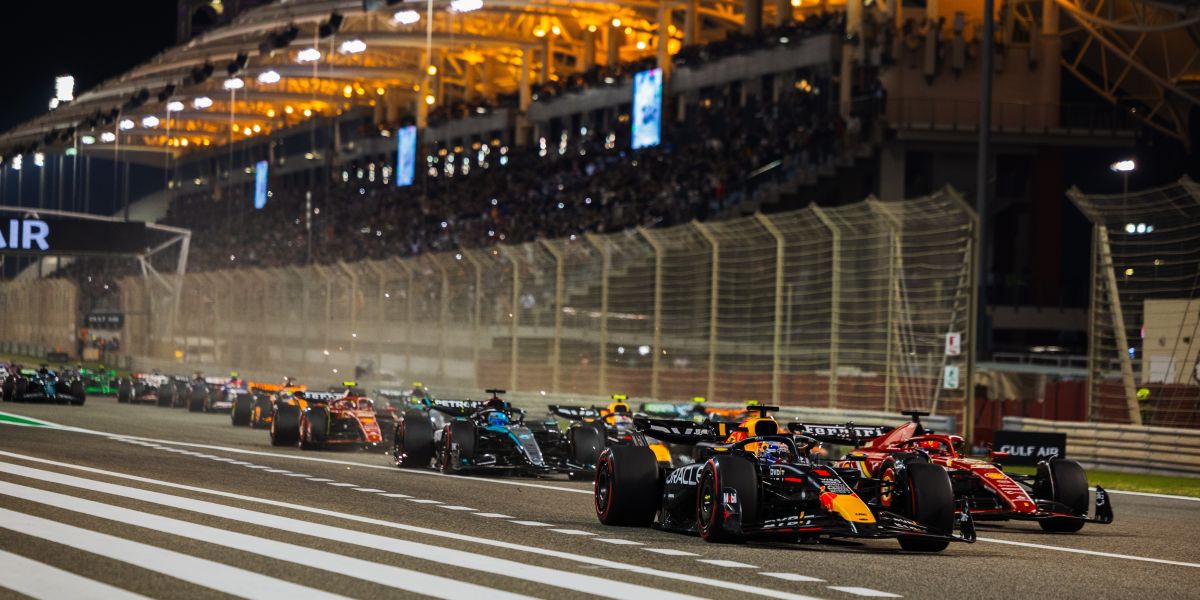
Formula 1’s 2026 season has been forced into an unexpected reshuffle after two major races in the Middle East were cancelled amid escalating regional tensions.
The Bahrain Grand Prix and Saudi Arabian Grand Prix, originally scheduled for April, have been removed from the calendar due to security concerns linked to the ongoing war involving Iran. The decision creates a rare gap in the championship schedule and could cost the sport hundreds of millions of dollars.
Why the races were cancelled
Formula 1 confirmed that the Bahrain and Saudi Arabian Grands Prix will not take place in April as the conflict in the region continues to escalate.
According to a report by Maury Brown for Forbes, organisers had been monitoring the situation for months as missile attacks and military tensions increased across parts of the Middle East. Officials considered relocating the races to other venues but ultimately decided cancelling them was the safest option.
Read also: McLaren reveal why Norris and Piastri failed to start in China
The conflict has involved Iran and regional powers and has created instability affecting travel, logistics and security across several countries where Formula 1 teams typically operate.
Formula 1 races require massive international coordination. Thousands of team members, engineers, broadcasters and logistics staff travel between events every week, making security and reliable transport routes critical to staging a Grand Prix.
Why Middle Eastern races matter to Formula 1
The Middle East has become one of the most important regions for Formula 1 in the past two decades.
Bahrain first joined the calendar in 2004 and became the sport’s first race in the Middle East. Saudi Arabia followed in 2021 with the high speed street circuit in Jeddah.
Read also: Mercedes eyes Alpine stake as F1 ownership talks heat up
These races are among the most financially valuable events in the championship because host countries pay large fees to stage them and governments use the races to promote tourism and international visibility.
Because of that, losing both events in the same season represents a significant commercial setback for the sport.
The financial impact on the championship
The cancellations could result in major financial losses for Formula 1.
According to an analysis from investment firm Guggenheim cited by Forbes, removing the two races could reduce revenue by roughly $190 million to $200 million.
Read also: Pole vault king does it again, Duplantis thrills home crowd with historic 6.31m jump
The same report estimates the cancellations may cut about $80 million in EBITDA, a measure commonly used to evaluate operating profitability.
Race weekends generate revenue from multiple sources including hosting fees, global broadcasting rights, sponsorship deals and trackside hospitality.
Without those two events, Formula 1’s 2026 calendar will shrink from 24 races to 22 races, according to the Forbes report.
Travel disruption affecting teams and staff
The conflict has already complicated travel for teams, drivers and thousands of staff working across the championship.
Read also: Trump’s Iran warning throws 2026 world cup into political storm
According to Forbes, many Formula 1 personnel normally travel through major aviation hubs such as Dubai, Abu Dhabi and Doha when moving between races in Asia and Europe.
Several of those airports temporarily closed following Iranian missile strikes in the region, disrupting common flight routes used by teams and logistics crews.
In response, some teams were forced to arrange charter flights to move equipment and staff safely between events.
A rare gap in the Formula 1 calendar
With the two April races removed, the season schedule will now feature a significant break.
Read also: Former Arsenal midfielder accused by multiple women now facing new rape allegations
After the Japanese Grand Prix at Suzuka on March 29, the championship will pause for several weeks before resuming at the Miami Grand Prix on May 3.
Long gaps in the Formula 1 calendar are unusual because the championship typically runs almost continuously from March through December.
According to the Forbes report by Maury Brown, the Azerbaijan Grand Prix scheduled for late September could also face uncertainty if tensions in the region continue.
For now, the full financial and logistical consequences may not become clear until Liberty Media, the American company that owns Formula 1, releases its financial results later this year.
Sources: Forbes


