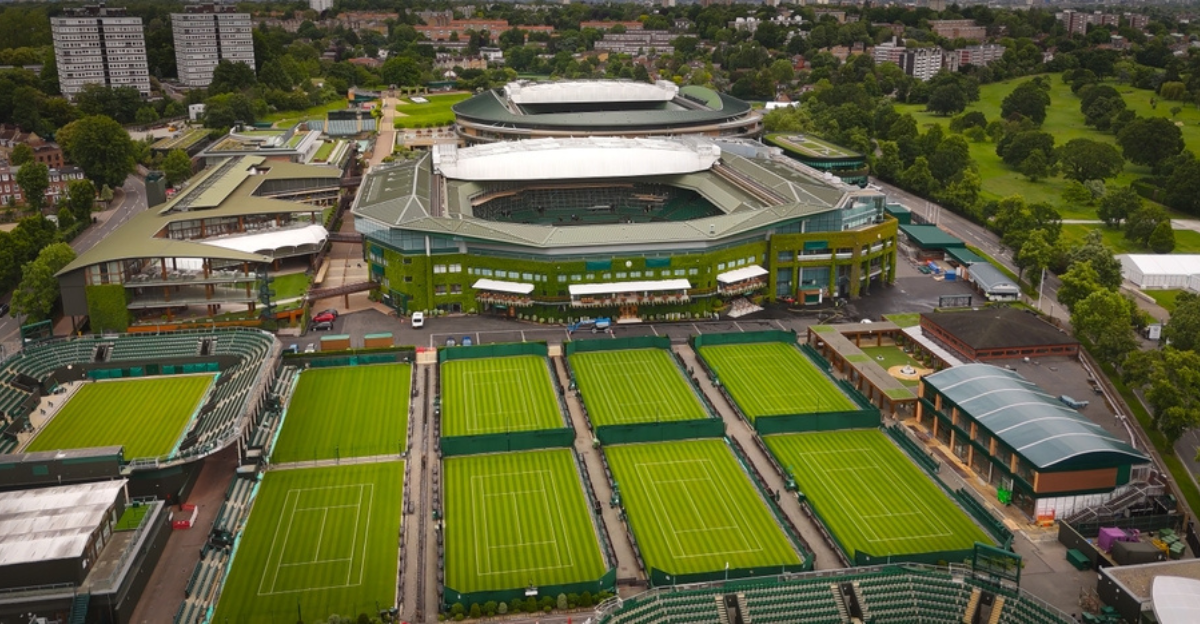
Wimbledon will introduce video review technology at the 2026 Championships, marking another step in the tournament’s gradual shift toward modern officiating.
The new system will allow players to request that an umpire review certain decisions during a match, such as whether a ball has bounced twice. However, electronic line calls already in place will remain final and cannot be challenged.
According to BBC Sport, there will be no limit on how many times a player can ask for a review. That represents a significant change from the previous Hawk-Eye challenge system, which restricted players to a set number of unsuccessful appeals per set.
The move is part of a broader effort by the All England Club to align with other Grand Slam tournaments, many of which have adopted more extensive use of technology in officiating. Wimbledon replaced traditional line judges with electronic line calling in 2025, ending one of its most visible on-court traditions.
Read also: Europe’s biggest leagues to review VAR use with Uefa
The addition of video review is expected to be used on key courts, rather than across every match, as officials continue to balance innovation with the tournament’s historic character.
Reaction to the change has been mixed. Some see it as a natural progression in a sport where accuracy is increasingly prioritised, while others question whether it will improve decision-making in practice.
Concerns have been raised about potential disruptions to match flow, particularly given the absence of limits on review requests. Critics argue that repeated stoppages could affect rhythm and even be used strategically.
Past incidents have also shaped the debate. Andy Murray supported the use of technology in tennis but described a malfunctioning system at the 2023 US Open as a “farce.” More recently, Britain’s Jack Draper was penalised for hindrance during a point at Indian Wells after disputing a call mid-rally an episode that highlighted how in-match interventions can create confusion.
Read also: Champions League format under fire from European sides
Trust in automated decisions has also been questioned by players. After Wimbledon last year, Emma Raducanu said she did not have full confidence in every electronic line call.
Fan reaction reflects similar uncertainty. Some have welcomed the added layer of review, while others remain skeptical about its effectiveness. One fan suggested limits should be introduced per set, while another compared the system to VAR in football, arguing that technology does not eliminate controversy.
As Wimbledon prepares to roll out the changes, the challenge will be integrating new tools without undermining the pace and traditions that have long defined the tournament.
Sources: BBC Sport, SPORTbible
Read also: Chelsea under pressure as Rosenior appointment faces early exit
Read also: Liam Rosenior moves to shut down Fernandez exit talk